Gary Saretzky Photo Books
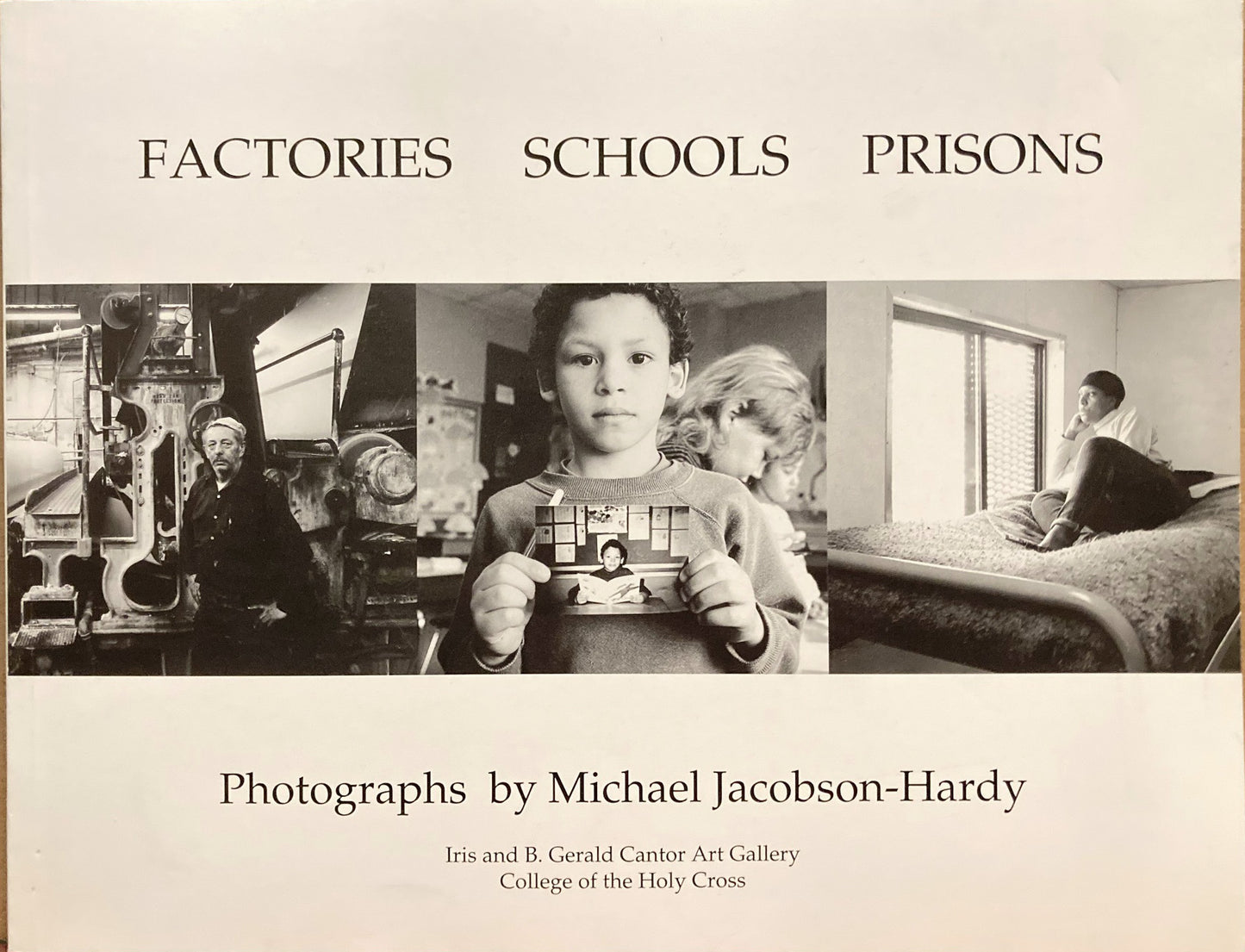
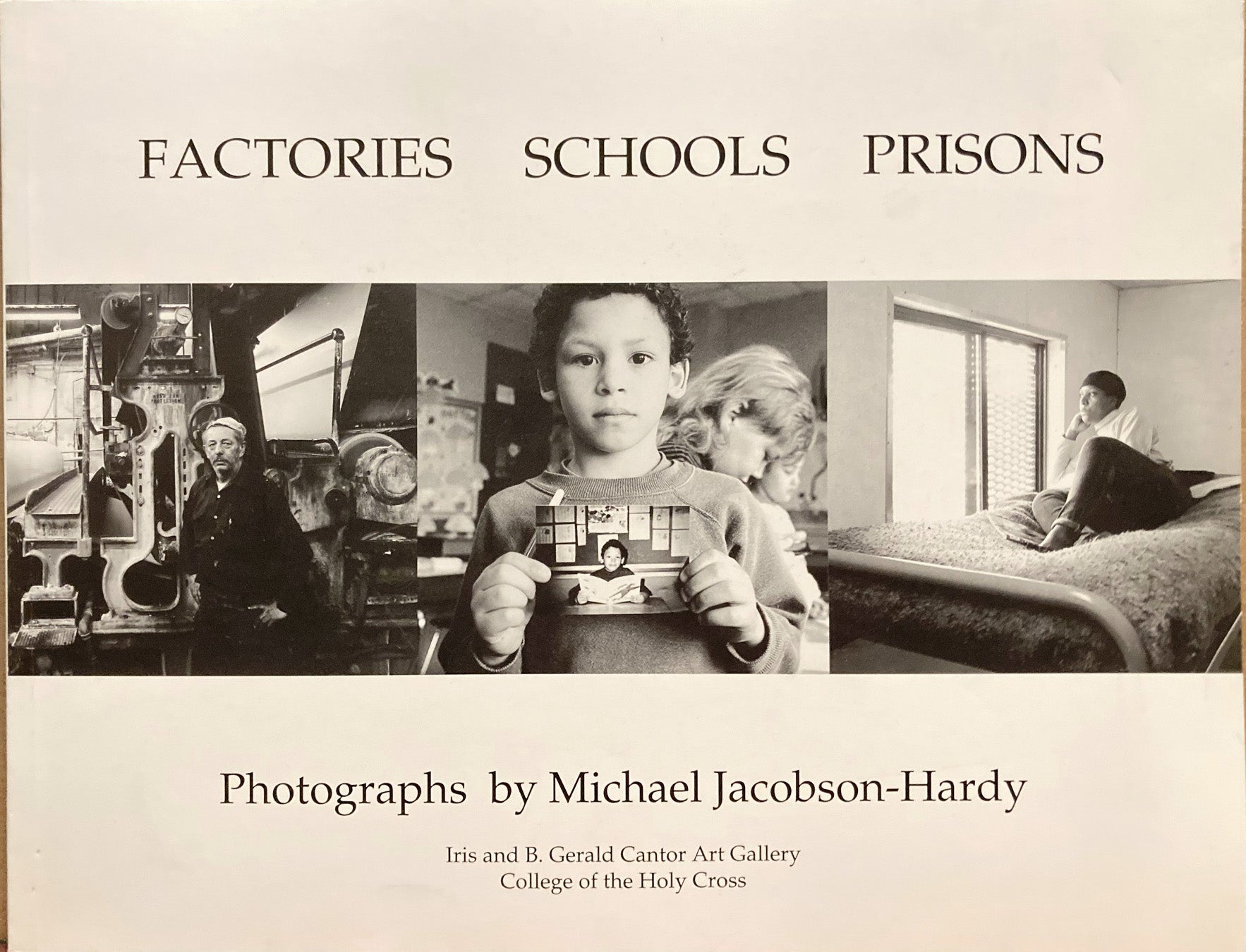
Jacobson-Hardy, Michael. Factories, Schools, Prisons by Michael Jacobson-Hardy.
Jacobson-Hardy, Michael. Factories, Schools, Prisons by Michael Jacobson-Hardy.
Couldn't load pickup availability
Iris and B. Gerald Cantor Art Gallery, College of the Holy Cross, 1996. Text by Victoria L. Swigert. Small label of the photographer inside back cover. [Photographs with quotations sequenced in the three series specified in the title, in black-and-white, mainly in central Massachusetts.] Oblong wraps, 96 pages, fine. Summary:
Factories, Schools, Prisons is a compelling photo-documentary exhibition and catalog by American photographer Michael Jacobson-Hardy. Extending the traditional lineage of social documentary masters like Walker Evans and Lewis Hine, the project explores the institutional connections between race, social class, and the erosion of equitable opportunities in American society.
The exhibition weaves together three distinct, interconnected photographic series to highlight how these core social institutions shape human lives:
-
Factories: This series contrasts traditional blue-collar workplaces—such as paper mills and foundries—with emerging high-technology computer manufacturing facilities. By centering on the laborers themselves, Jacobson-Hardy documents sweeping industrial changes through the lens of individual human impact.
-
Schools: Focusing on underfunded public schools, these images depict children navigating dilapidated facilities, crumbling chalkboards, and outdated textbooks. The series highlights the direct link between reduced educational spending and the degradation of equal opportunity for marginalized youth.
-
Prisons: Turning his lens toward cellblocks, razor-wire fences, and inmate populations, Jacobson-Hardy examines the everyday realities of life inside the corrections system. This segment confronts the troubling relationships between systemic socio-economic neglect, race, and mass incarceration.
Though primarily photographed within New England, the compiled imagery serves as a microcosm for national structural trends. By juxtaposing closing factories, neglected classrooms, and overflowing jails, the project makes a powerful visual argument that these institutional failures are fundamentally linked.