Gary Saretzky Photo Books
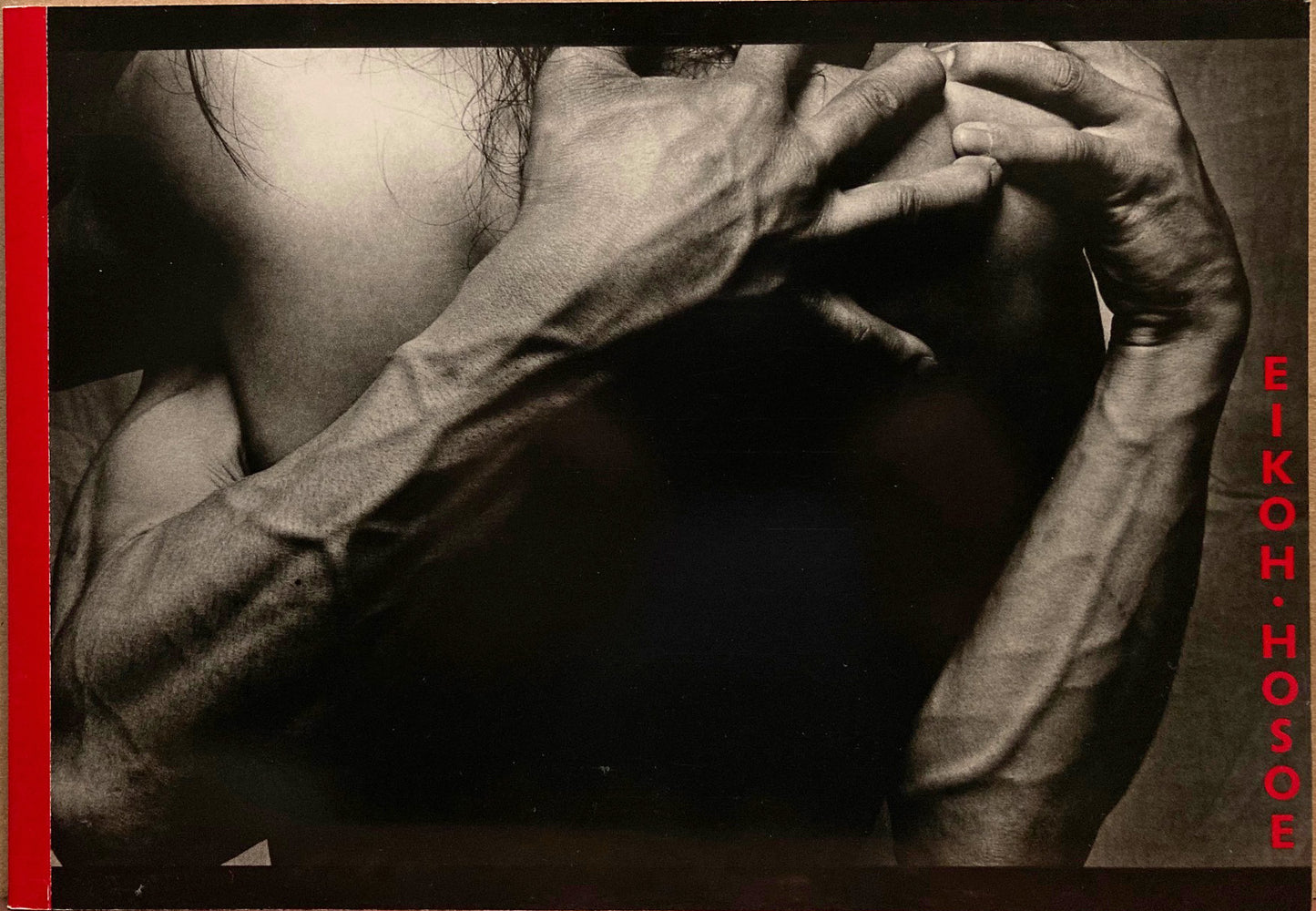
Hosoe, Eikoh. Eikoh Hosoe by Ronald J. Hill.
Hosoe, Eikoh. Eikoh Hosoe by Ronald J. Hill.
Couldn't load pickup availability
Published as Untitled #42 by the Friends of Photography, 1986. Copies available:
- Wraps (only edition), short crease on verso corner, otherwise fine.
- Wraps, fine.
Note: On March 18, 1933, in Yonezawa, Yamagata, Japan, Eikoh Hosoe (細江 英公), Japanese photographer and filmmaker, was born. Hosoe is best known for his high contrast black-and-white photos, including his series Bara-kei, published in English as Killed by Roses, which features the writer Yukio Mishima as a model, and Kamaitachi, about a supernatural being that haunted the Japanese countryside. Since 1995, Hosoe has been the director of the Kiyosato Museum of Photographic Arts and has received many honors, including inclusion in the Aperture Masters of Photography series of books. Summary:
ikoh Hosoe: Photographs (1986) is a significant monograph published by the Friends of Photography in Carmel, California. Released as Untitled #42 in the organization's influential series of photographic volumes, the book serves as the first major retrospective monograph of the seminal Japanese avant-garde photographer published in the United States.
The volume features an afterword by art historian Ronald J. Hill and features a comprehensive overview of Hosoe's career up to the mid-1980s. Across 60 pages and 31 high-quality black-and-white plates, the book reproduces definitive imagery from his most celebrated, psychologically charged, and theatrical portfolios—including Man and Woman (1959–60), Barakei (Ordeal by Roses) (1961–62) featuring author Yukio Mishima, Kamaitachi (1965–68), and Embrace (1971), alongside his later architectural studies of Antoni Gaudí’s sculptures in Spain.
Eikoh Hosoe (1933–2024), born Toshihiro Hosoe in Yamagata Prefecture, was an iconic fixture of post-World War II Japanese photography who challenged traditional documentary conventions to pioneer a highly theatrical, expressionistic style. Rising to prominence in Tokyo during the late 1950s, he co-founded the influential Vivo photographic collective, which rejected classical realism in favor of personal, subjective exploration. His masterworks frequently blended photography with dance, theater, and literature, exploring themes of human mortality, eroticism, myth, and the psychological trauma of post-war Japan through deep contrast, dark tones, and intense bodily abstractions. Beyond his own creative practice, Hosoe was an essential institutional pillar for Japanese photography, serving as a co-founder of the Daido Moriyama-associated Workshop Photography School and teaching for decades at the Tokyo Institute of Polytechnics.