Gary Saretzky Photo Books
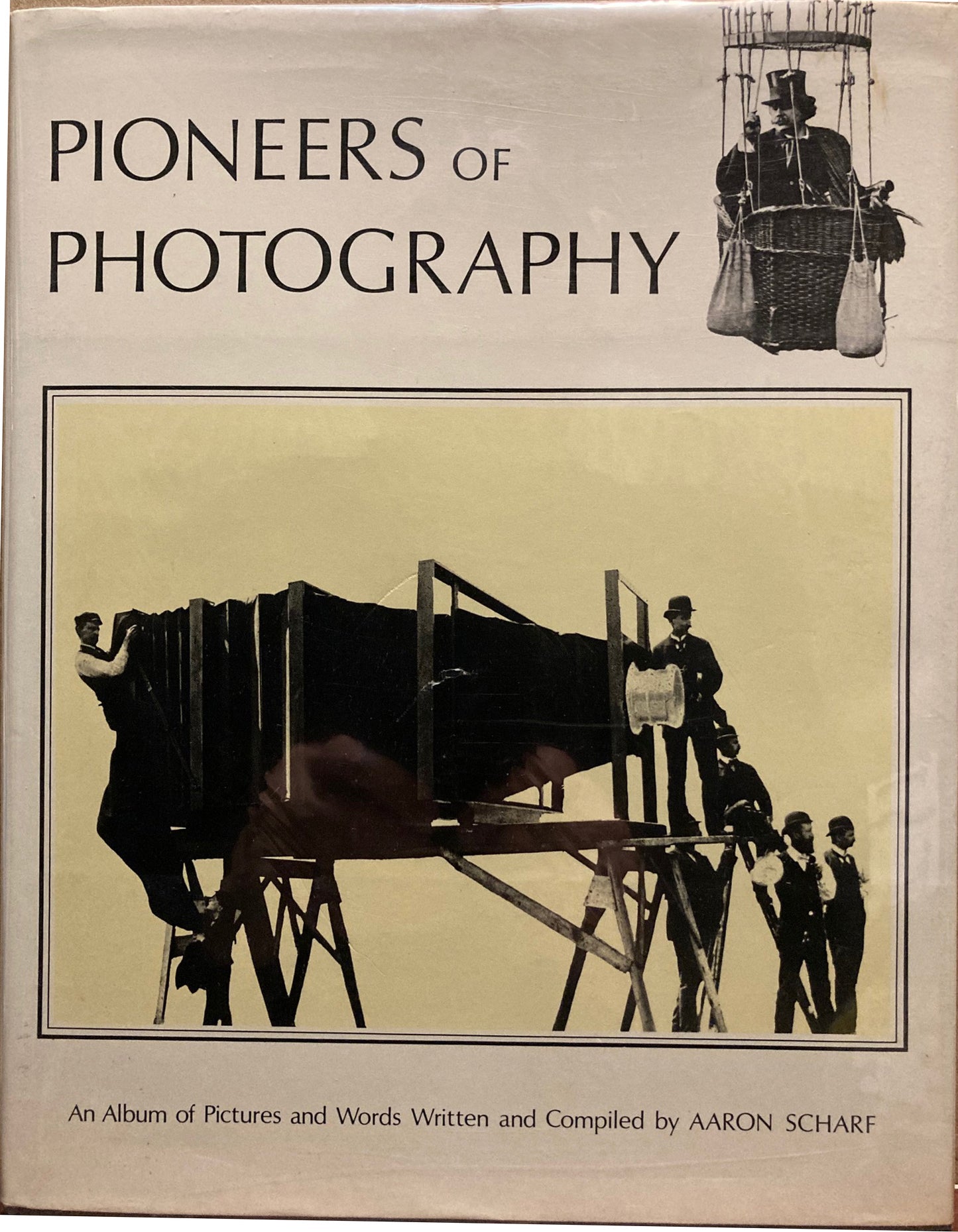
History of Photography. Pioneers of Photography. An Album of Pictures and Words Compiled by Aaron Scharf.
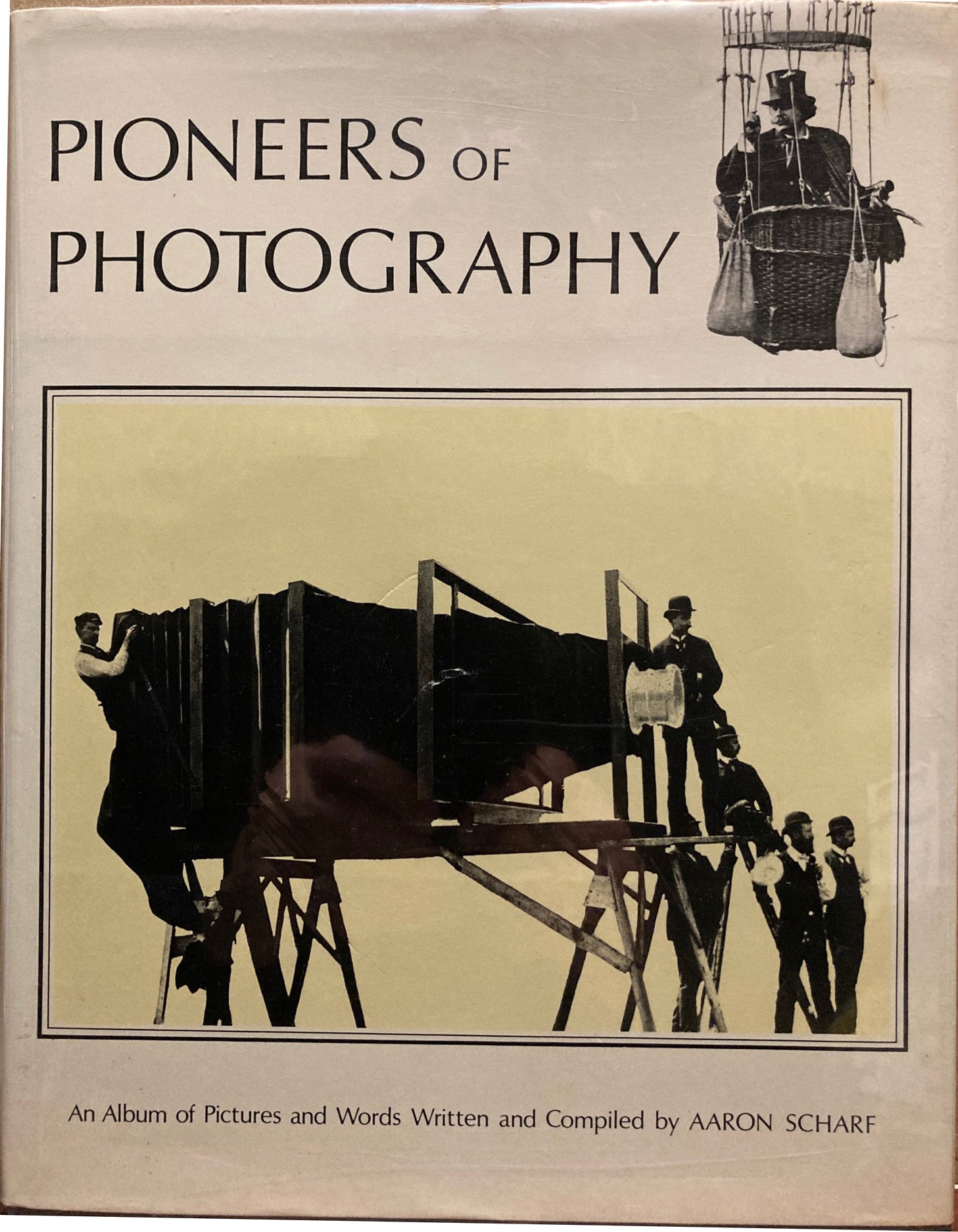
History of Photography. Pioneers of Photography. An Album of Pictures and Words Compiled by Aaron Scharf.
Couldn't load pickup availability
NY: Abrams, 1976. Excerpts from William Henry Fox Talbot, Pencil of Nature; correspondence of Daguerre, Niepce, Hippolyte Bayard, David Octavius Hill (of Hill and Adamson); Julia Margaret Cameron's autobiographical "Annals of My Glass House"; articles from the British Journal of Photography, 1860s by Samuel Bourne concerning his trips to the Himalayas; Nadar's "When I Was a Photographer" translated into English; articles by Oliver Wendell Holmes on Civil War photography and other topics; writings of Edweard Muybridge concerning animal locomotion; Charles Holme, "Art in Photography" from Studio magazine, 1905; and writings by Alfred Stiegliz and Edward Steichen on the autochrome color process, 1907-1908. Fine, cloth, with very good or better dust jacket with minor scratches and indentations. An important reference, numerous illustrations. Summary:
Pioneers of Photography: An Album of Pictures and Words (published in 1975/1976 by the BBC and Harry N. Abrams) is an intimate, richly illustrated history of the medium's earliest decades. Compiled by art historian Aaron Scharf—who acted as an advisor for the BBC television series of the same name—the book focuses heavily on primary source material. Rather than relying entirely on retrospective historical analysis, Scharf weaves together the first-hand accounts, diaries, and letters of early photographers alongside their landmark images. The book traces the transformation of photography from a primitive chemical experiment into a massive professional industry, a documentary tool, and a brand-new art form.
1. The Inventors and Early Chemistry
The book begins by highlighting the fierce, parallel race to capture a permanent image using light and chemistry. Scharf uses personal records to detail the foundational figures:
-
Nicéphore Niépce: Compiles his early, agonizingly long experiments with heliography (the earliest photographic process).
-
Louis Daguerre: Outlines the creation of the highly detailed, single-print daguerreotype and how it took the world by storm in 1839.
-
William Henry Fox Talbot: Explores his development of the calotype (or talbotype) in England, which introduced the paper negative/positive process—the true foundation of modern film photography.
-
Hippolyte Bayard: Spotlights the lesser-known French inventor who created a direct positive paper process but was sidelined by the French government in favor of Daguerre, famously prompting Bayard to create the world's first staged protest photograph.
2. The Professionalization & Technical Boundaries
Scharf details how photography quickly evolved into a commercial enterprise and how creatives stretched the limits of primitive gear.
-
Nadar (Gaspard-Félix Tournachon): Features the legendary Parisian bohemian who photographed the cultural elite (like Sarah Bernhardt) and pushed technological boundaries by shooting inside the dark Paris sewers using artificial electric light, as well as taking the first aerial photographs from a hot air balloon.
-
The First Color Experiments: Explores early, highly experimental attempts to crack the color barrier long before commercial color film became viable.
3. Travel and Global Documentation
The narrative follows photographers who lugged hundreds of pounds of fragile glass plates and chemical baths into treacherous terrain.
-
Samuel Bourne: Highlighted for his mathematically precise, stunningly composed landscapes of India and the Himalayas, which set an unmatched standard for travel photography under grueling physical conditions.
4. Diverging Paths: Documentary vs. Art
As the medium matured, a polarization occurred between capturing stark reality and staging artistic imagery.
-
Social Documentary: Figures like John Thomson are featured for using the camera to chronicle everyday reality, notably compiling his "London types" to document the harsh lives of the city's working-class and street vendors.
-
Pictorialism & Artistry: In contrast, the book looks at Julia Margaret Cameron, who intentionally ignored sharp documentary focus. She used soft focus and theatrical staging to capture intense, allegorical, and deeply psychological portraits of her sitters.
5. The Camera as an Analytical Tool
The final stages of the book look at how photography began to alter human perception of time and motion, paving the way for cinema.
-
Étienne-Jules Marey & Eadweard Muybridge: Scharf explores their groundbreaking work in chronophotography (capturing multiple phases of movement). Muybridge’s multi-camera setups of galloping horses and Marey’s single-plate exposures of birds in flight proved that the camera could see split-second mechanics completely invisible to the human eye.
Scharf’s Pioneers of Photography acts as both an educational text and a visual album. Its unique value lies in letting the pioneers speak for themselves. By pairing iconic imagery with the exact words of the people who mixed the toxic chemicals, lugged the heavy wooden cameras, and debated the artistic soul of the medium, the book captures the genuine sense of wonder and chaotic experimentation that defined the birth of photography.