Gary Saretzky Photo Books
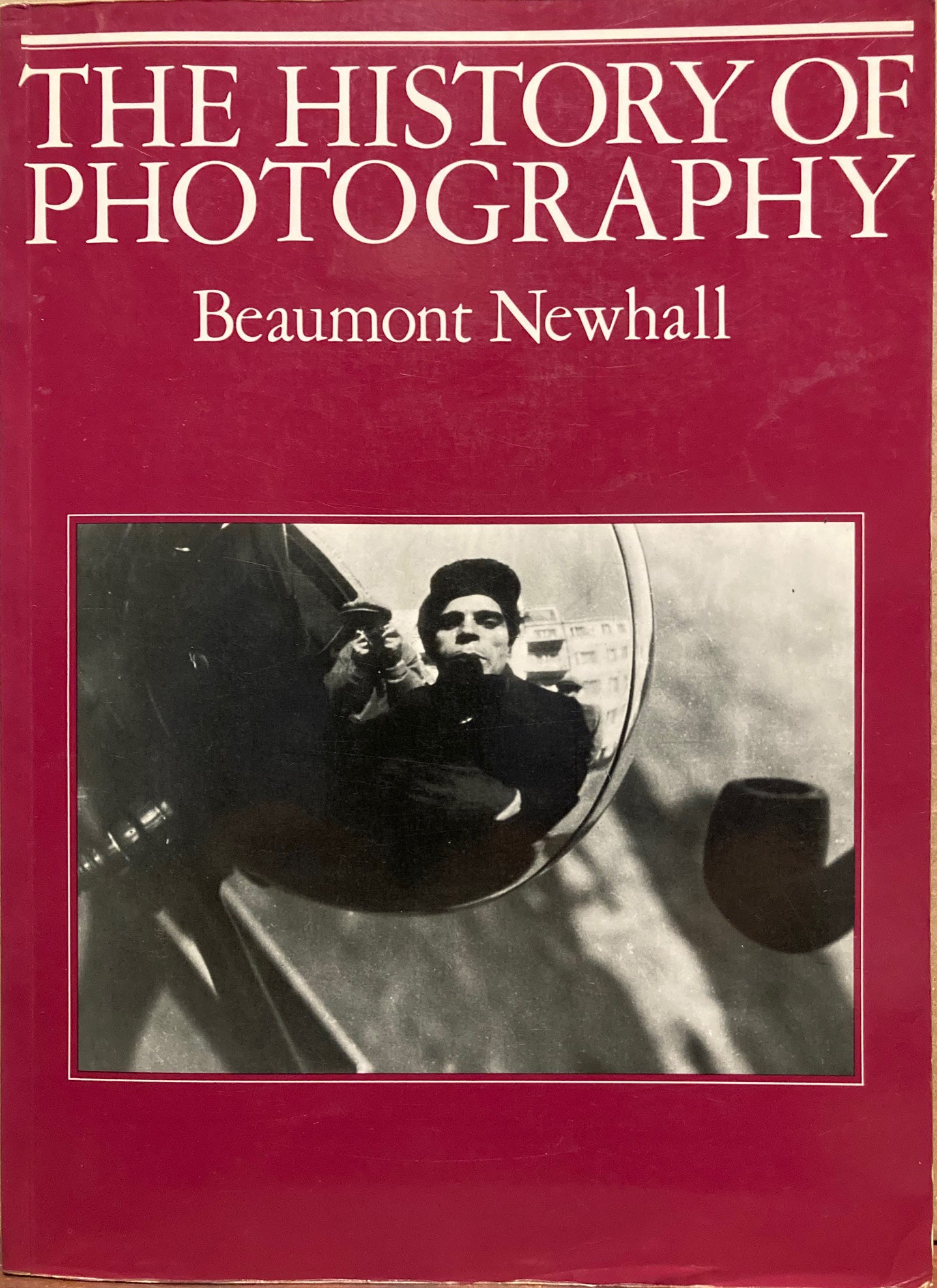
History. Newhall, Beaumont. The History of Photography from 1839 to the Present Day.
History. Newhall, Beaumont. The History of Photography from 1839 to the Present Day.
Couldn't load pickup availability
Revised and Enlarged Edition by Beaumont Newhall. Fifth Editon, 1982. 1st printing. NY: Museum of Modern Art, 1982. Presumed 1st printing of this, the fifth, edition. No later printings indicated and at least three known. Summary:
Originally published in 1937 as a catalog for a landmark Museum of Modern Art (MoMA) exhibition, Beaumont Newhall’s The History of Photography: From 1839 to the Present is widely considered the foundational textbook that established photographic history as an academic discipline. The 1982 fifth edition (frequently reprinted through 1988) represents the final major expansion of Newhall's lifetime work, updating the narrative to encompass contemporary color developments and modern visual trends.
Newhall’s core thesis is technologistic: he argues that the aesthetic evolution of photography is deeply intertwined with, and often dictated by, technical breakthroughs.
1. The Pre-History and Twin Inventions
The book opens with the quest for "the elusive image," detailing how the centuries-old optical device, the camera obscura, met 19th-century chemistry. Newhall presents the birth of photography as a simultaneous breakthrough across Western Europe:
-
The Daguerreotype: Louis Daguerre’s 1839 announcement of a highly detailed, sharp image permanently fixed onto a silver-plated copper sheet—the "mirror with a memory."
-
The Calotype: William Henry Fox Talbot’s paper-based process, which introduced the concept of the negative from which multiple positive prints could be made, forming the actual DNA of modern film photography.
2. Democratization and Technical Shifts
Newhall tracks how chemical and optical refinements quickly turned a complex laboratory experiment into a massive global industry:
-
Portraits for the Million: The reduction of exposure times via brighter lenses and more sensitive emulsions allowed commercial portrait studios to explode, making likenesses accessible to the working classes rather than just wealthy elites.
-
The Collodion (Wet Plate) Process: The transition from paper negatives to glass plates, which married the detail of the daguerreotype with the reproducibility of the calotype. Newhall notes how this sparked a wave of field documentation, allowing photographers to record distant wars (like the American Civil War) and uncharted landscapes.
3. The Aesthetic Tug-of-War
A central pillar of the book is photography’s struggle to find its own identity distinct from painting. Newhall divides this movement into distinct artistic philosophies:
-
Art Photography / Pictorialism: Early efforts by artists like Julia Margaret Cameron, Oscar Rejlander, and later Robert Demachy to elevate photography by mimicking classical painting techniques. This included heavy hand-manipulation of prints, soft-focus lenses, and staged allegorical or theatrical tableaus.
-
Straight Photography: Led by Alfred Stieglitz, the Photo-Secession movement, and later Paul Strand and Edward Weston (Group f/64). This ideology championed a total departure from painterly effects. "Straight" photographers utilized sharp focus, maximum depth of field, and crisp compositions to let the camera assert its own unique, unaltered visual language.
4. Expansion of Form and Speed
As equipment grew more portable, the lens began redefining human perception:
-
The Conquest of Action: The invention of dry plates and high-speed mechanical shutters enabled the split-second motion studies of Eadweard Muybridge and Étienne-Jules Marey, forever changing how artists and scientists understood movement.
-
In Quest of Form: The avant-garde movements of the early 20th century, where photographers like Man Ray and László Moholy-Nagy embraced experimentation through photograms (cameraless photography), extreme close-ups, and radical perspectives.
5. Social Responsibility & Real-Time Reporting
Newhall dedicates significant real estate to the camera as an instrument of truth and communication:
-
Documentary Photography: The deliberate use of the camera to advocate for social change, most notably highlighted by Jacob Riis and Lewis Hine exposing labor exploitation, and later by the Farm Security Administration (FSA) photographers like Dorothea Lange and Walker Evans during the Great Depression.
-
Photojournalism: The rise of smaller, handheld 35mm cameras (like the Leica) coupled with the invention of the flashbulb. This birthed "instant vision" and the golden age of magazine journalism, embodied by Henri Cartier-Bresson’s philosophy of capturing the unposed, fleeting "decisive moment."
6. The Color Horizon
The final additions to the textbook address the slow but inevitable mastery of color. Newhall charts this trajectory from the hand-tinted plates of the 19th century and the painterly Autochrome prints of the early 1900s to the bold, direct saturation of late-20th-century color masters like William Eggleston, Stephen Shore, and Joel Meyerowitz.
Newhall's History of Photography remains an essential text because of its unparalleled clarity in pairing mechanical evolution with artistic intent. However, modern art historians note its limitations: it maintains a strictly Western focus (primarily the United States, Great Britain, France, and Germany) and prioritizes photography as a vehicle for individual artistic expression, largely leaving out vernacular everyday uses like family snapshot culture, corporate advertising, or scientific recording. Despite these omissions, the text remains the definitive blueprint for how the modern world came to map, understand, and critique the power of the photographic print.
Two copies available:
- Wraps, fine with custom-made 4-mil polyester protector.
- Fine, without protector.
