Gary Saretzky Photo Books
Harper, Douglas. Good Company: A Tramp Life by Douglas A. Harper.
Harper, Douglas. Good Company: A Tramp Life by Douglas A. Harper.
Couldn't load pickup availability
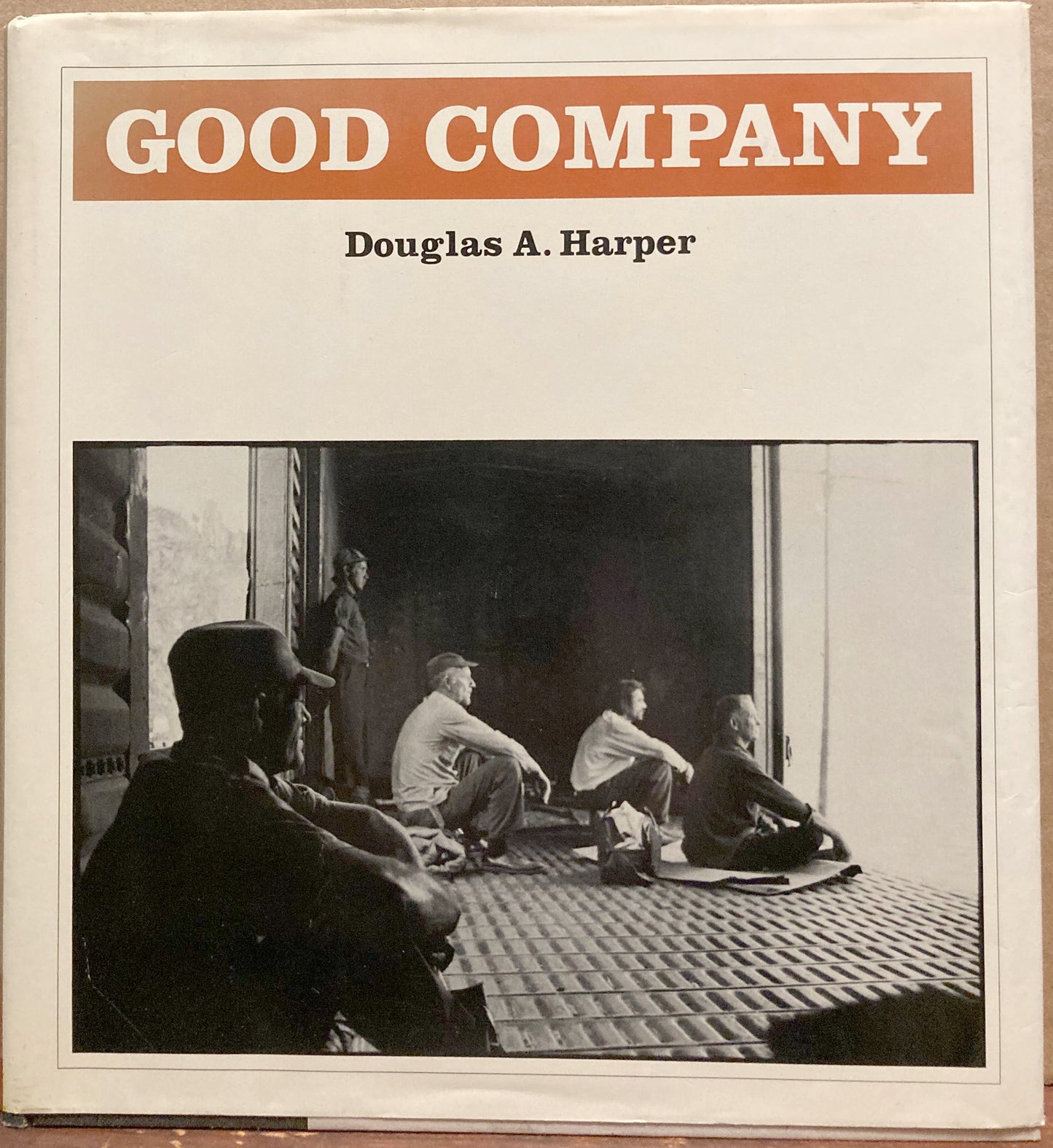
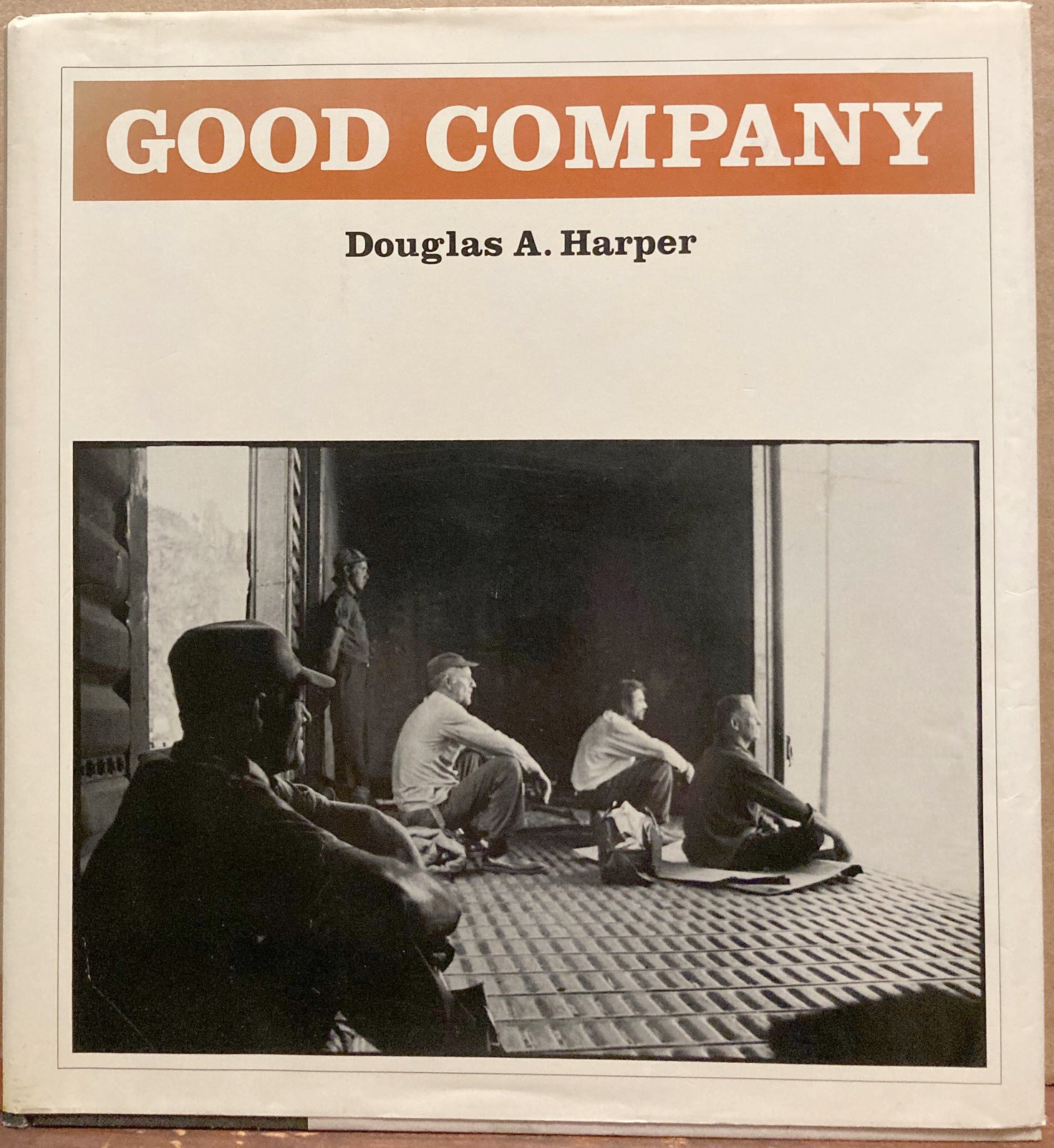
University of Chicago Press, 1982. ISBN 0-226-31686-6. Stated 1st printing. Hardcover with dust jacket. Ex-library with trimmed rear flyleaf. Spine label removed showing fading of spine on dust jacket. Very little signs of use. This book is about tramps, especially those who travel on railroad freight trains. Provides detailed information on how to be a hobo and survive on very little or no money. Harper was a sociologist who became a long-time tramp and became part of the tramp fellowship. With 52 photographs by the author. Summary:
Good Company: A Tramp Life (originally published in 1982) is a pioneering work of visual sociology and participant ethnography by sociologist Douglas A. Harper. Based on his fieldwork during the 1970s, Harper climbed onto freight trains and immersed himself in the rapidly vanishing subculture of American railroad tramps.
-
The Journey with "Carl": The core narrative follows Harper’s five-week, multi-thousand-mile journey riding the rails alongside "Carl," a quintessential, veteran tramp. Through Carl, Harper explores the complex unwritten rules, language, and survival strategies of hobo life.
-
A Mobile Labor Force: Rather than reducing tramps to the prevailing stereotype of helpless alcoholics, Harper frames them as a highly independent, mobile working-class subculture. He documents how these men served as a vital seasonal labor force, migrating by train to harvest apple orchards in the Pacific Northwest.
-
Pioneering Visual Sociology: The book is famous for its integration of documentary photography, featuring roughly ninety of Harper’s own high-contrast black-and-white photos. The images capture "hobo jungles," boxcar interiors, and the stark realities of skid row, serving as active ethnographic evidence rather than just passive illustrations.
-
The Transition to Modern Homelessness: In later editions, Harper contrasts the fiercely independent, train-riding "tramp" era with the rise of modern urban homelessness. He explains how changes in agricultural technology, increased post-9/11 rail yard surveillance, and the destruction of inner-city SRO (single room occupancy) housing ultimately dismantled the traditional hobo lifestyle.