Gary Saretzky Photo Books
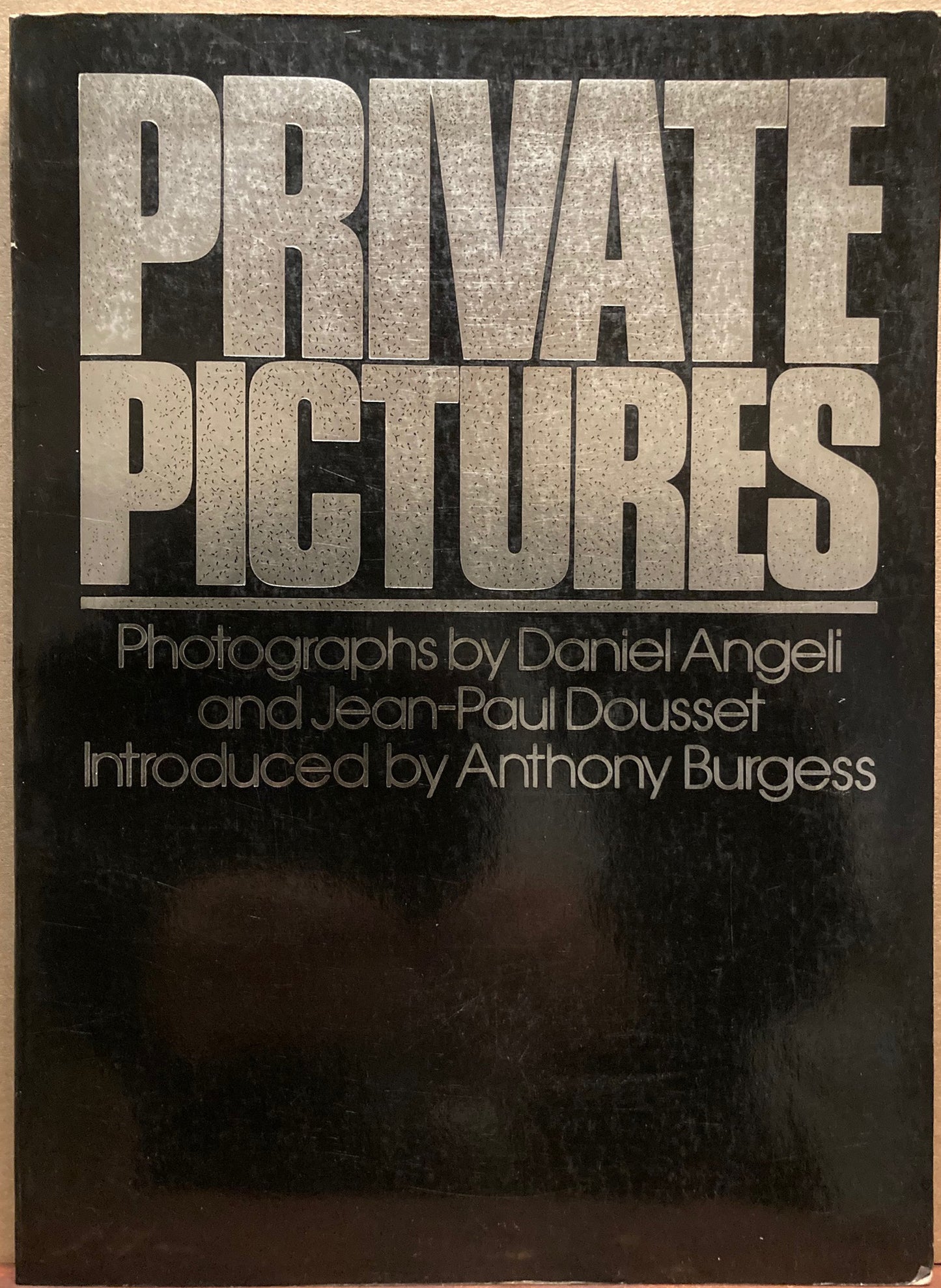
Angeli, Daniel. Private Pictures by Daniel Angeli and Jean-Paul Dousset.
Angeli, Daniel. Private Pictures by Daniel Angeli and Jean-Paul Dousset.
Couldn't load pickup availability
Introduction by Anthony Burgess. NY: Viking, 1980. [Paparazzi style sneaky pictures of celebrities, sometimes naked, including Bridgette Bardot, Elton John, Elizabeth Taylor, Richard Burton, Jack Nicholson, Gregory Peck, Dirk Bogarde, Peter Ustinov, the Queen Mother of England, Prince Charles, Queen Elizabeth, Omar Sharif, Yul Brynner, John Travolta, Giovanni Agnelli, Aristotle and Jacqueline Onassis, Edith Piaf, Maria Callas, Roman Polanski, Sharon Tate, Gloria Swanson, Marlene Dietrich, Salvador Dali, Woody Allen, et al.] Near fine in wraps, as issued, with crimp on cover. Note: slightly different introduction than in the Jonathan Cape edition published in UK. Summary:
Private Pictures, published in 1976 (with an American edition by Viking Press and a famous introduction by Anthony Burgess), is a seminal and controversial volume that effectively defined the modern "paparazzi" aesthetic. It collects the work of Daniel Angeli, often called the "King of the Paparazzi," and Jean-Paul Dousset.
Core Concept: The Death of the Posed Portrait
The book represents a radical departure from the glamorized, studio-approved celebrity photography of the early 20th century. Instead, it offers a raw, intrusive, and "stolen" look at the world’s elite—royalty, film stars, and shipping magnates—caught in moments they never intended for public consumption.
-
The Unvarnished Elite: The collection features famous figures like Jackie Onassis, Mick Jagger, Elizabeth Taylor, and the Windsor family not as icons, but as vulnerable, often irritated human beings.
-
The "Candid" as Truth: The authors argue that a blurred, long-lens shot of a celebrity fleeing a nightclub contains more "truth" than a thousand posed publicity stills.
Key Themes and Visual Style
-
The Paparazzi Aesthetic: The book is characterized by the technical hallmarks of "hit and run" photography: high-grain film, harsh electronic flash, and the slight soft-focus of long telephoto lenses. This gritty look became the visual language of tabloid culture.
-
The Power Dynamic: A recurring theme is the "hunt." The photographs capture the tension between the photographer (the intruder) and the subject (the prey), often resulting in photos of celebrities shielding their faces or lashing out.
-
The Jet Set Era: It serves as a visual history of the 1960s and 70s "Jet Set" lifestyle in locations like St. Tropez, Gstaad, and Monte Carlo.
The Anthony Burgess Introduction
The book is notable for its sophisticated introduction by novelist Anthony Burgess (A Clockwork Orange). Burgess provides a philosophical defense of the paparazzi, arguing that:
-
The public has a natural, if "ghoulish," right to see the reality behind the carefully constructed masks of the famous.
-
Celebrities enter into a "Faustian bargain" where their privacy is the price of their immense wealth and influence.
Significance
Private Pictures is a landmark in the history of photojournalism and sociology. It anticipated the 24-hour celebrity obsession of the digital age and blurred the lines between journalism, art, and voyeurism. While it was criticized at the time for being "vulgar," it is now studied as a vital record of the shifting boundaries of privacy in the late 20th century.
Daniel Angeli (born 1943) is a pioneering French photojournalist, widely hailed as the "king of the paparazzi" for his influential role in shaping modern celebrity photojournalism. Starting his career at the Bernand agency in the late 1950s, Angeli went on to found the Agence Angeli in 1968, capturing unscripted, highly coveted candid moments of high society, world leaders, and Hollywood icons—most notably taking the famous 1977 photograph of Gianni Agnelli diving nude from his yacht. Beyond his relentless pursuit of jet-set figures in St. Tropez and European ski resorts, he established a profound professional relationship with French rock icon Johnny Hallyday, serving as his official personal photographer for over fifteen years. By bridging the gap between invasive celebrity chasing and artful press photography, Angeli redefined 20th-century photojournalism, creating images that became defining pop-culture artifacts of the era