Gary Saretzky Photo Books
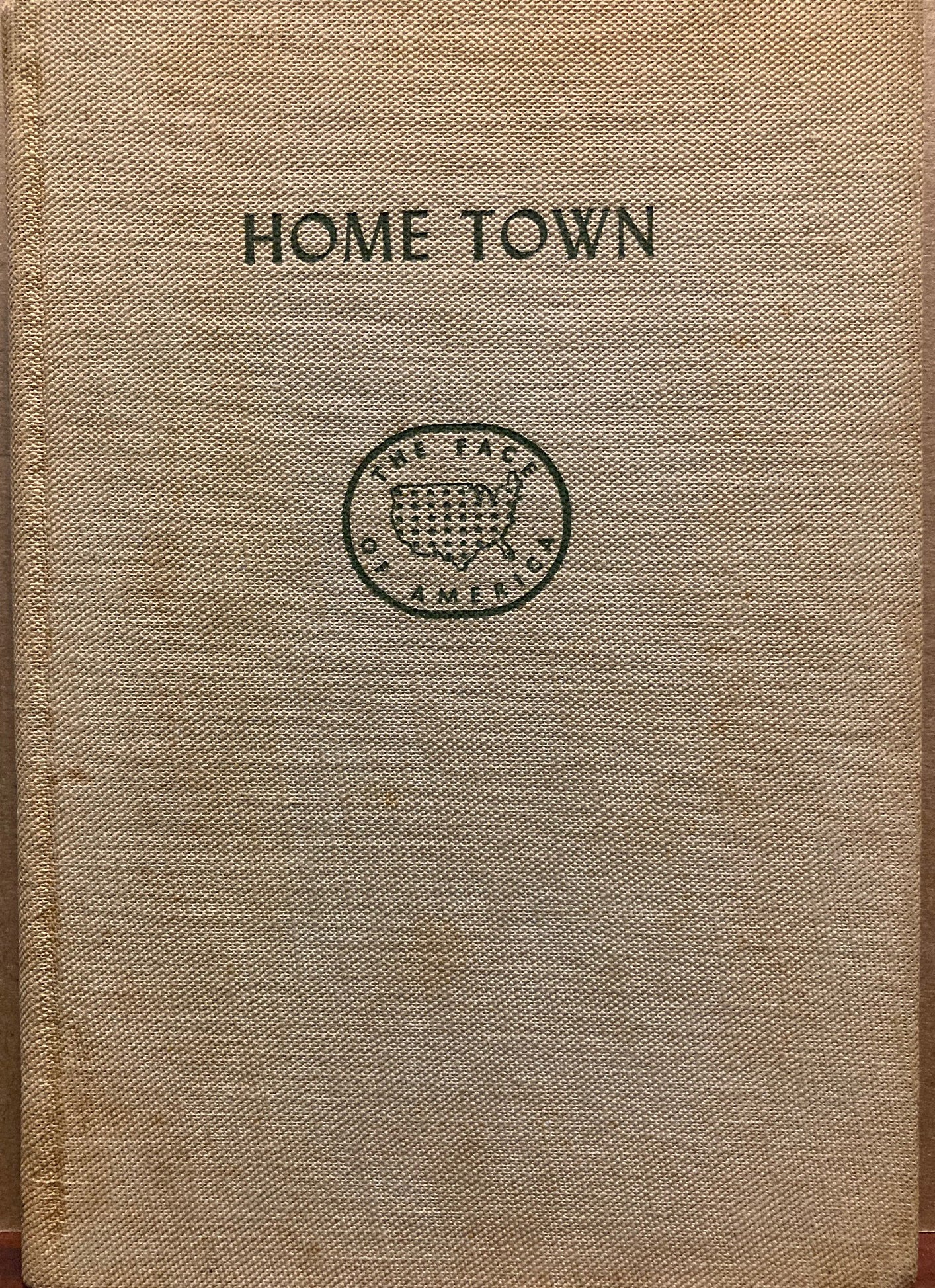
Anderson, Sherwood. Home Town by Sherwood Anderson (FSA photographs)
Anderson, Sherwood. Home Town by Sherwood Anderson (FSA photographs)
Couldn't load pickup availability
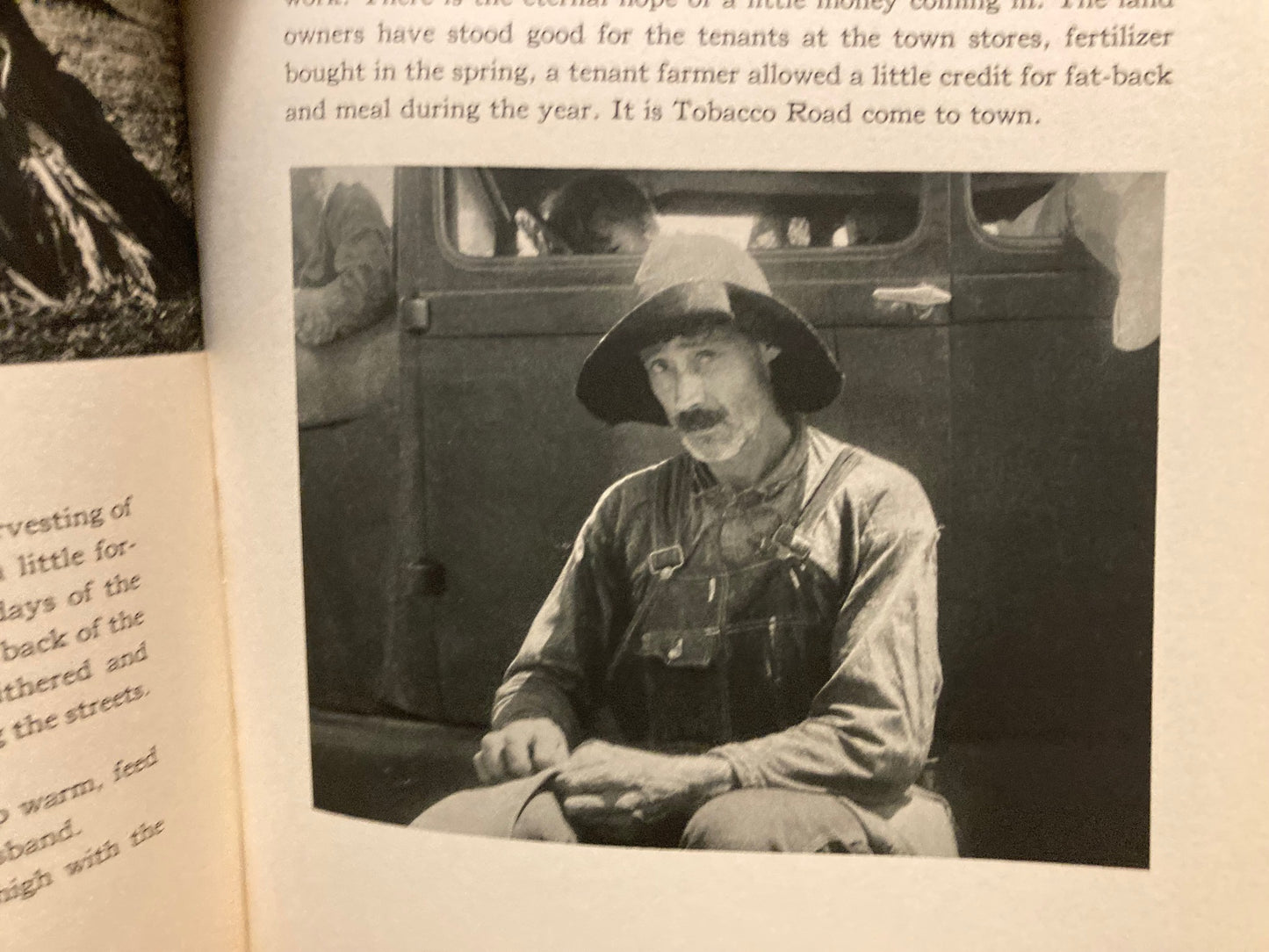
NY: Alliance, 1940. 142 photographs by Farm Security Administration photographers. Photographers include Arthur Rothstein, Russell Lee, Walker Evans, Ben Shahn, John Vachon, Dorothea Lange, Marion Post (later Wolcott), and Carl Mydans. One of several historically significant documentary photography volumes edited by Edwin Rosskam for the Face of America series. Rosskam was editor of the Historical Section, Farm Security Administration, under the direction of Roy Stryker, and selected these photos from FSA files. This book is only one of a handful published during the existence of the FSA illustrated exclusively with FSA photos. Rosskam asked Sherwood Anderson for 20,000 words and Anderson sent him 60,000 and told him to cut it, which he did.] 1st ed., though not stated. Summary:
Home Town, published in 1940 as part of the "Face of America" series, is a poignant collaboration between the celebrated writer Sherwood Anderson and the photographers of the Farm Security Administration (FSA). It serves as a lyrical, semi-nostalgic defense of small-town American life at the end of the Great Depression.
Core Concept: The "Village" as the American Heart
Writing toward the end of his life, Anderson (best known for Winesburg, Ohio) sought to reconcile his earlier criticisms of small-town provincialism with a newfound appreciation for its stability and human scale.
-
The FSA Connection: The book features 142 photographs by legends such as Walker Evans, Dorothea Lange, Marion Post Wolcott, and Russell Lee. While these photographers are often associated with documenting grit and poverty, Anderson selected images that emphasized the "sweetness" and continuity of life in the "towns of the hills and the plains."
-
Counter-Urbanism: Anderson argues that the anonymity of the big city is a "sickness" and that the small town—where everyone is known and accounted for—is the natural habitat for the American spirit.
Key Themes and Structure
-
The "Plain" People: The text and images focus on everyday rituals: the Saturday afternoon stroll, the gossip at the post office, the church social, and the local courthouse.
-
The Stability of Place: Unlike the "migrant" imagery famous in other FSA publications, Home Town focuses on people with roots. It celebrates the barbers, the farmers, and the shopkeepers who stayed put.
-
Modernity vs. Tradition: Anderson acknowledges the arrival of the radio and the automobile, but he insists that the fundamental character of the American village remains unchanged.
Visual and Literary Style
-
Documentary Lyricism: The book is a "photo-text" in the truest sense. Anderson’s prose is simple, rhythmic, and conversational, mirroring the "straight" and unpretentious style of the FSA photographs.
-
A "Curated" Reality: Critics often note that Anderson’s vision is somewhat idealized. By selecting specific FSA photos, he created a version of America that felt timeless and resilient, providing a sense of national comfort on the eve of World War II.
Significance
Home Town is a vital document for understanding the intellectual shift of the 1930s. It represents the moment when America’s leading intellectuals turned away from European modernism and "re-discovered" the domestic landscape.
It remains a beautiful, if complex, tribute to an era of American life that was about to be irrevocably changed by the industrial demands of the coming war. For Anderson, it was a final "love letter" to the people and places that had populated his fiction for decades.
"The town is a living thing. It is a part of the man, as the man is a part of the town." — Sherwood Anderson
Available:
- Cloth, no dust jacket, very good with slight browning to cover and brown stains inside cover from glue used in binding, as often seen in copies of this book. Gift inscription of Fred A. Crane (1857-1941) of Ohio to Dr. Ed and Betsey Hyde of Vancouver, Dec. 4, 1940.
- Cloth (light blue), moderate fading, no dust jacket, without gift inscription, very good.