Gary Saretzky Photo Books
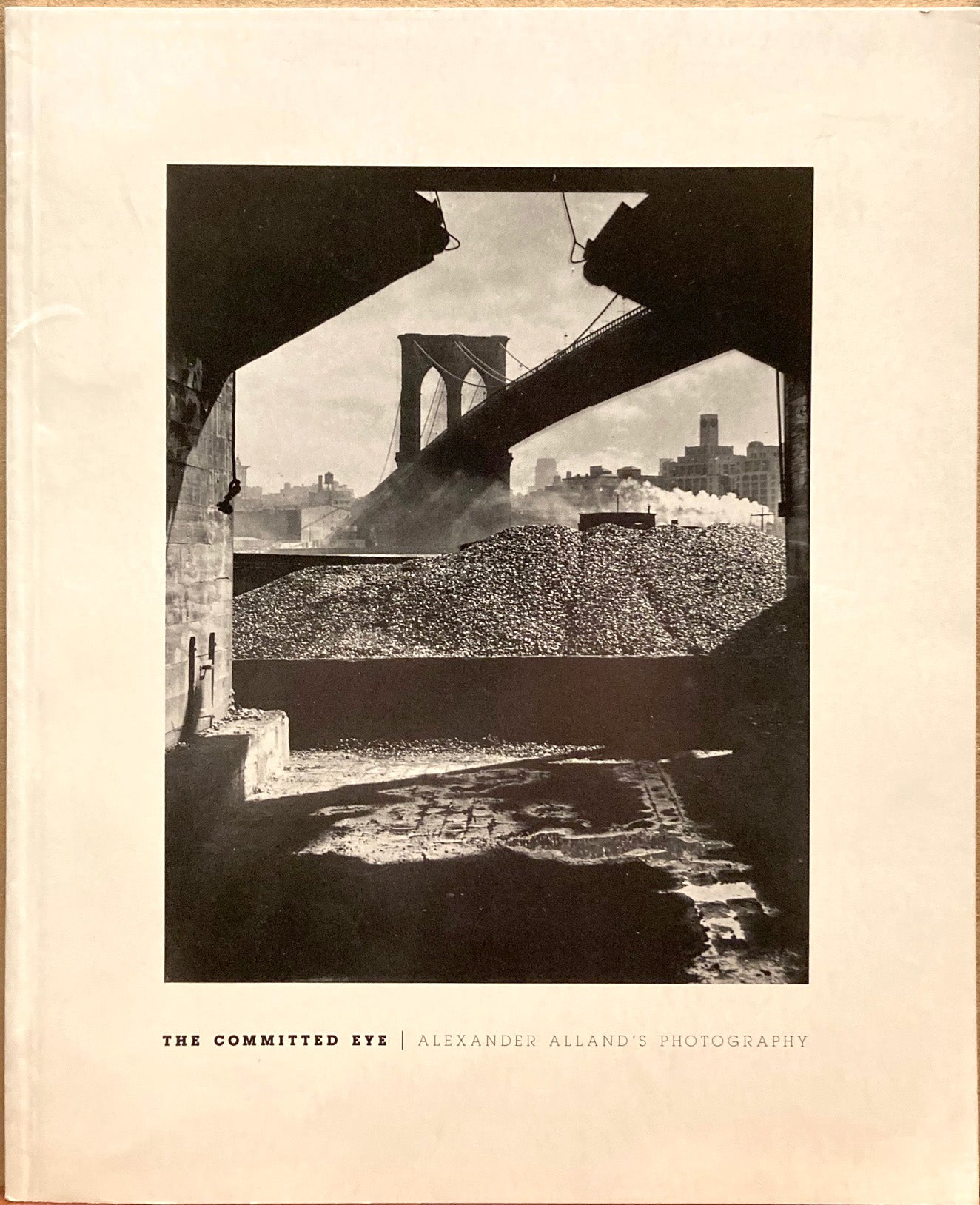
Alland, Alexander. The Committed Eye: Alexander Alland's Photography by Bonnie Yochelson.
Alland, Alexander. The Committed Eye: Alexander Alland's Photography by Bonnie Yochelson.
Couldn't load pickup availability
Museum of the City of New York, 1991. 50 pages. 1st edition, 1st printing, 30 full page photographs by Alexander Alland, plus text illustrations. Essay by Bonnie Yochelson. Published on the occasion of the exhibition at the Museum of the City of New York, 16 April through 27 October, 1991. [Alland, who rescued the photographic archives of Jacob Riis, was an excellent documentary photographer. This well-reproduced sample of his work includes shots of various groups in New York City, including Korean Americans, Gypsies, unemployed, Commandment Keepers Congregation (Jewish African Americans), Indian Americans, et al., as well as views of the city. A few are from his books American Counterpoint (1943) and Portrait of New York (1939).] Wraps, very good. Summary:
The Committed Eye: Alexander Alland’s Photography, published in 1991 by the Museum of the City of New York(in conjunction with an exhibition), is the first major study of Alexander Alland, a Russian-born photographer who used his lens as a tool for social reform and cross-cultural understanding in mid-20th-century America. Written by noted historian Bonnie Yochelson, the book rescues Alland from near-obscurity.
Core Concept: The Artist as Activist
Alexander Alland (1902–1989) was a contemporary of Lewis Hine and Berenice Abbott, but his "commitment" was uniquely focused on the immigrant experience and the defense of ethnic diversity. Yochelson argues that Alland’s work was a deliberate counter-narrative to the rising nativism and racial tensions of the 1930s and 40s.
-
Documenting the "Melting Pot": Alland’s most famous work involves his intimate portraits of New York’s diverse ethnic enclaves. He didn't just photograph people; he photographed the survival of their traditions within the American landscape.
-
The Collective Spirit: The "Committed Eye" refers to Alland’s belief that photography should serve a moral purpose—specifically to foster tolerance and combat prejudice.
Key Series and Contributions
Yochelson organizes Alland’s sprawling career into several vital thematic areas:
-
American Counterpoint (1943): This was Alland’s landmark book (with text by Pearl S. Buck). The catalog highlights these images, which juxtaposed different ethnic groups to show their shared humanity and contribution to American democracy during WWII.
-
New York's "Other" Neighborhoods: Extensive documentation of Harlem, Chinatown, and the Jewish Lower East Side. Alland’s style was cleaner and more formal than the gritty "street photography" of the time, favoring a respectful, clear-eyed realism.
-
Historical Preservation: Alland was also a pioneering photo-historian. The book details how he "rediscovered" and preserved the glass-plate negatives of Jacob Riis and Jessie Tarbox Beals, essentially creating the first archives for New York’s social documentary history.
Visual Style and Technique
-
The Heroic Portrait: Alland often photographed his subjects from a slightly low angle, giving ordinary laborers and immigrants a sense of dignity and "monumentality."
-
Clarity over Drama: Unlike the moody, high-contrast work of the Film Noir era, Alland’s prints are characterized by a broad tonal range and sharp detail, reflecting his belief that the "truth" didn't need to be dramatized to be effective.
Significance
Bonnie Yochelson’s monograph is essential for understanding the roots of social documentary in America. It positions Alexander Alland as the "missing link" between the 19th-century reformers like Riis and the later, more subjective documentary photographers of the 1950s.
The book serves as a reminder that during a time of global conflict, Alland was using his camera to build a visual bridge between cultures, making him one of the most vital—if overlooked—humanists in the history of the medium.
"Alland was a man who saw the camera as a weapon against bigotry." — Bonnie Yochelson