Gary Saretzky Photo Books
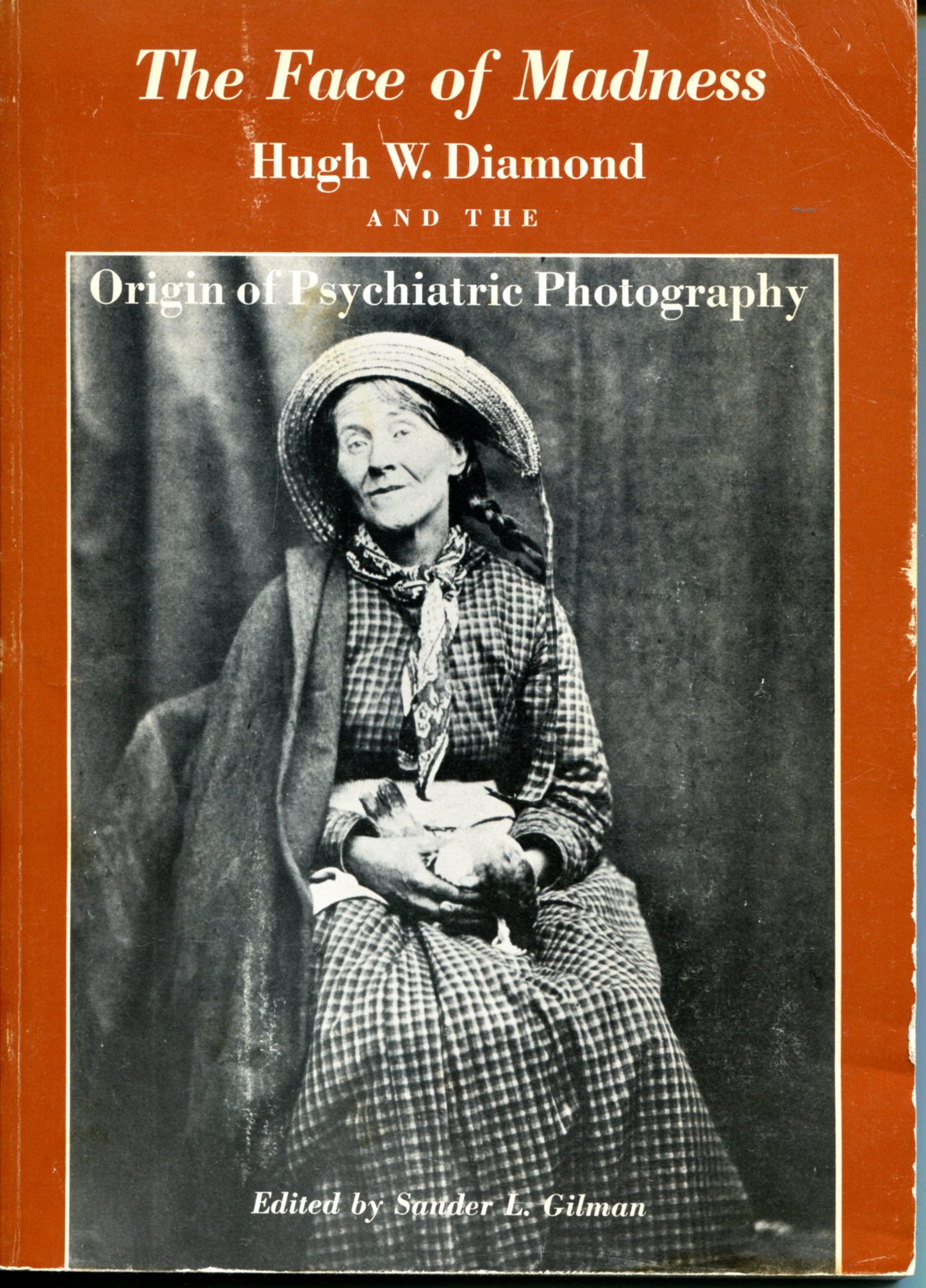
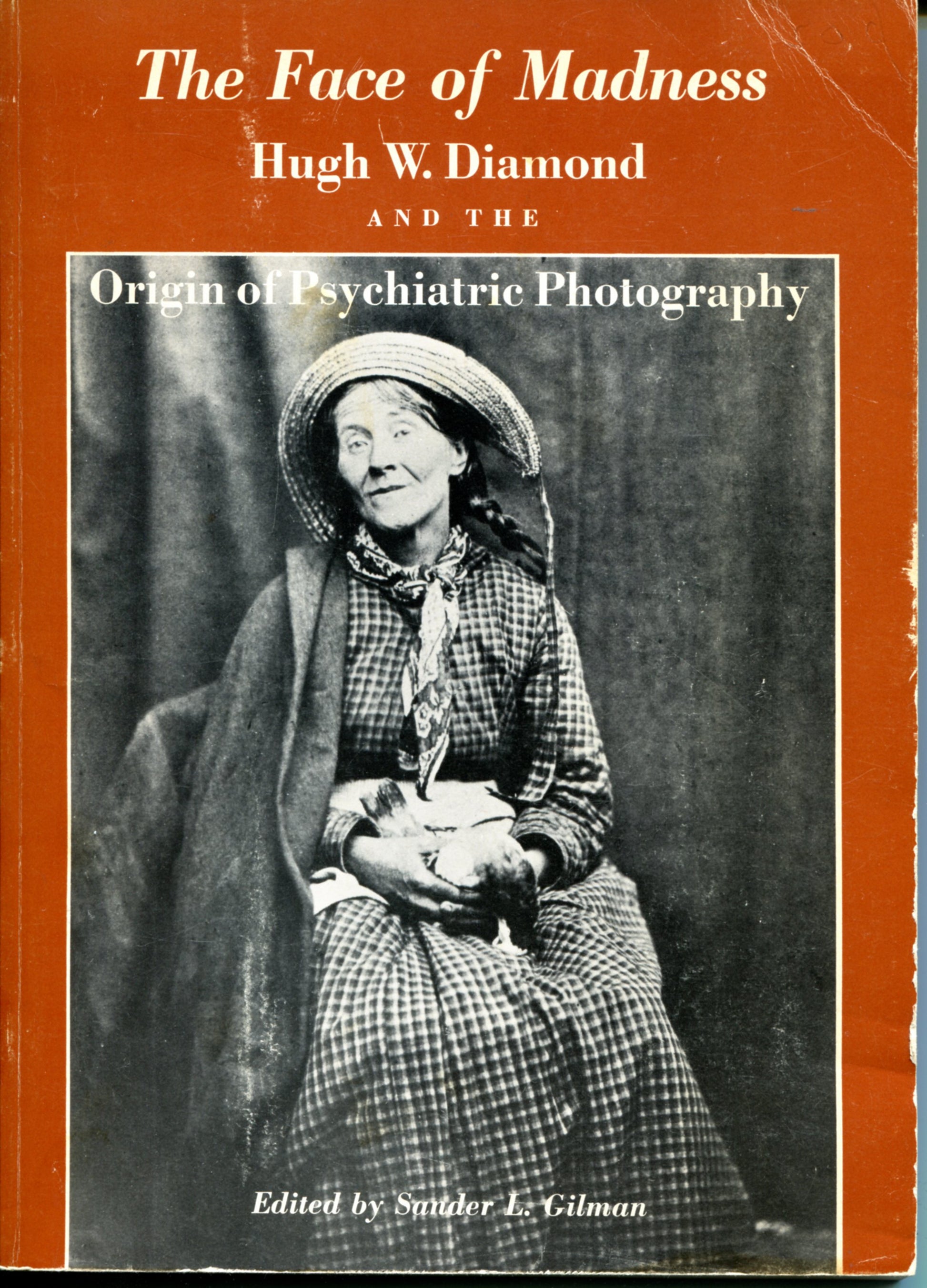
Diamond, Hugh. The Face of Madness. Hugh W. Diamond and the Origin of Psychiatric Photography.
Diamond, Hugh. The Face of Madness. Hugh W. Diamond and the Origin of Psychiatric Photography.
Couldn't load pickup availability
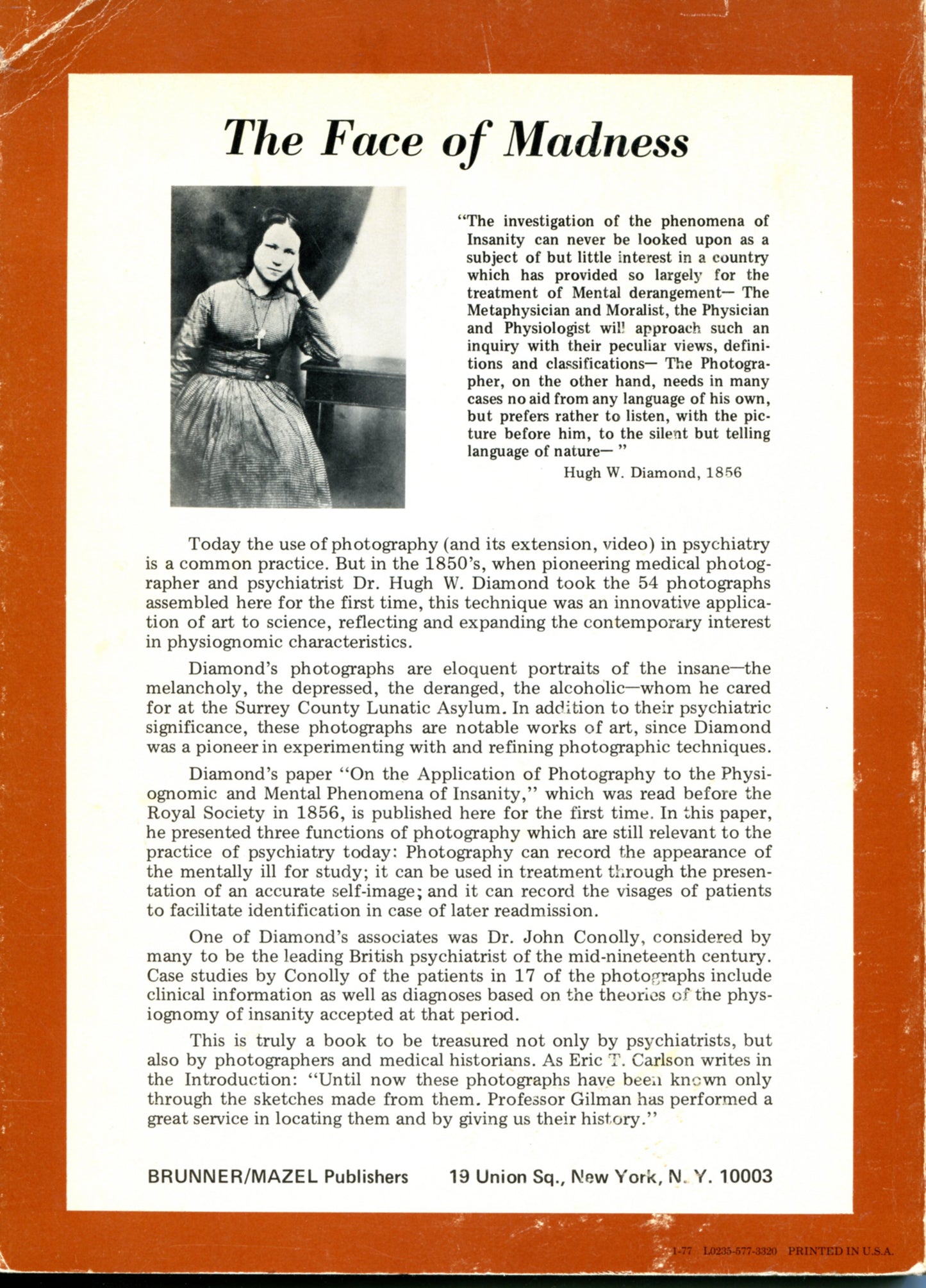
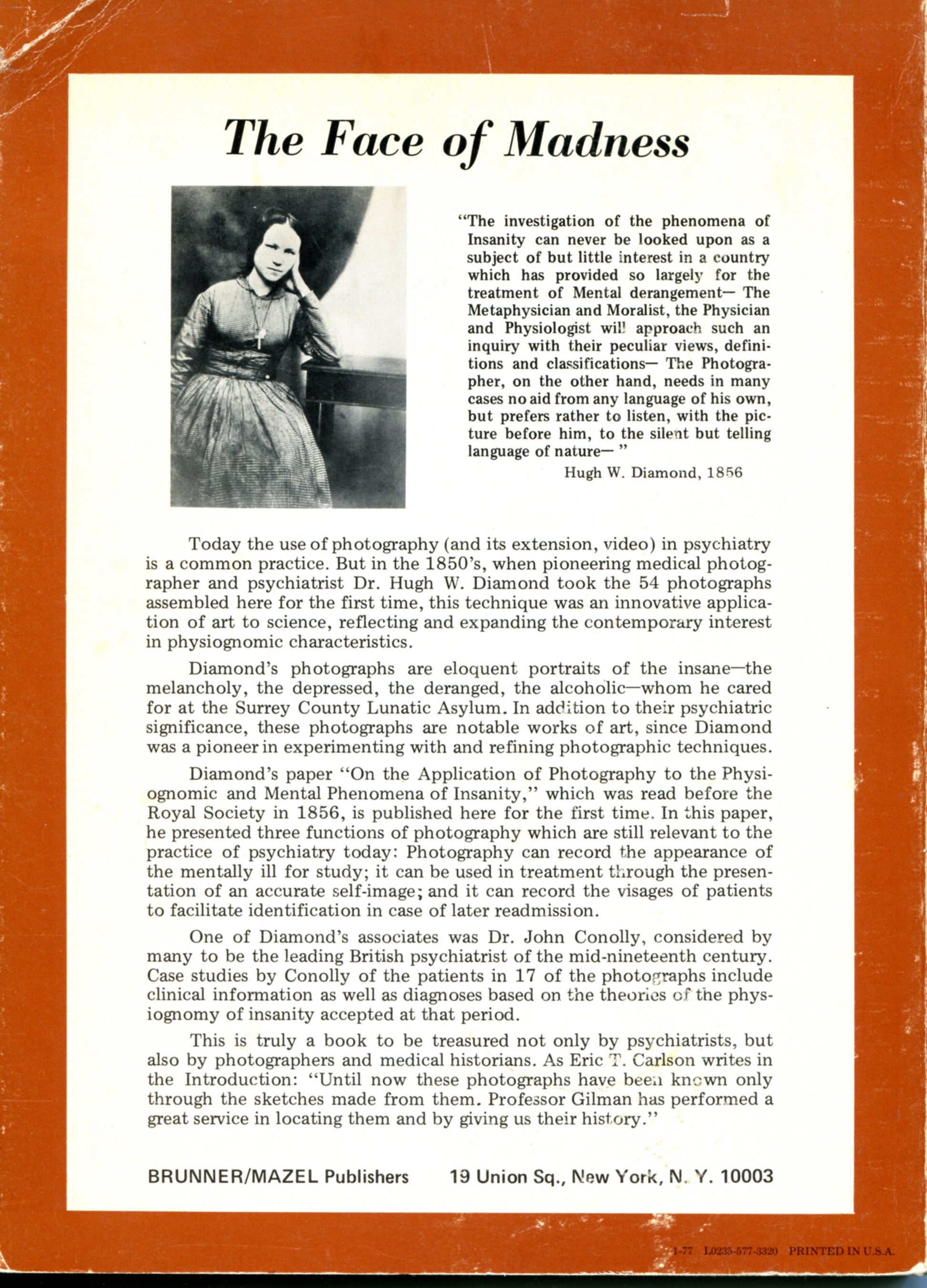
By Sander L. Gilman, ed., Hugh W. Diamond, and John Conolly. Brunner/Mazel, 1976. Psychiatry, mental illness, and portraits of patients in the nineteenth century illuminate an important aspect of the history of medicine. Wraps, good with creases to corners of cover and wear to extremities. Not to be confused with later reprints. Summary:
The Face of Madness: Hugh W. Diamond and the Origin of Psychiatric Photography (1976), edited by medical historian Sander L. Gilman, is a groundbreaking scholarly volume that examines the intersection of early photography, medical science, and Victorian psychiatry.
Key Details & Highlights
-
Publisher & Format: Published by Brunner/Mazel in 1976 as a 111-page illustrated volume, featuring historical essays alongside 54 calotype and collodion portraits taken in the 1850s.
-
Subject Matter: Reproduces the clinical portraits made by Dr. Hugh Welch Diamond, a Victorian psychiatrist and superintendent of the Female Department at the Surrey County Asylum in England.
-
Core Thesis: Explores Diamond's pioneering belief that photography could serve three key psychiatric functions: recording patient physiognomy for diagnosis, aiding in treatment by showing patients their own likenesses, and providing secure visual identification for asylum records.
-
Historical Context: Includes Diamond's landmark 1856 paper On the Application of Photography to the Physiognomic and Mental Phenomena of Insanity delivered to the Royal Society, framed by Sander L. Gilman’s critical analysis of 19th-century theories linking facial expression to mental illness.
-
Significance: Serves as a foundational primary text in the history of medical photography, visual culture, and the ethics of clinical representation.