Gary Saretzky Photo Books
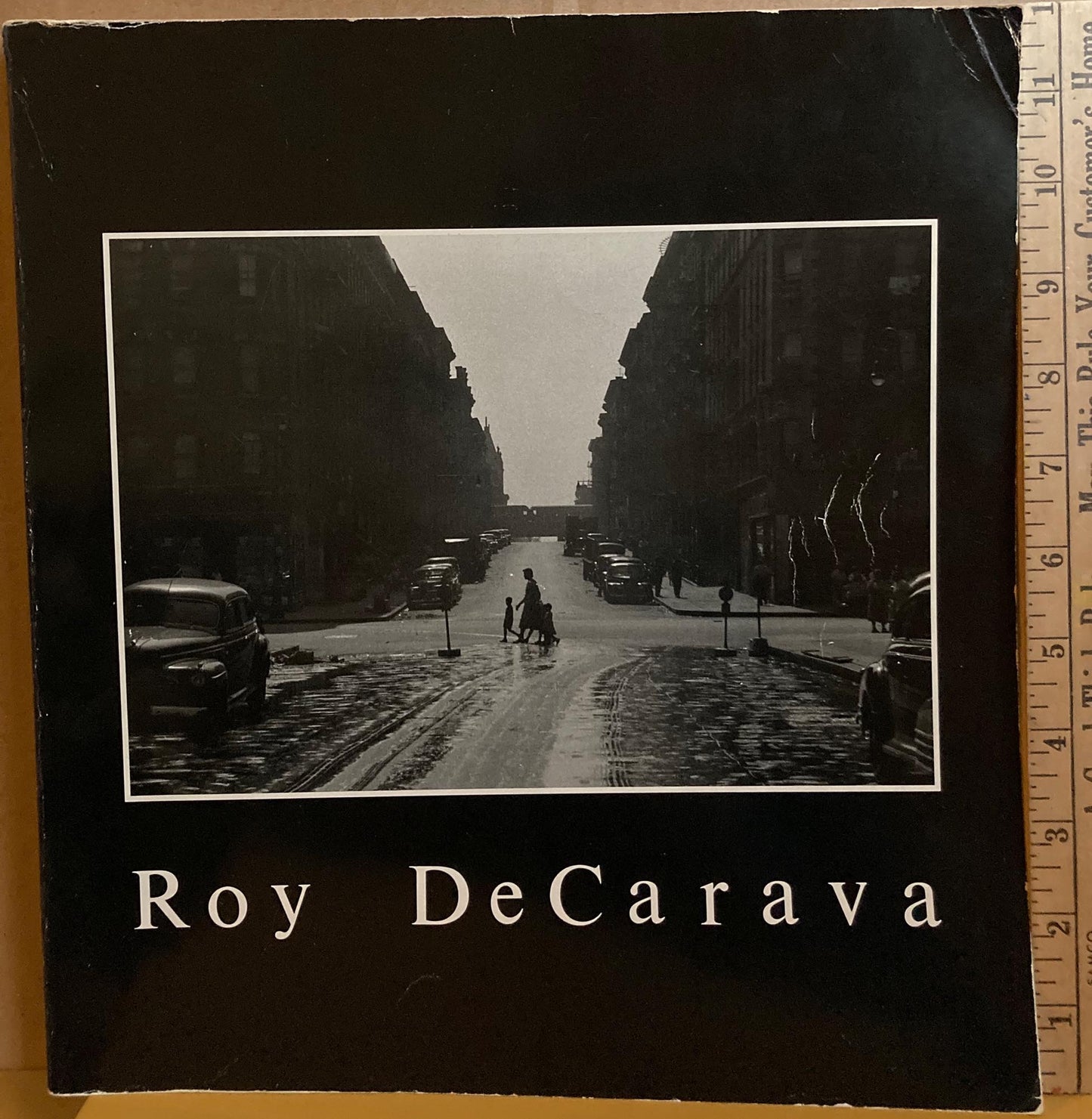
DeCarava, Roy. Roy DeCarava. Major monograph on the esteemed photographer.
DeCarava, Roy. Roy DeCarava. Major monograph on the esteemed photographer.
Couldn't load pickup availability
Edited by Jim Alinder. Friends of Photography, 1981. Untitled 27. 192 pages. Member's Edition. Wraps, good oblong heavy volume with cover wear, scratches, and crimps. Spine edges retouched in black pigmented ink. Pages fine. Summary:
Roy DeCarava: Photographs (published in 1981 by The Friends of Photography as Monograph 27 in their Untitledseries) is the first major retrospective monograph dedicated to the work of pioneering African American photographer Roy DeCarava. Edited by James Alinder, the publication includes a preface by Alinder, an extensive biographical essay by art historian Sherry Turner DeCarava, and 82 finely printed duotone plates spanning DeCarava's career from the late 1940s through the 1970s.
Core Themes & Subject Matter
-
Harlem & Everyday Black Life: The volume focuses heavily on DeCarava's intimate portraits of Harlem's streets, tenement apartments, hallways, and everyday residents, celebrating the beauty, dignity, and quiet moments of Black life without resorting to social realism or documentary sensationalism.
-
Mastery of Shadow & Dark Tones: The selection emphasizes DeCarava’s trademark dark printing style, showcasing his ability to achieve rich tonal nuance within deep shadows and subtle highlights rather than relying on high-contrast lighting.
-
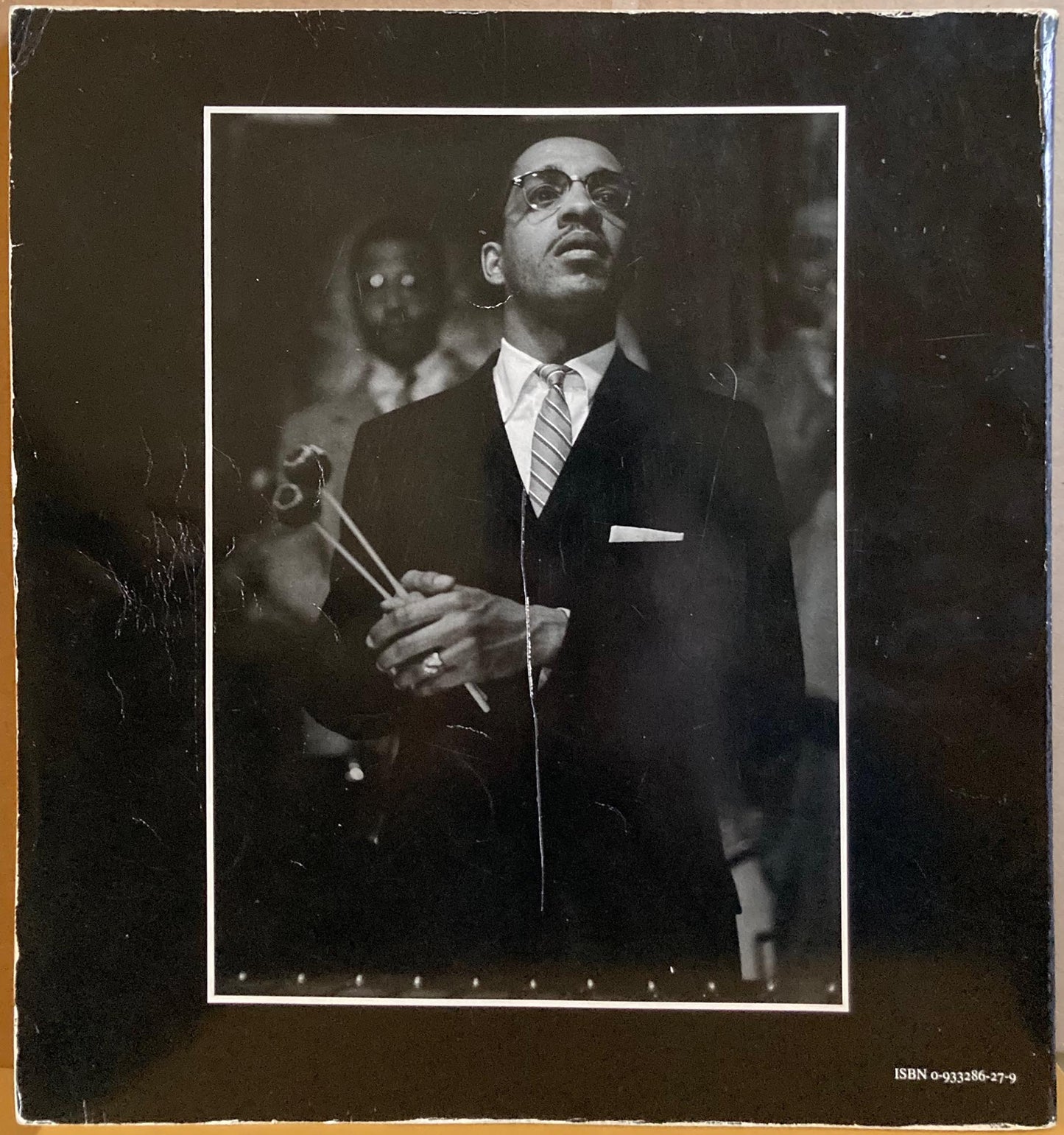
Jazz & Musical Culture: Highlighting DeCarava's deep engagement with music, the book features iconic, atmospheric portraits of legendary jazz musicians—including John Coltrane, Miles Davis, Billie Holiday, and Duke Ellington—captured in performative intensity and contemplative off-stage moments.
-
Artistic Autonomy: The essays and image selection highlight DeCarava's commitment to photography as a fine art form, documenting his work as a pioneer who resisted commercial editorial constraints to maintain complete creative control over his vision and prints.
Roy DeCarava (1919–2009) was an influential American photographer and educator whose work redefined the visual narrative of Harlem and urban Black culture. Born and raised in Harlem, New York, DeCarava initially studied painting, printmaking, and drawing at the Cooper Union and the Harlem Community Art Center before adopting photography as his primary medium in the late 1940s. In 1952, he became the first African American photographer to be awarded a Guggenheim Fellowship, which supported the work that led to his seminal 1955 collaborative book with poet Langston Hughes, The Sweet Flypaper of Life. Beyond his own photographic output, DeCarava was a tireless advocate for photography as a fine art and for equal access in the art world; he founded A Gallery for Advertising in 1955—one of the first galleries devoted exclusively to photography—and helped to establish the Kamoinge Workshop in 1963 to support Black photographers. A longtime professor of art at Hunter College, DeCarava received the National Medal of Arts in 2006, leaving behind a legacy celebrated for its masterly control of light and shadow, emotional depth, and poetic humanism.
Note: Roy DeCarava was born in New York City on December 9, 1919. The first Black artist to receive a Guggenheim Fellowship in Photography in 1952, DeCarava became a well-known photographer in 1955, when his work was included in The Family of Man exhibit at the Museum of Modern Art and the first edition was published of his book, Sweet Flypaper of Life, with text by Langston Hughes. Later reprinted, Sweet Flypaper of Life provides a warm depiction of family life in Harlem. In the mid-1960s, DeCarava was president of Kamoinge, the group of African American photographers that documented Harlem and still exists with an expanded mission. DeCarava, whose work included photographing jazz musicians, went on to a distinguished teaching career at Hunter College in New York. He died on October 27, 2009.