Gary Saretzky Photo Books
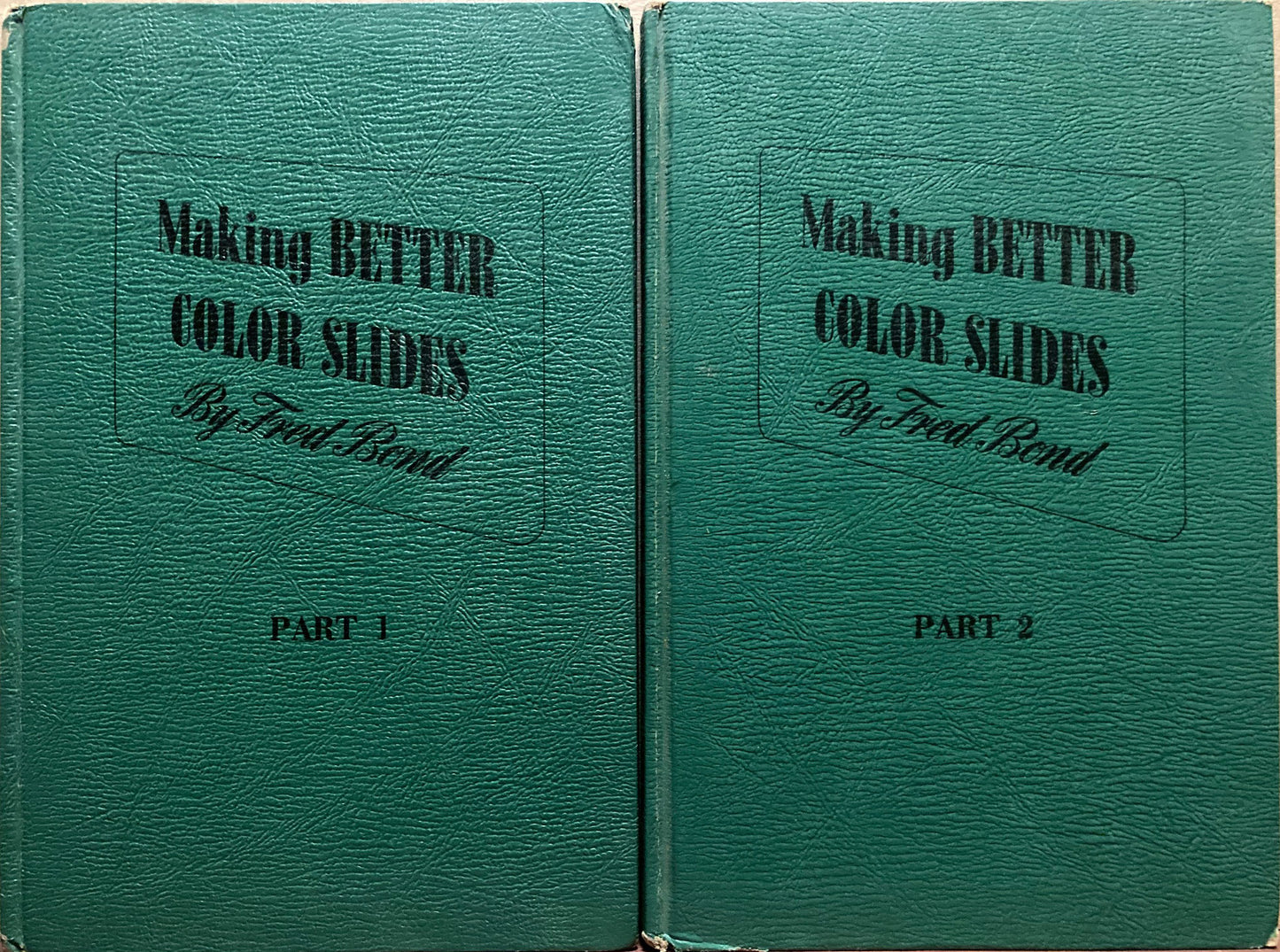
Color. Making Better Color Slides by Fred Bond.
Color. Making Better Color Slides by Fred Bond.
Couldn't load pickup availability
Camera Craft, 1952. 2 vols. [Inc. color plates of the winners of the Fred Bond Color Slide Contest.] Extremities worn, very good, no dust jackets. Summary:
Published by Camera Craft in the early 1950s, Fred Bond’s two-volume series, "Making Better Color Slides," served as a definitive guide for amateur and semi-professional photographers transitioning into the then-rapidly evolving world of color film.
The work is characterized by its technical rigor and practical focus on the unique challenges of color transparency (slide) film, which was much less forgiving than black-and-white media.
Core Philosophy
Bond’s central thesis is that "good" color photography is not a matter of luck but of meticulous control over light, exposure, and composition. He emphasizes that color adds a new dimension to photography that requires a different mental approach than monochromatic shooting.
Key Content and Themes
-
The Science of Exposure: Bond provides exhaustive detail on using light meters effectively. Because slide film has a narrow "latitude" (the range of brightness it can capture), he stresses the importance of exposing for the highlights to prevent "blown out" whites.
-
Color Harmony and Theory: A significant portion of the books is dedicated to aesthetic choices. Bond explains how different colors interact within a frame—discussing complementary colors, warm vs. cool tones, and how to use color to create depth or focus.
-
Lighting Quality: He distinguishes between the "quantity" of light and the "quality" of light (color temperature). He guides readers on how to manage the "blueness" of shadows and the "warmth" of golden-hour light to ensure skin tones and landscapes look natural.
-
Technical Precision: The series covers the specifics of 35mm and larger roll-film formats, the use of filters (like polarizers and color-correction filters), and the mechanics of the camera itself.
-
Composition: Bond translates classical art principles into the medium of the slide, teaching photographers how to lead the viewer's eye through a scene using color contrast and geometric lines.
Structure
-
Part I: Generally focuses on the fundamentals: equipment, film types (like Kodachrome and Ektachrome), exposure basics, and outdoor lighting.
-
Part II: Dives deeper into advanced topics: indoor/artificial lighting, flash photography, portraiture, and specialized subjects like flowers or night scenes.
Historical Significance
At the time of publication, the series was highly regarded for making complex optical and chemical concepts accessible to the hobbyist. Today, it is a sought-after collectible for those interested in the "Kodachrome era" of photography, offering a window into the mid-century aesthetic and the disciplined technical craft required before the advent of digital sensors.