Gary Saretzky Photo Books
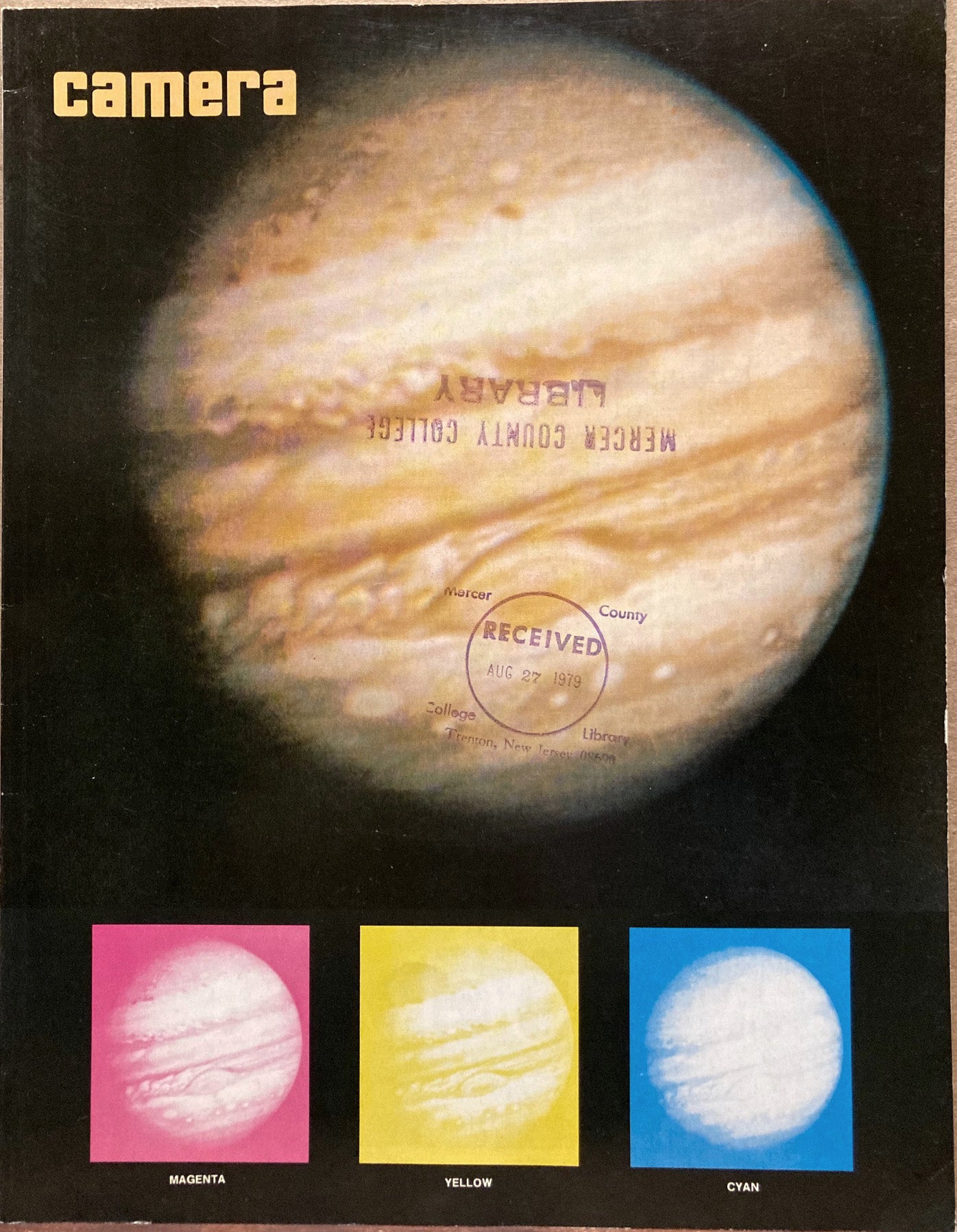
Camera, July 1979. Associated Press special issue. Volume 58, Number 7. Photojournlism.
Camera, July 1979. Associated Press special issue. Volume 58, Number 7. Photojournlism.
Couldn't load pickup availability
Edited by Allan Porter. [Contains some of the best known images in the history of photojournalism, including the attempted assassination of New York Mayor William J. Gaynor by Bill Warneke; Ruth Snyder being executed in electric chair by Thomas Howard; Valentine's Day Massacre of mobsters in Chicago by Hack Miller; the dirigible zeppelin Hindenburg on fire by Murray Becker; attack on Pearl Harbor, December 7, 1941; Paris Is Free Again by Pete Carroll; Iwo Jima flag raising by Joe Rosenthal; Hiroshima atomic bomb mushroom cloud by Sgt. George R. Caron; The Bridge at Pyongyang, Korea by Max Desfor; The King of Britain, George VI is dead by Ron Case; Lt. Col. Loan shooting Viet Cong by Eddie Adams; Jack Ruby shooting Lee Harvey Oswald by Bob Jackson; Patty Hearst holding up bank by video surveillance camera, and many others.] Ex-library copy with library stamp on cover, otherwise VG+. Summary:
The July 1979 issue of Camera (Volume 58, No. 7) is a landmark edition of the prestigious Swiss magazine, guest-edited and curated to celebrate the history and impact of the Associated Press (AP). It serves as a rigorous examination of the evolution of photojournalism from a technical and societal perspective.
Core Focus: The AP and the "Wire"
The issue provides a deep dive into how the Associated Press transformed the speed and nature of news. It traces the trajectory from early physical transport of film to the revolutionary Wirephoto technology, which allowed images to be transmitted via telephone lines.
1. The Aesthetic of the "Straight" News Image
Under the direction of longtime editor Allan Porter, the issue explores the specific visual language of AP photographers. Unlike the "art" photography usually featured in Camera, these images are presented for their:
-
Immediacy: The "on-the-spot" quality of breaking news.
-
Objective Witness: The role of the photographer as a transparent conduit for global events.
-
Narrative Power: How a single frame can summarize a complex geopolitical conflict.
Key Historical Portfolios
The magazine features a curated selection of iconic AP images that defined the 20th century. This includes coverage of:
-
Major Conflicts: From the visceral front-line reporting of World War II and the Korean War to the controversial and influential imagery of the Vietnam War.
-
Domestic Politics: Significant moments in American civil rights and presidential history.
-
Human Interest and Sports: Capturing the "smaller" moments of daily life and athletic achievement that rounded out the AP’s global wire.
Technical and Philosophical Essays
Beyond the photographs, this issue is valued for its scholarly approach to the profession:
-
The Evolution of Transmission: Detailed accounts of the technological leaps required to move images across oceans in minutes rather than days.
-
The Ethics of Photojournalism: Discussions on the responsibility of the agency in selecting which images are distributed to thousands of newspapers worldwide, shaping public perception of history.
-
The Professional Identity: Portraits of the often-anonymous photographers who worked behind the AP credit line, risking their lives to "get the picture."
Summary Takeaway
Camera, July 1979 is an essential tribute to the machinery of news. By dedicating an entire issue of an "art" journal to a news agency, it successfully argues that the rapid-fire, functional imagery of the Associated Press constitutes a vital and permanent part of the world's visual heritage. It is a definitive record of how the "wire" changed the way we see the world.