Gary Saretzky Photo Books
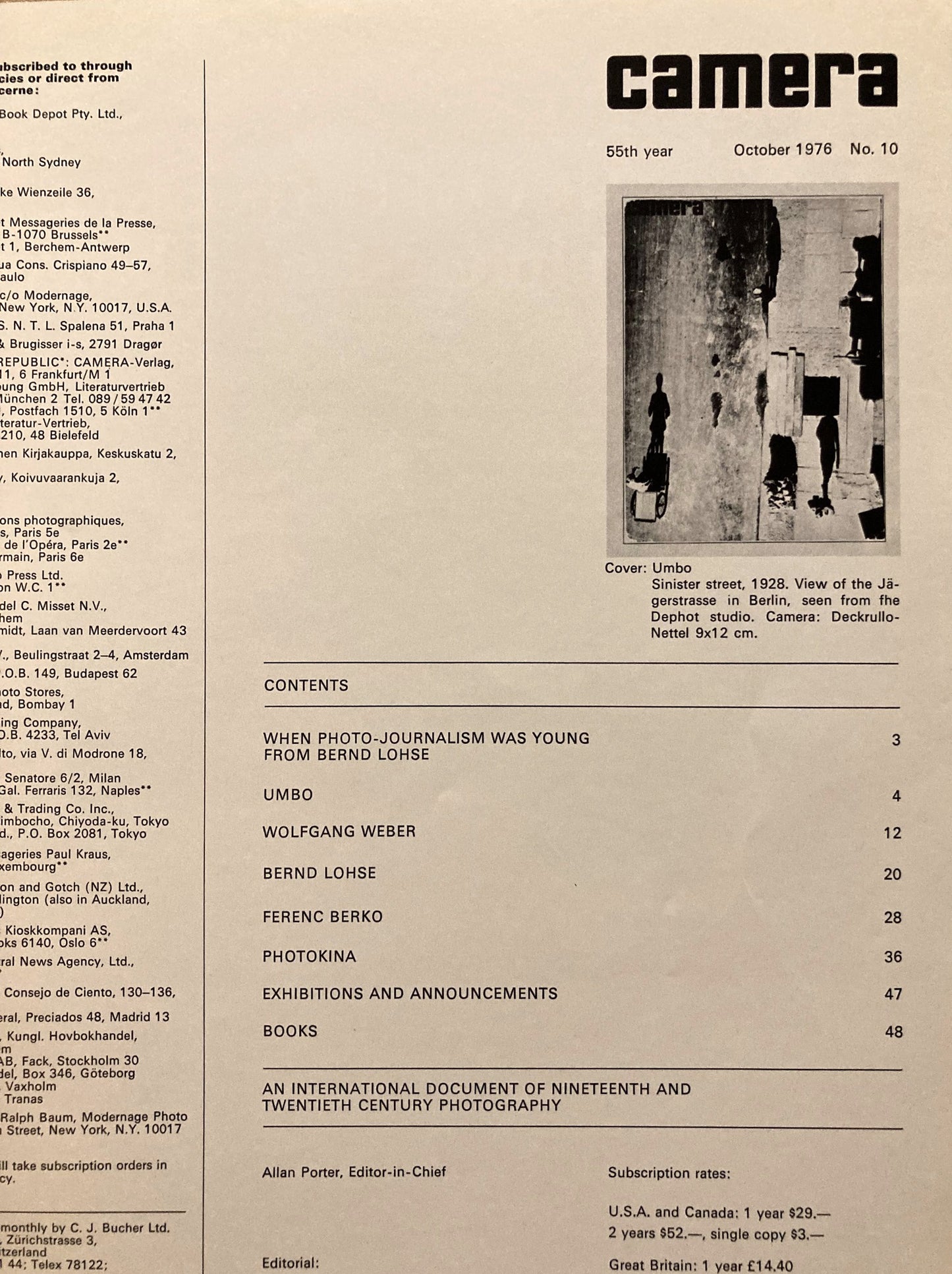
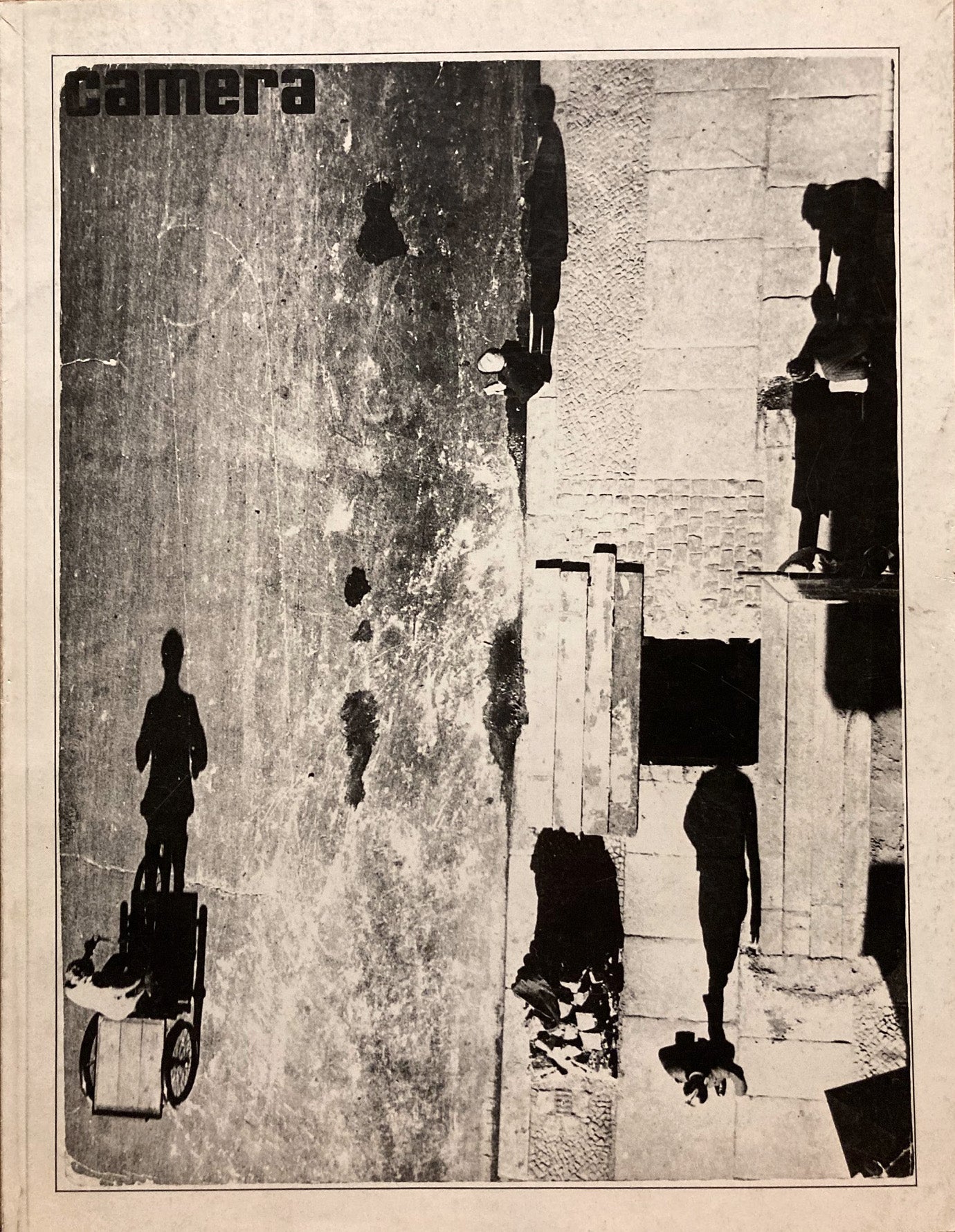
Camera, October 1976. Volume 55, Number 10. Photojournalism.
Camera, October 1976. Volume 55, Number 10. Photojournalism.
Couldn't load pickup availability
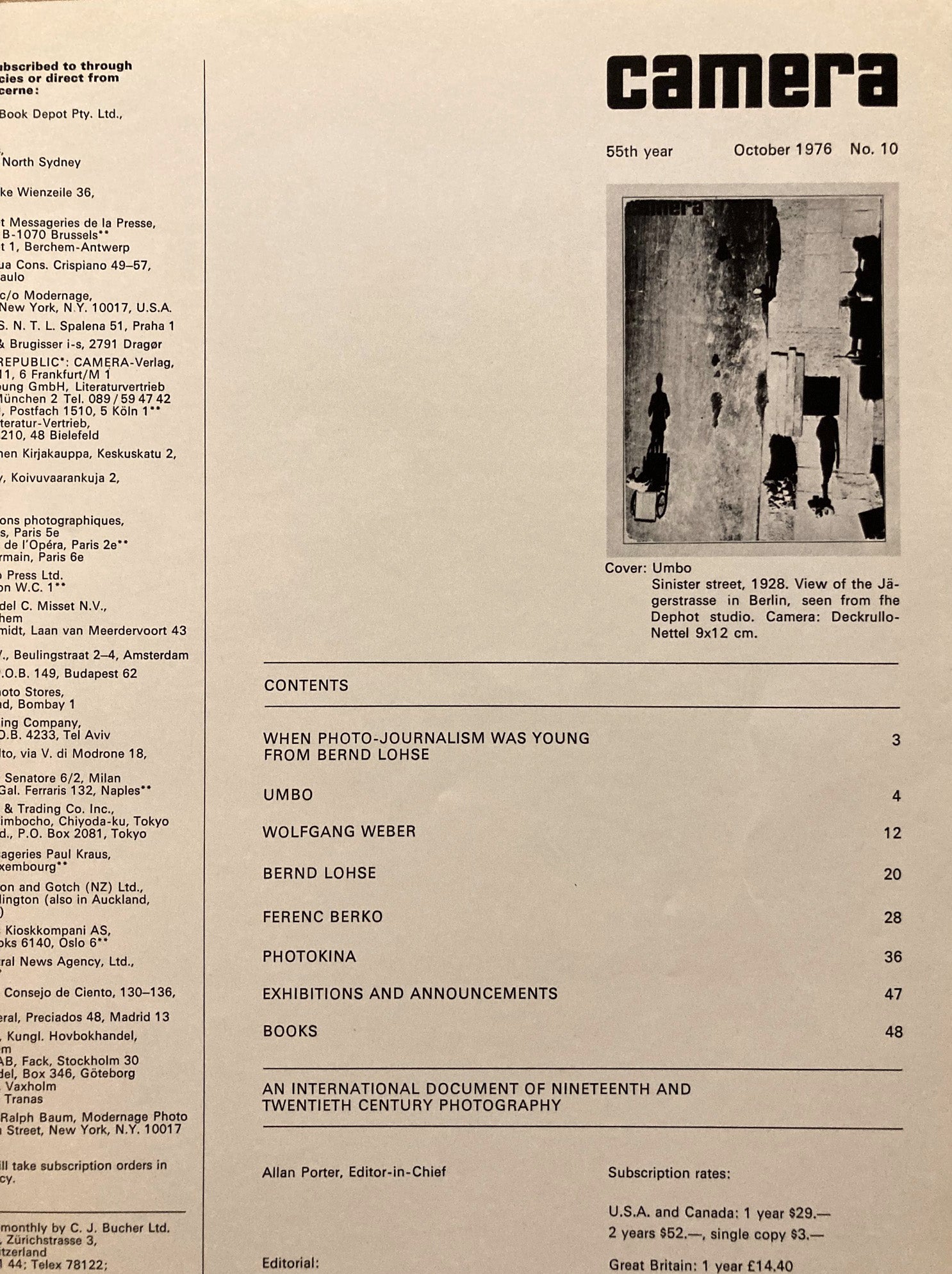
Includes "When Photo-Journalism Was Young" featuring photographers: Bernd Lohse; Umbo; Wolfgang Weber; and Ferenc Berko. VG+. Summary:
The October 1976 issue of Camera (Volume 55, No. 10) is a scholarly retrospective titled "Photojournalism – The Pioneer Days." Curated by editor Allan Porter, this edition serves as a historical bridge, tracing the roots of modern reportage back to the golden age of German and European picture magazines of the 1920s and 30s.
The Historical Context: The Birth of the "Picture Story"
The issue argues that photojournalism was not merely the act of taking news photos, but a revolution in sequencing and narrative. It focuses on the era when the Leica camera and high-speed film allowed photographers to move from static, posed shots to the dynamic, candid "candid" style that defined the Berliner Illustrirte Zeitung and Münchner Illustrierte Presse.
Featured Pioneers
1. Bernd Lohse
A central figure in the issue, Lohse was both a practitioner and a historian of the craft.
-
Contribution: The issue highlights his role in the 1930s as a traveler-journalist. His work exemplifies the "human interest" story, blending cultural observation with a sophisticated, modernist eye.
2. Umbo (Otto Umbehr)
Umbo represents the intersection of the Bauhaus and journalism.
-
Visual Style: Known for his bohemian portraits and dramatic, "New Vision" perspectives (high-angle shots and silhouettes).
-
Impact: The issue showcases how Umbo brought a surrealist, avant-garde sensibility to the pages of popular magazines, proving that news imagery could also be high art.
3. Wolfgang Weber
Weber is presented as the quintessential "globe-trotting" reporter.
-
The Technical Leap: He was one of the first to utilize the small-format camera to document social structures in Africa, Asia, and the Middle East.
-
Narrative: His work in this issue emphasizes the sociological depth of early photojournalism, moving beyond simple headlines to explore daily life in distant cultures.
4. Ferenc Berko
Though later known for his work in Aspen and his color experiments, the issue focuses on Berko’s early, formalist approach to documentary.
-
The International Eye: His contributions highlight the transition of these European pioneers as they moved across borders (Berko worked in Germany, London, and India), carrying the "European eye" to a global stage.
Editorial Significance
Allan Porter uses this issue to remind readers that the "decisive moment" (often attributed to Cartier-Bresson) had its foundations in the rigorous work of these earlier, often overlooked, photographers. By profiling these four individuals, the magazine documents:
-
The transition from glass plates to 35mm film.
-
The shift from the single iconic image to the multi-page photo essay.
-
The influence of the German avant-garde on the future of American magazines like LIFE and Look.
Summary Takeaway
Camera, October 1976 strips away the contemporary polish of the 1970s to show the grit, experimentation, and intellectual curiosity of the men who first taught the world how to "read" a photographic story. It remains a primary resource for anyone studying the history of the European illustrated press.