Gary Saretzky Photo Books
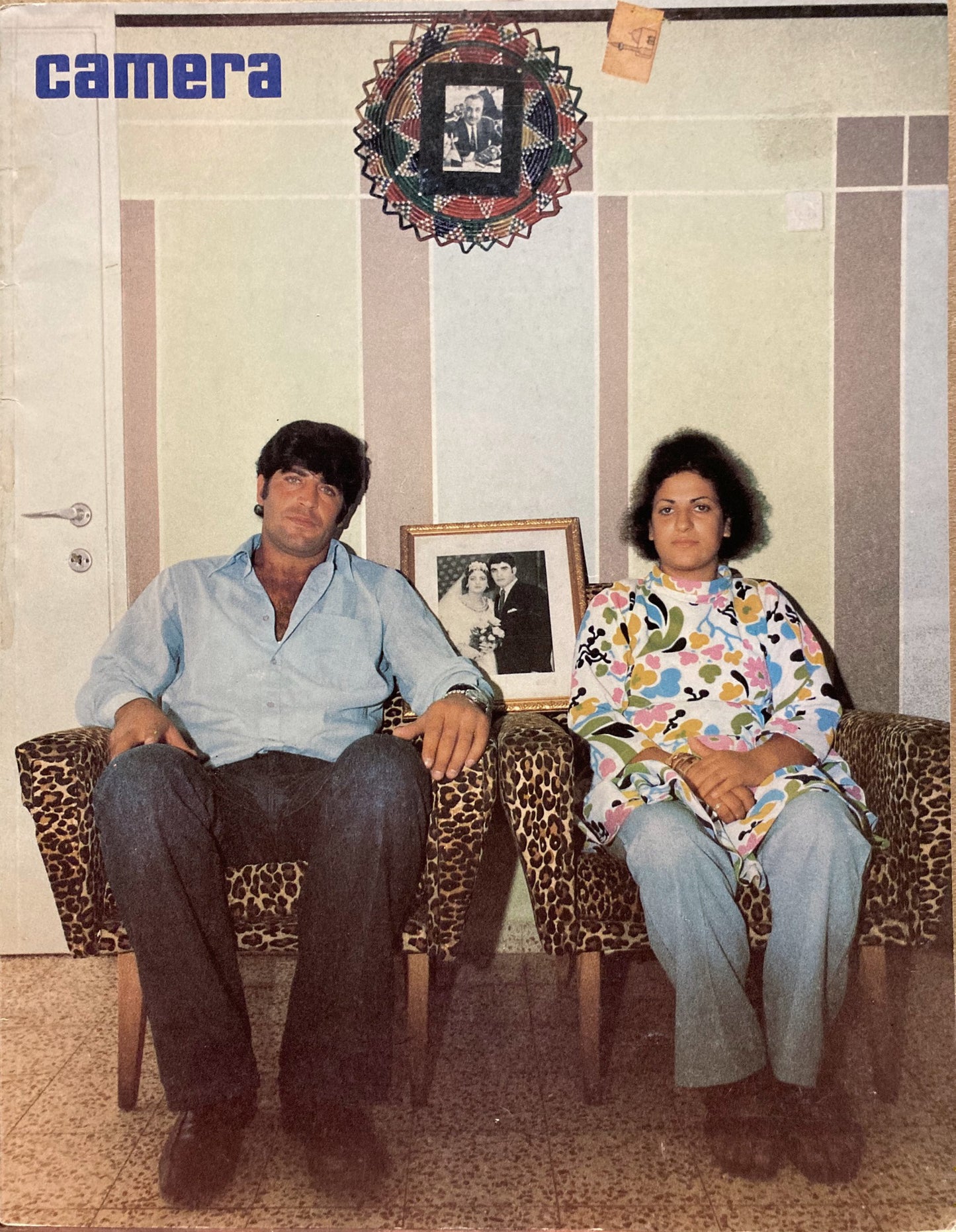
Camera, March 1976. Volume 55, Number 3. Investigative Photography.
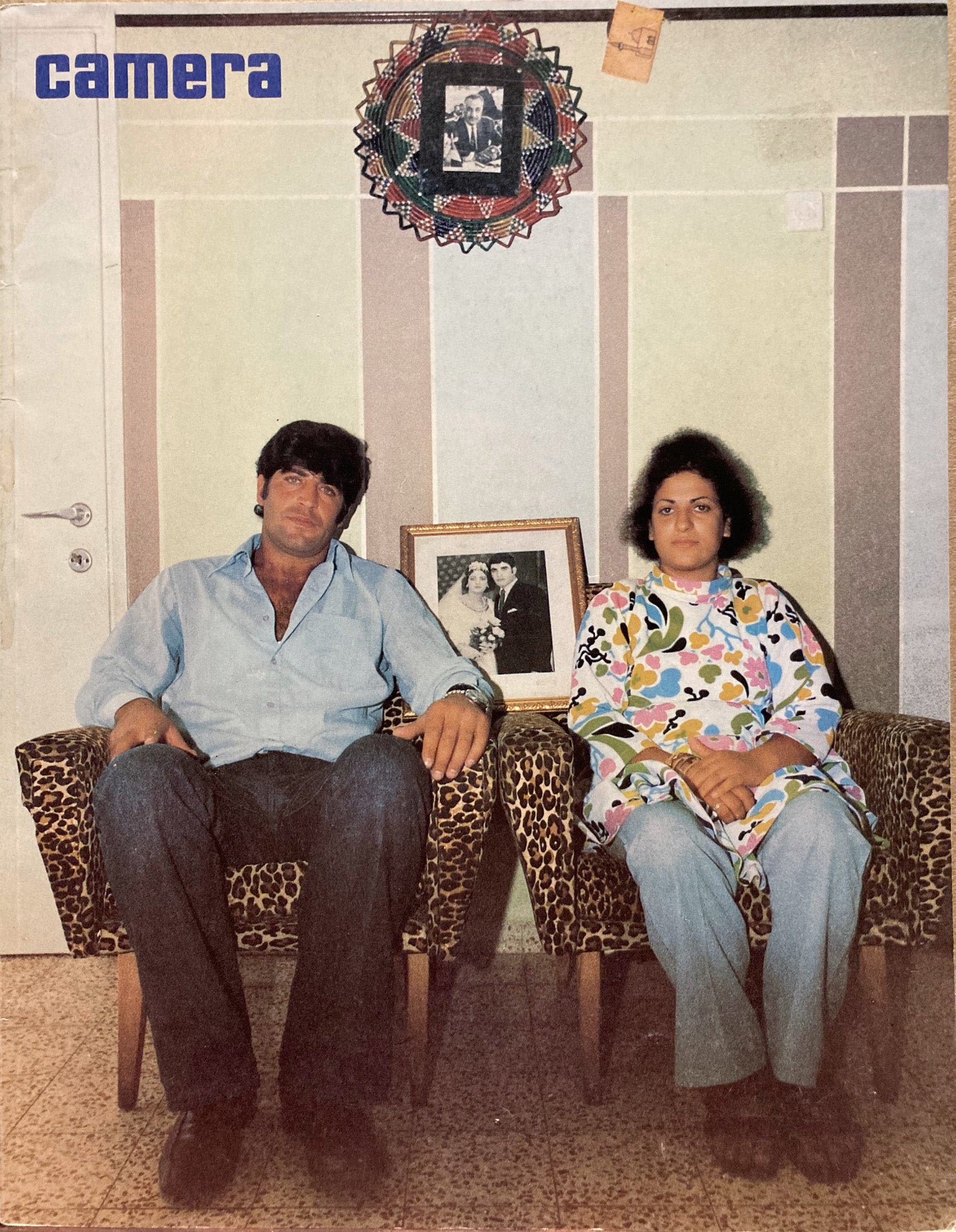
Camera, March 1976. Volume 55, Number 3. Investigative Photography.
Couldn't load pickup availability
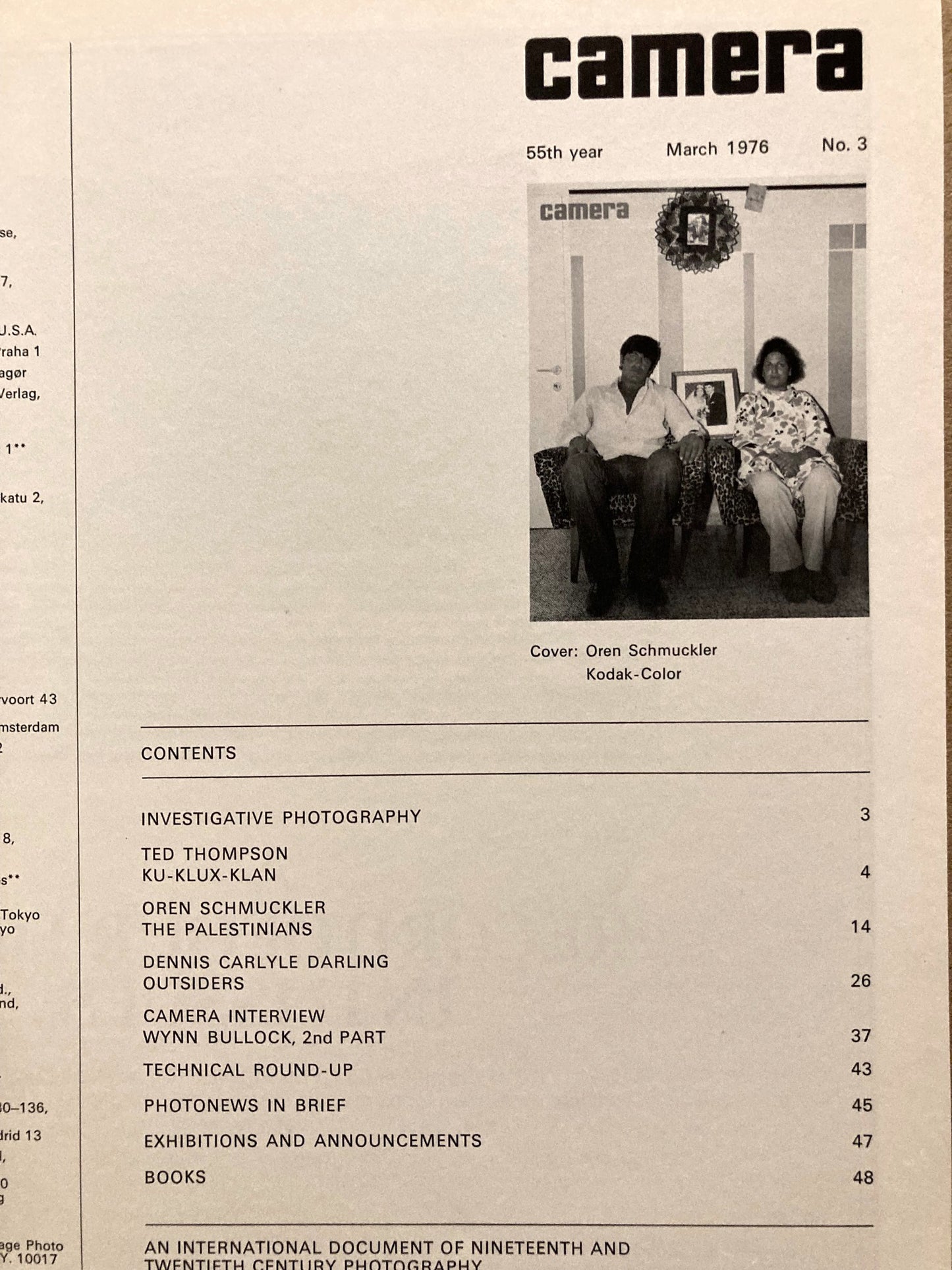
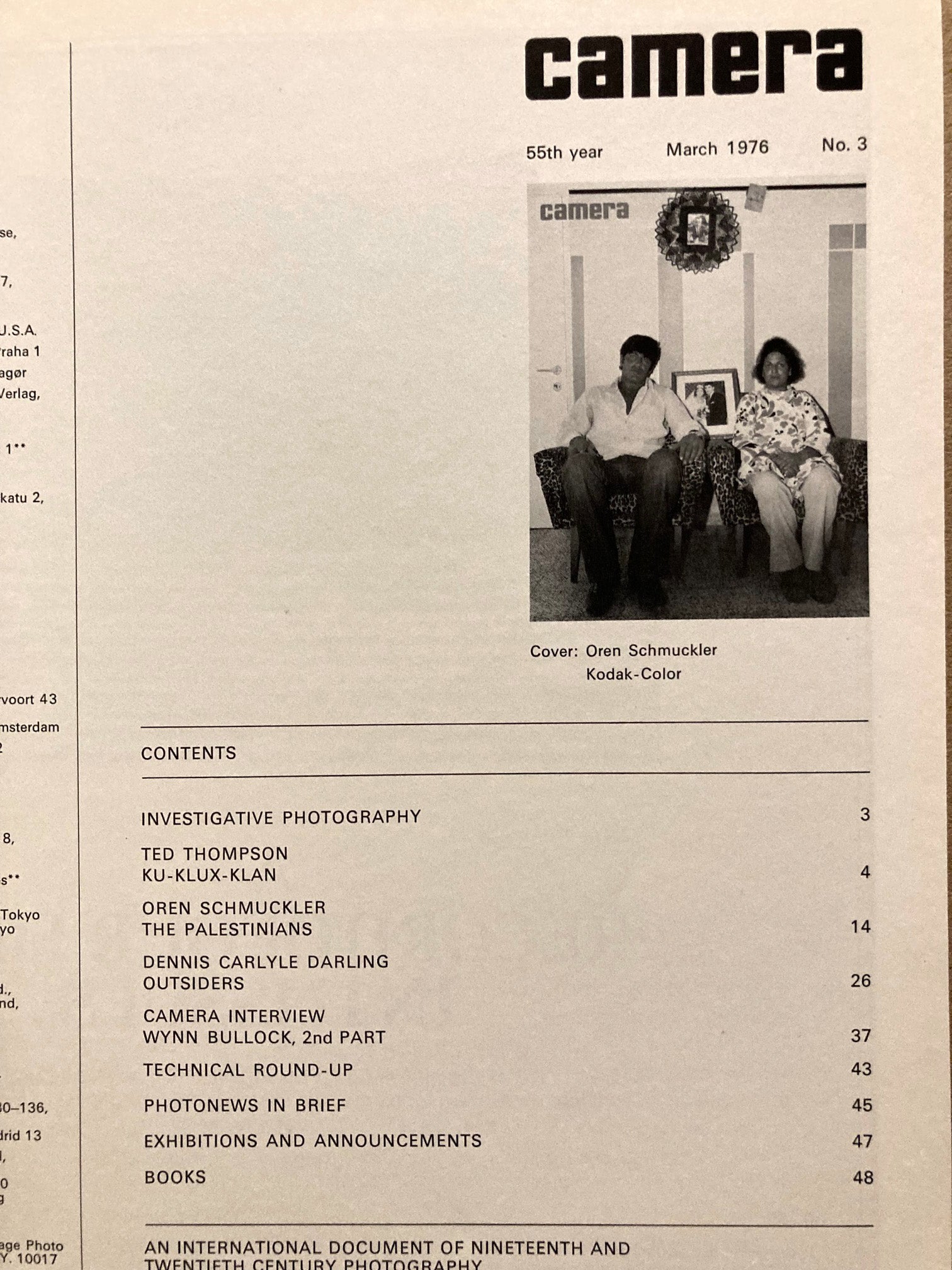
Edited by Allan Porter. Featuring Ted Thompson: Ku-Klux-Klan; Oren Schmuckler: the Palestinians; and Dennis Carlyle Darling: Outsiders. Interview: Wynn Bullock, Part 2. Very good+ condition. Summary:
The March 1976 issue of Camera (Volume 55, No. 3) is a provocative edition titled "Investigative Photography." In this issue, editor Allan Porter explores the camera as a tool for social and political inquiry, moving beyond simple "reportage" toward deep-dive visual essays that challenge the viewer’s comfort and preconceptions.
Featured Investigative Portfolios
1. Ted Thompson: Ku-Klux-Klan
Thompson provides a chilling, "insider" look at the ritualistic and mundane lives of KKK members.
-
The Approach: The photography is startling because of its proximity; Thompson captures cross-burnings and hooded gatherings with a stark, non-judgmental clarity that allows the subjects’ own iconography to convict them.
-
Theme: The banality of evil and the persistence of extremist subcultures in America.
2. Oren Schmuckler: The Palestinians
Schmuckler’s portfolio offers a gritty, empathetic documentation of Palestinian life and resistance.
-
Focus: Rather than focusing solely on the violence of the conflict, the images look at the daily struggle, the refugee experience, and the faces of a displaced population.
-
Theme: The use of the camera to give a face to a geopolitical "issue," transforming news headlines into human narratives.
3. Dennis Carlyle Darling: Outsiders
Darling’s work focuses on the fringes of American society, specifically motorcycle gangs and "outlaw" subcultures.
-
Visual Style: His images are high-contrast and visceral, capturing the scars, tattoos, and defiant postures of his subjects.
-
Theme: The attraction to the edge of society and the "uniforms" of rebellion.
The Interview: Wynn Bullock, Part 2
A major highlight of this issue is the conclusion of a deep-dive interview with the legendary Wynn Bullock, conducted shortly before his death in late 1975.
-
Philosophy: While the portfolios in the issue focus on social reality, Bullock’s interview provides a counterpoint, discussing his "Space-Time" theory and his belief that photography should reveal the hidden forces of nature.
-
Legacy: He reflects on his transition from the "Family of Man" era to his late-career abstractions, providing a philosophical grounding for the entire magazine.
Editorial Significance
Allan Porter uses this issue to define "Investigative Photography" as a genre distinct from daily news. He argues that the investigative photographer must be an "involved observer" who spends months or years embedded with a subject. The issue highlights the camera's power to act as a social scalpel, peeling back the layers of contemporary culture to reveal uncomfortable truths.
Summary Takeaway
Camera, March 1976 is an intense exploration of the ethics of the gaze. By pairing the extreme social reality of the KKK and the Palestinian conflict with the high-minded philosophy of Wynn Bullock, the issue creates a powerful dialogue about the dual nature of photography: its ability to document the darkest corners of humanity while simultaneously seeking universal, transcendental truths.