Gary Saretzky Photo Books
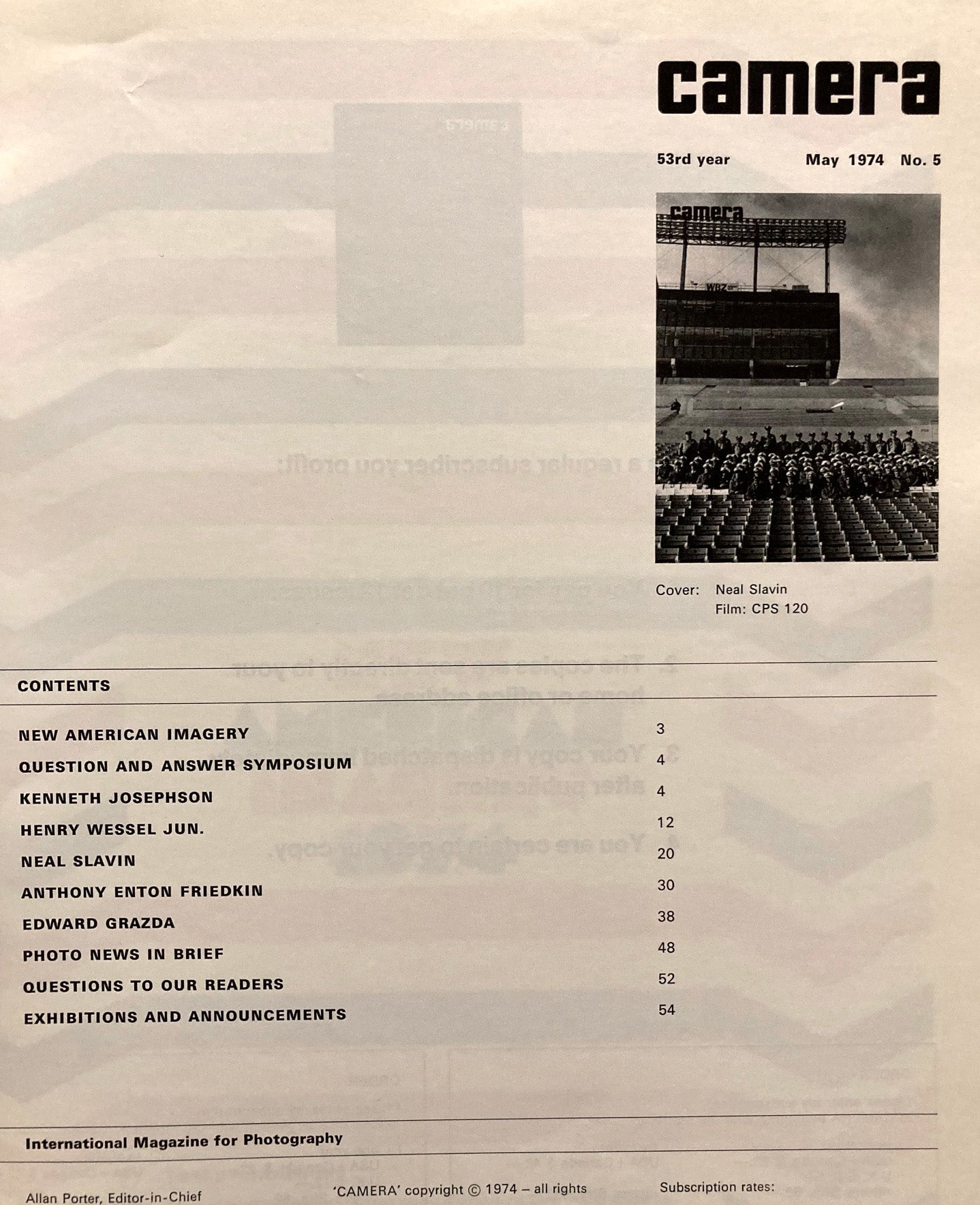
Camera, May 1974. Volume 53, No. 5. New American Imagery. Ken Josephson, Henry Wessel, Jr., et al.
Camera, May 1974. Volume 53, No. 5. New American Imagery. Ken Josephson, Henry Wessel, Jr., et al.
Couldn't load pickup availability
Edited by Allan Porter. Featuring Kenneth Josephson, Henry Wessel, Jr., Neal Slavin, Anthony Enton Friedkin, and Edward Grazda. VG+ with small crimps along spine. Summary:
The May 1974 issue of Camera (Volume 53, No. 5), titled "New American Imagery," is a pivotal survey of the shifting landscape of American photography in the mid-1970s. Editor Allan Porter uses this issue to showcase a "post-documentary" generation—photographers who moved away from traditional storytelling toward conceptualism, social irony, and the exploration of the photographic medium itself.
Featured Photographers and Concepts
1. Kenneth Josephson: Photography about Photography
Josephson is the conceptual anchor of the issue. His work explores the "picture-within-a-picture" technique.
-
The Idea: By holding a photograph of a scene within the actual scene he is shooting, Josephson forces the viewer to confront the layered reality of the medium.
-
Theme: The photograph as a physical object and a tool of visual deception rather than a simple window to the world.
2. Henry Wessel, Jr.: The New Topographics Spirit
Wessel provides a glimpse into the aesthetic that would soon be codified in the famous New Topographics exhibition (1975).
-
Visual Style: His images capture the mundane, often awkward geometry of the American suburban landscape—think telephone poles, stucco walls, and lonely palms under the flat, harsh light of California and the Southwest.
-
Tone: A detached, ironic, and strangely beautiful look at the "man-altered" landscape.
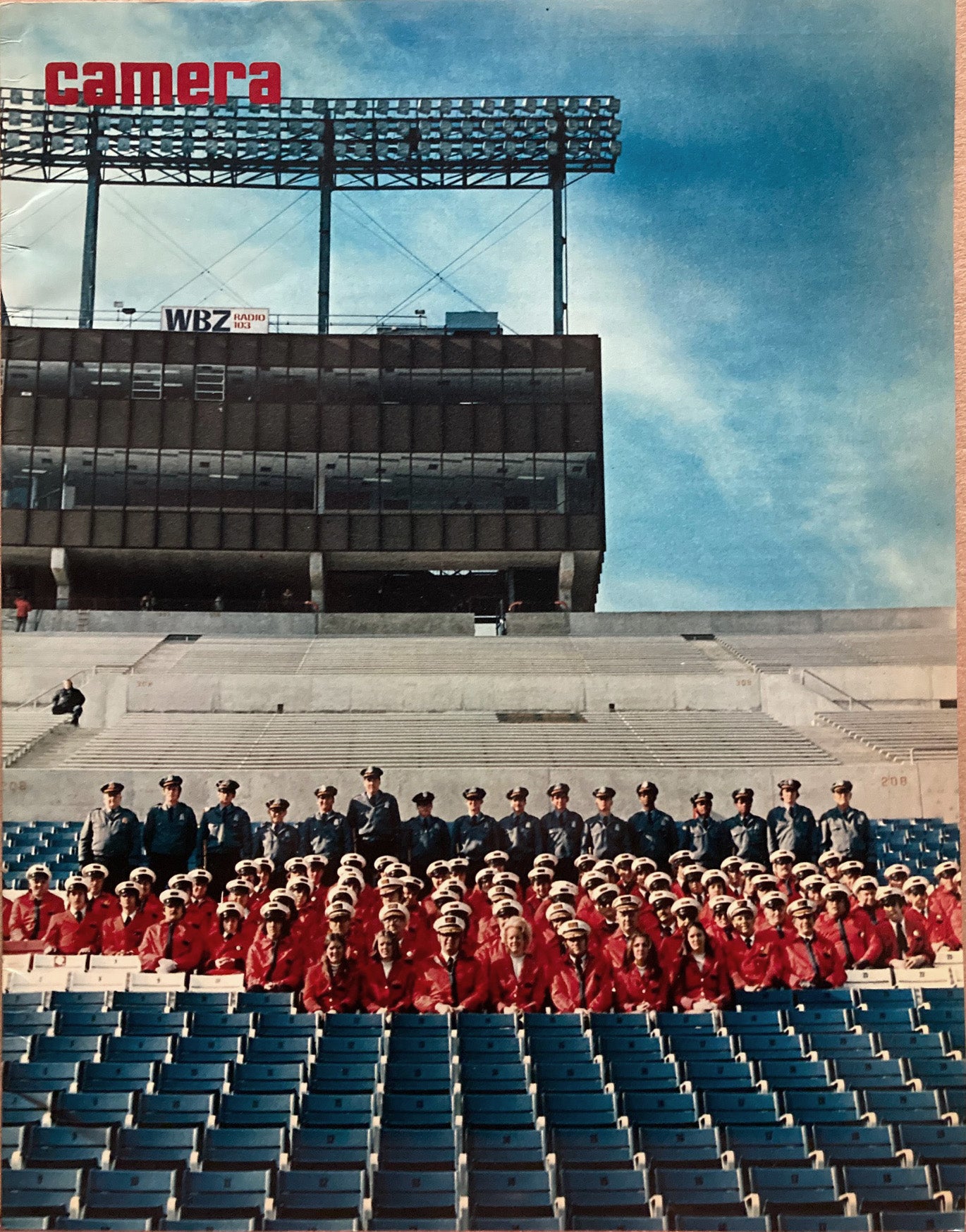
3. Neal Slavin: The Power of the Group
Slavin is featured for his early work documenting American groups and organizations.
-
Subject: From the American Girl Scouts to cemetery workers, Slavin’s portraits examine how individuals find identity through collective belonging.
-
Aesthetic: His formal, often frontally-composed group portraits emphasize the social "uniforms" and hierarchies inherent in American life.
4. Anthony Enton Friedkin: The Subcultural Margin
Friedkin contributes a more visceral, gritty series focused on California subcultures.
-
Focus: Notable for his "Gay Essay" and surf culture documentation, his work in this issue captures the energy and tension of marginalized communities.
-
Style: His approach is more "concerned" than the cool detachment of Wessel or Josephson, maintaining a link to the classic documentary tradition but with a modern, edgy intimacy.
5. Edward Grazda: The Latin American Street
Grazda offers a bridge between American "street photography" and the broader world.
-
Subject: His work in this issue often draws from his travels in Mexico and Latin America.
-
Narrative: He captures the rhythm of the street with a focus on religious icons, political graffiti, and the quiet, stoic presence of the people, emphasizing a "raw" rather than "pictorial" beauty.
Editorial Theme: The Death of the "Picture Story"
In his editorial, Allan Porter argues that the era of the traditional LIFE magazine "picture story" is over. He posits that these five photographers represent a new "authorial" approach where the individual image—rather than a sequence of events—carries the weight of the artist's personal philosophy.
Summary Takeaway
Camera, May 1974 is a primary document of American Post-Modernism. It captures the exact moment when the "straight" photograph became a conceptual tool. By grouping the dry irony of Henry Wessel with the intellectual games of Kenneth Josephson and the social cataloging of Neal Slavin, the issue maps out the diverse paths American photography would take for the remainder of the 20th century.
