Gary Saretzky Photo Books
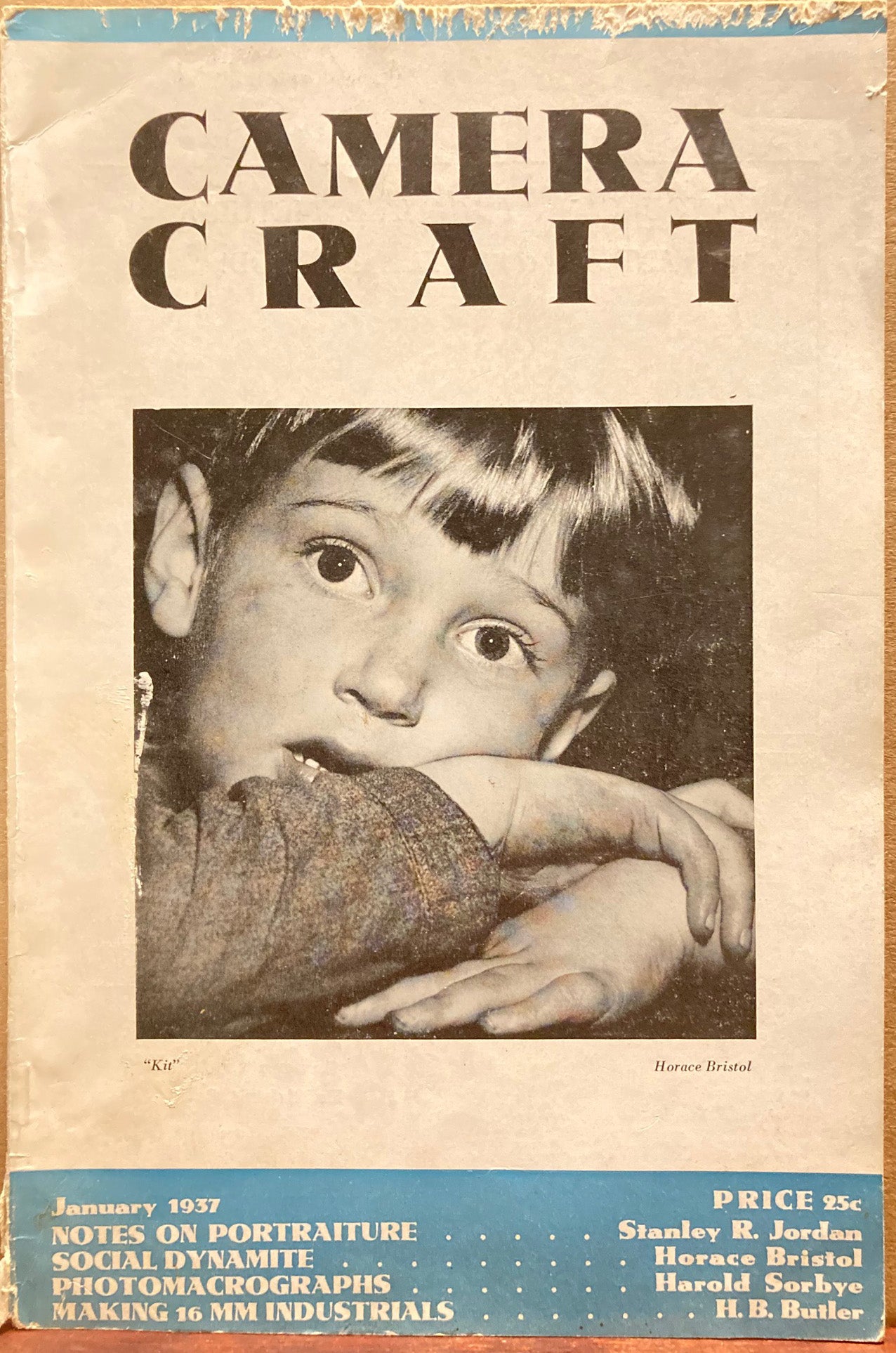
Bristol, Horace. Camera Craft, Volume XLIV, No. 1, January 1937.
Bristol, Horace. Camera Craft, Volume XLIV, No. 1, January 1937.
Couldn't load pickup availability
Includes article by Horace Bristol, "The Miniature Camera: Social Dynamite," on pages 3-9, with five of his photographs, plus one on the cover. Entire issue, 51 pages plus unpaginated ad pages. [Among other notable accomplishments, Bristol's photographs of migrant workers that he shot while accompanied by John Steinbeck were published in Life magazine to accompany an article about Steinbeck's The Grapes of Wrath.] Other articles include Stanley R. Jordan on portraiture. Good condition with front cover abraded on top edge. Summary:
The January 1937 issue of Camera Craft (Volume XLIV, No. 1) is a 51-page photographic periodical notable for featuring the work and writings of photojournalist Horace Bristol.
Issue Overview & Highlights
-
Featured Article: Contains Bristol's article "The Miniature Camera: Social Dynamite!", which discusses the power of small-format cameras to document contemporary social realities.
-
Visual Content: Displays five photographs by Bristol inside the issue, along with one of his images selected for the front cover.
-
Other Contents: Includes articles on topics such as portraiture by Stanley R. Jordan, photomacrographs, and monochrome printing techniques.
Horace Bristol (1908–1997) was an American photojournalist known for his candid social documentation and wartime photography. Born in California, he studied at the Art Center in Los Angeles and worked alongside Group f/64 members in San Francisco during the 1930s. In 1937, he became a founding staff photographer for Life magazine, and later that decade he traveled with writer John Steinbeck through California's Central Valley, creating a famous series of photographs of migrant farm workers that helped inspire The Grapes of Wrath. During World War II, Bristol served under Edward Steichen in the U.S. Navy's Aviation Photographic Unit, documenting military campaigns in the Pacific. Following the war, he worked extensively in Japan and Southeast Asia before putting away his camera for nearly thirty years, only for his archive to be rediscovered and celebrated in exhibitions and publications late in his life.
