Gary Saretzky Photo Books
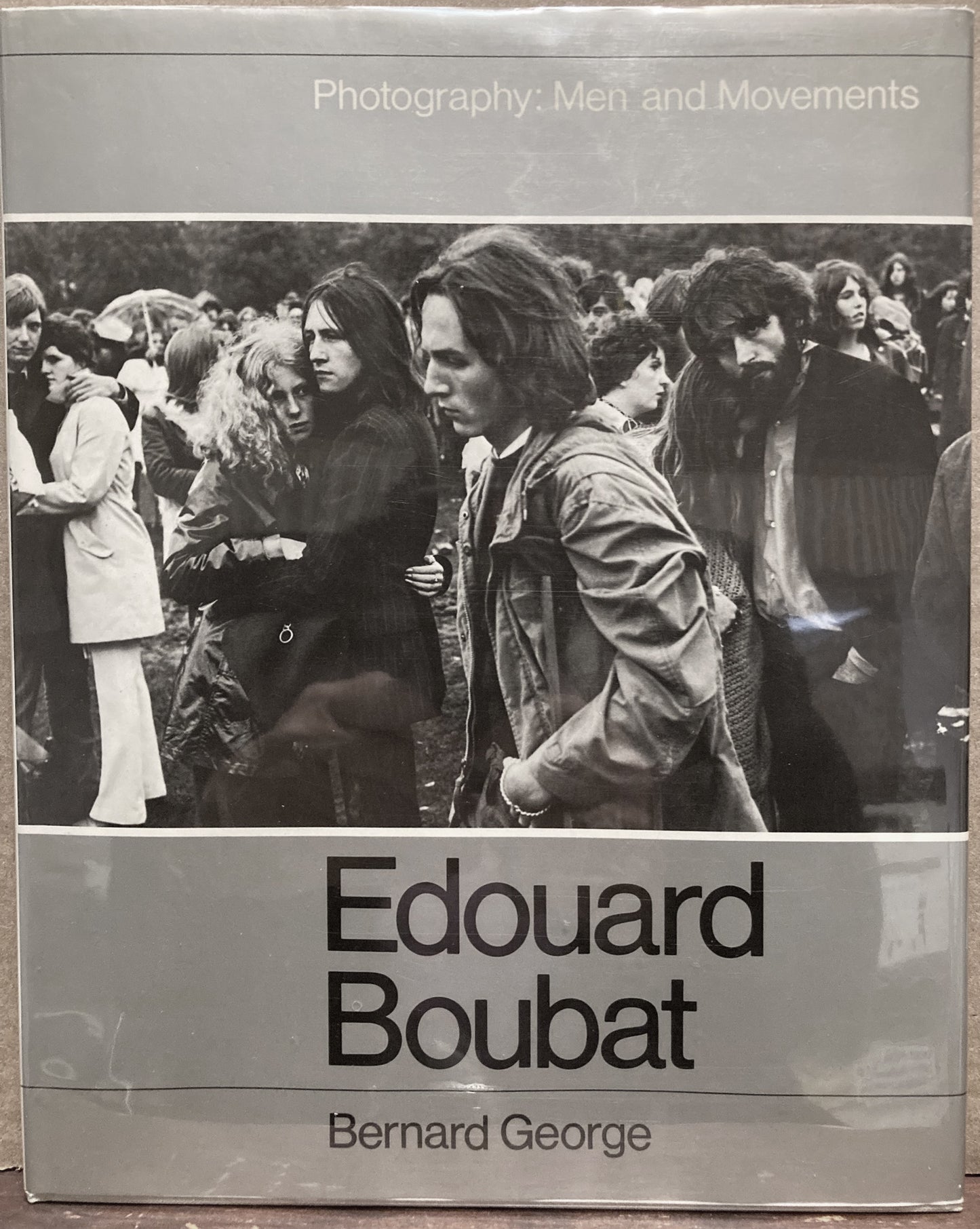
Boubat. Edouard Boubat by Bernard George.
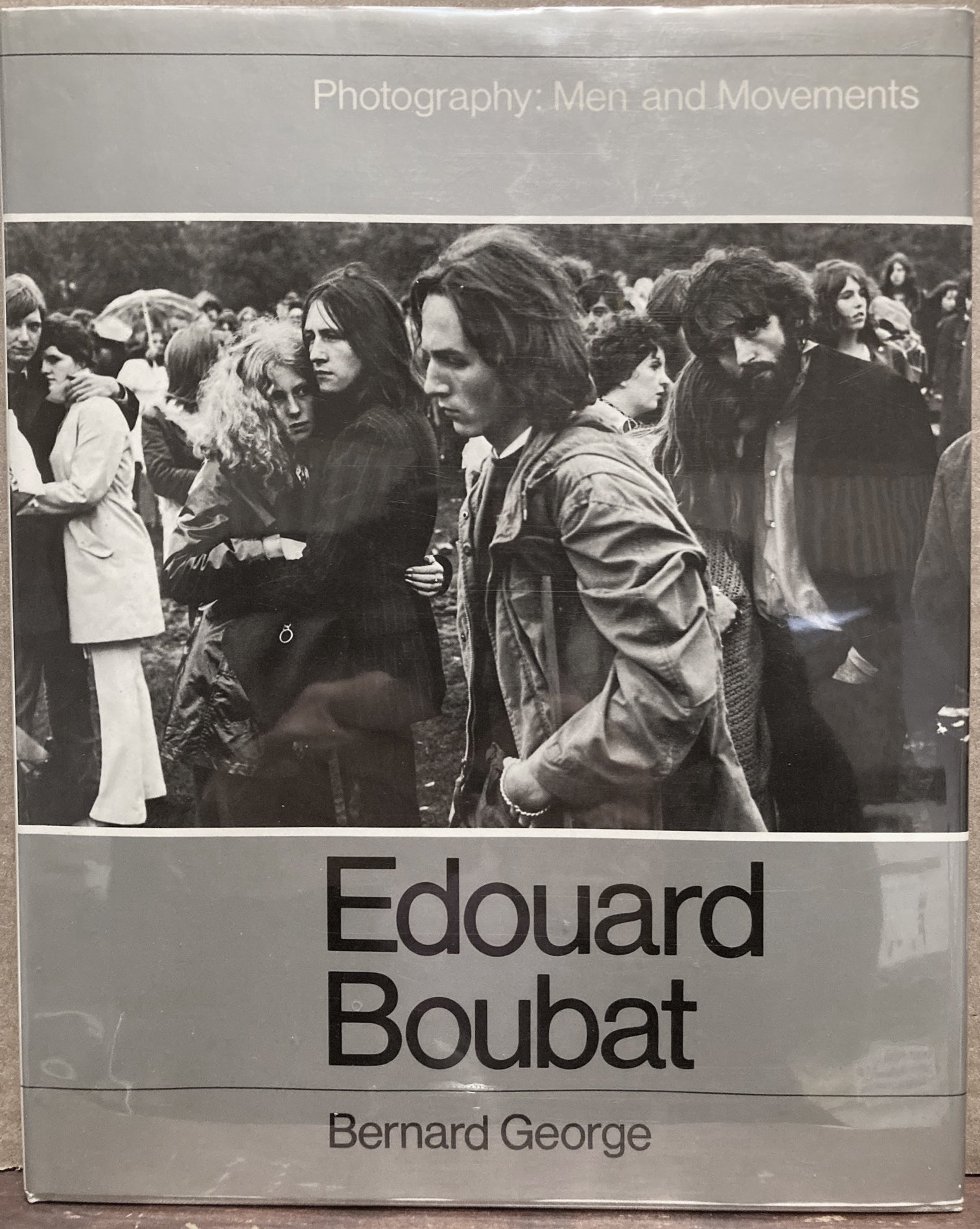
Boubat. Edouard Boubat by Bernard George.
Couldn't load pickup availability
Macmillan, 1973. [Men and Movements series.] Fine in hardcover with fine dust jacket, First American edition and first printing, previously issued in Europe by Bucher in 1972. Not issued with ISBN number. Summary:
The 1973 edition of Edouard Boubat, published by Macmillan as part of their "Macmillan Art Books" series, is a refined English-language introduction to the photographer’s work. While Bernard George provides the primary introductory essay, this specific edition was designed to bring the "Humanist" tradition of French photography to a broader Western art audience.
Core Content and Presentation
-
The "Poet of Photography": The book frames Boubat as a lyrical alternative to the more aggressive photojournalism of the era. The selection of plates emphasizes his "peaceful eye," focusing on his ability to capture moments of quietude and harmony in a chaotic world.
-
Global Scope: While heavily featuring his quintessential Parisian scenes, the Macmillan edition includes a significant selection of his travels from the 1950s and 60s, including images from Spain, India, Morocco, and Japan.
-
Thematic Groupings: The photographs are arranged to highlight Boubat’s recurring motifs: children at play, the delicate beauty of women, and the interplay between people and the natural landscape.
Key Themes
-
Innocence and Discovery: A central theme of the Macmillan volume is the "wonder" of the gaze. The text and imagery suggest that Boubat approaches his subjects with a lack of prejudice, treating every encounter as a fresh discovery.
-
Light as a Subject: This edition pays particular attention to Boubat's technical use of backlighting and soft natural light, which creates a halo-like effect around his subjects, elevating mundane scenes into something spiritual.
-
Humanism Post-WWII: The book positions Boubat’s work as a necessary cultural response to the trauma of the war—a visual reaffirmation of the goodness and continuity of human life.
Significance of the Macmillan Edition
This 1973 release was instrumental in establishing Boubat's reputation in the United States and the UK. By presenting his work in a high-quality, large-format art book, Macmillan moved Boubat out of the realm of "magazine photography" and into the pantheon of Fine Art Photography. It remains a classic reference for its elegant layout and its successful distillation of Boubat’s "unspoiled" vision of humanity.
Édouard Boubat (1923–1999) was a celebrated French photojournalist and a prominent figure in the post-WWII French humanist photography movement. Born in Paris, he studied typography and graphic arts at the École Estienne before being subjected to forced labor in Germany during World War II. Deeply affected by the horrors of war, Boubat purchased his first camera in 1946 with a clear artistic objective: to celebrate life, beauty, and human dignity rather than document suffering. He gained immediate acclaim for early works like Little Girl with Dead Leaves (1946) and spent decades traveling the world as a staff photojournalist for the prestigious magazine Réalités, capturing poetic, tender images of everyday life, romantic street scenes, and intimate portraits. Aptly dubbed a "peace correspondent" by French poet Jacques Prévert, Boubat earned major accolades—including the Kodak Prize and the Hasselblad Award—for his gentle, optimistic vision and mastery of natural light.