Gary Saretzky Photo Books
Barboza, Anthony, et al. Camera Arts, July/August 1981. Anthony Barboza, Edward Steichen, Tom Maloney, et al.
Barboza, Anthony, et al. Camera Arts, July/August 1981. Anthony Barboza, Edward Steichen, Tom Maloney, et al.
Couldn't load pickup availability
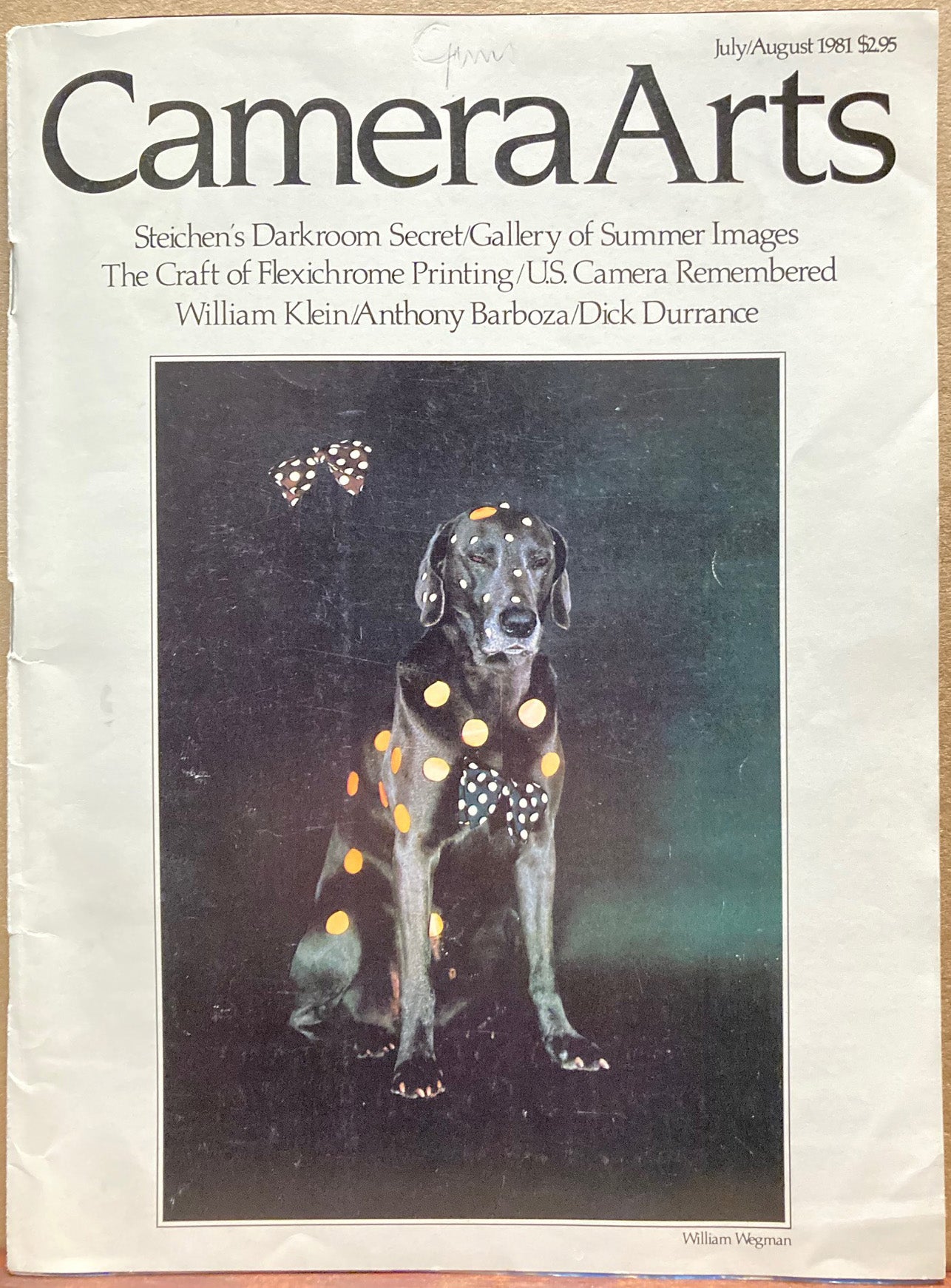
Ziff-Davis, 1981. Edited by Jim Hughes. Entire issue with features on Anthony Barboza, member of Kamoinge; Edward Steichen's Secret Formula; Tom Maloney and U.S. Camera; William Klein; Dick Durrance; Flexichrome Printing; and William Wegman with text by Man Ray. Cover by William Wegman. Very good with small area of erased writing on front cover. 118 pages. Summary:
The July/August 1981 issue of Camera Arts serves as a sophisticated bridge between photography’s commercial history and its burgeoning status as a high-art medium. During this period, the magazine was known for its high production values and deep-dive editorial style, moving beyond gear reviews to focus on the philosophy and "soul" of the image.
Featured Highlights
-
Anthony Barboza ("Black Borders"): This issue prominently features the work of Anthony Barboza, a pivotal figure in Black commercial and fine-art photography. The focus is on his creative portraits and his ability to blend fashion sensibilities with deep, psychological intimacy, often framed by his signature black borders.
-
Edward Steichen: The magazine offers a retrospective look at Steichen’s monumental influence. It explores his transition from Pictorialism to a sharp, modernist style, and his role in elevating photography's status at institutions like MoMA.
-
Tom Maloney and U.S. Camera: A historical deep dive into the legacy of Tom Maloney, the founding editor of U.S. Camera. This section examines how Maloney’s publications defined the mid-century "American style" of photography, popularizing the medium through influential annuals and magazines that showcased both amateur and professional masters.
-
The Aesthetics of the Era: Beyond the specific profiles, this issue explores the technical-to-artistic transition of the early 1980s, debating the merits of traditional craftsmanship versus new, experimental visions.
Key Themes
-
Legacy vs. Modernity: Balancing the "Old Guard" (Steichen/Maloney) with the contemporary innovators (Barboza).
-
The Editorial Voice: Highlighting the role of editors and publishers in shaping public perception of what constitutes "great" photography.
-
Narrative Portraiture: Analyzing how Barboza and Steichen, in different eras, used the human face to tell broader cultural stories.