Gary Saretzky Photo Books
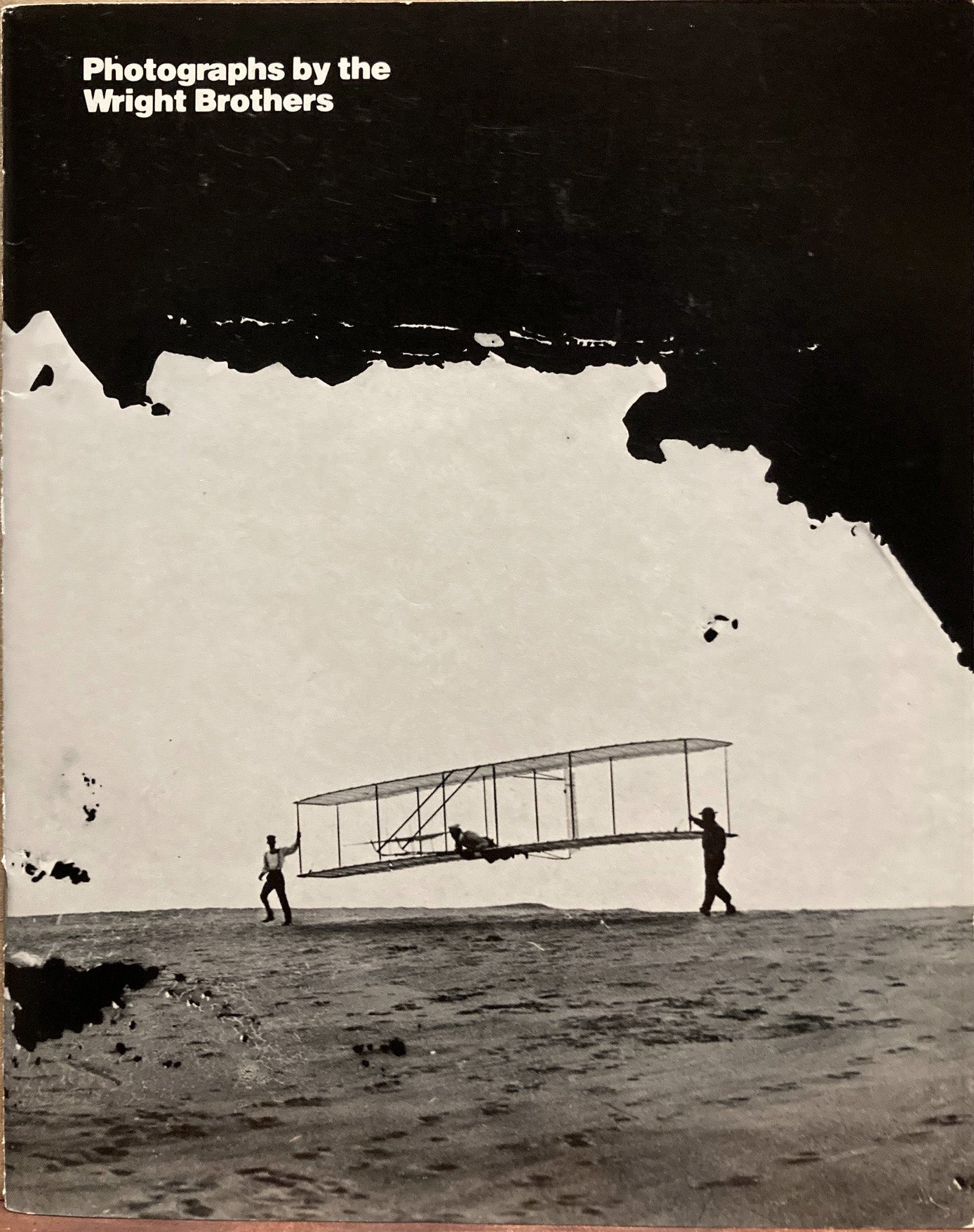
Wright Brothers. Photographs by the Wright Brothers. Prints from the Glass Negatives at the Library of Congress.
Wright Brothers. Photographs by the Wright Brothers. Prints from the Glass Negatives at the Library of Congress.
Couldn't load pickup availability
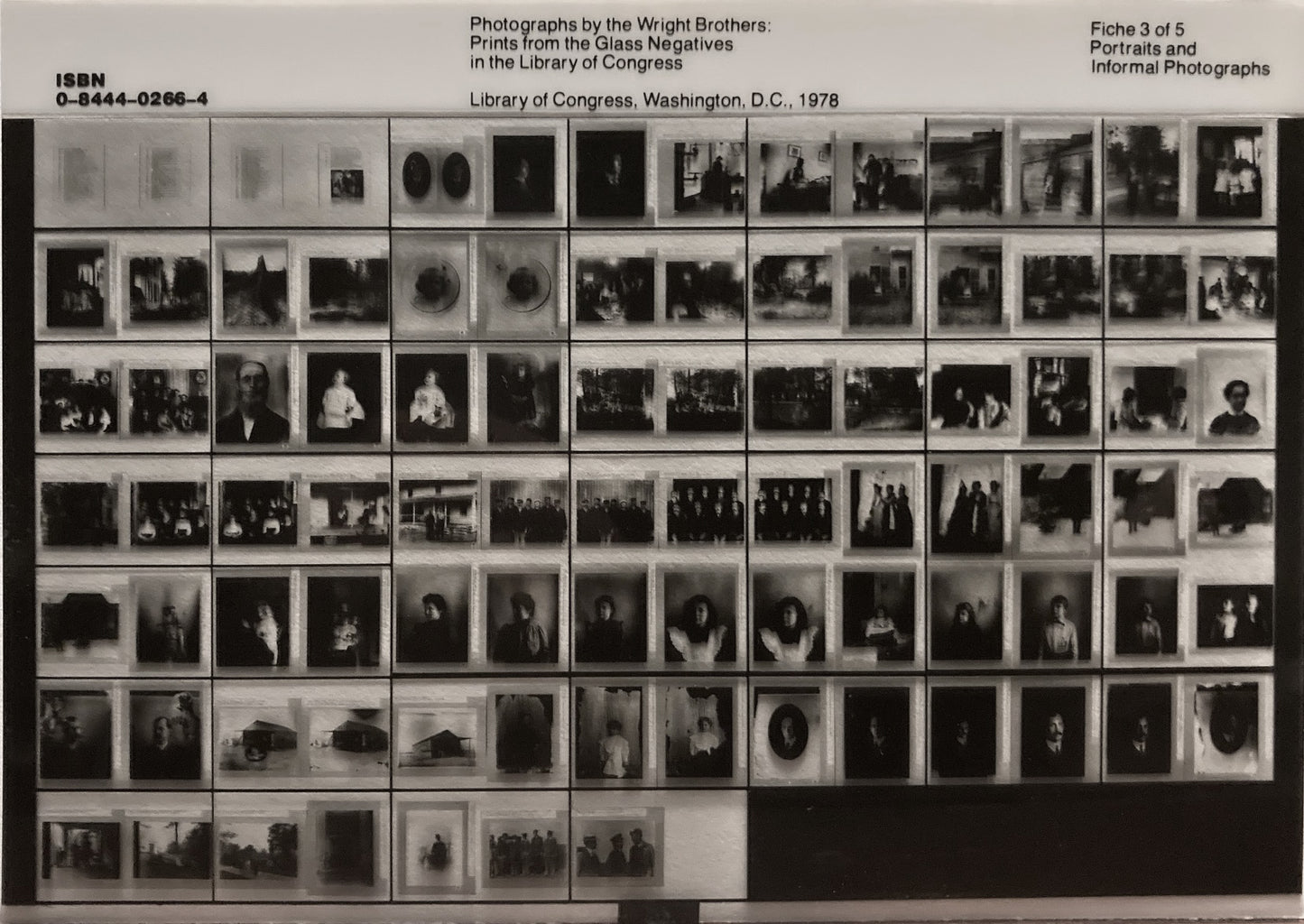
A Micropublication Commemorating the Seventy-Fifth Anniversary of the First Flight by the Wright Brothers, December 17, 1903. Library of Congress, 1978. Booklet, 21 pages, with five microfiche reproducing 301 photographs organized in groups: Gliders; Powered Flights; Portraits and Informal Photographs; Kitty Hawk and Other Locales; and Memorabilia. Booklet provides list of all photographs. Near fine booklet, microfiche complete and fine. Summary:
Photographs by the Wright Brothers: Prints from the Glass Negatives at the Library of Congress (1978) is a landmark visual record that documents the birth of modern aviation. This publication serves as a curated catalog of the 303 glass plate negatives donated to the Library of Congress by the Orville Wright estate in 1949.
Core Focus and Content
The collection is unique because the Wright brothers were as meticulous with their photography as they were with their engineering. They used cameras to document their experiments, successes, and failures between 1898 and 1911.
-
Technical Documentation: The images provide a step-by-step visual history of the development of the Wright Gliders and the subsequent Wright Flyer.
-
The First Flight: It includes the iconic image of the first powered flight on December 17, 1903, captured by John T. Daniels under the brothers' direction.
-
Personal Insight: Beyond aviation, the collection contains intimate portraits of the Wright family, their home life in Dayton, Ohio, and their bicycle shop, offering a rare glimpse into their private world.
Significance of the Collection
The 1978 publication was significant because it made these high-resolution primary sources accessible to the public and historians. These glass negatives provide a level of detail and clarity often superior to early film, acting as "silent witnesses" that verify the brothers' achievements against competing claims of the era. Many photos are of immense engineering value, showing the internal bracing, engine components, and the revolutionary wing-warping mechanisms used for control.
Key Takeaway
This work isn't just a "picture book"; it is a definitive archival resource. It bridges the gap between the brothers' technical notebooks and the physical artifacts now housed in the Smithsonian, proving that the Wrights were not just inventors, but also skilled documentarians of their own legacy.