Gary Saretzky Photo Books
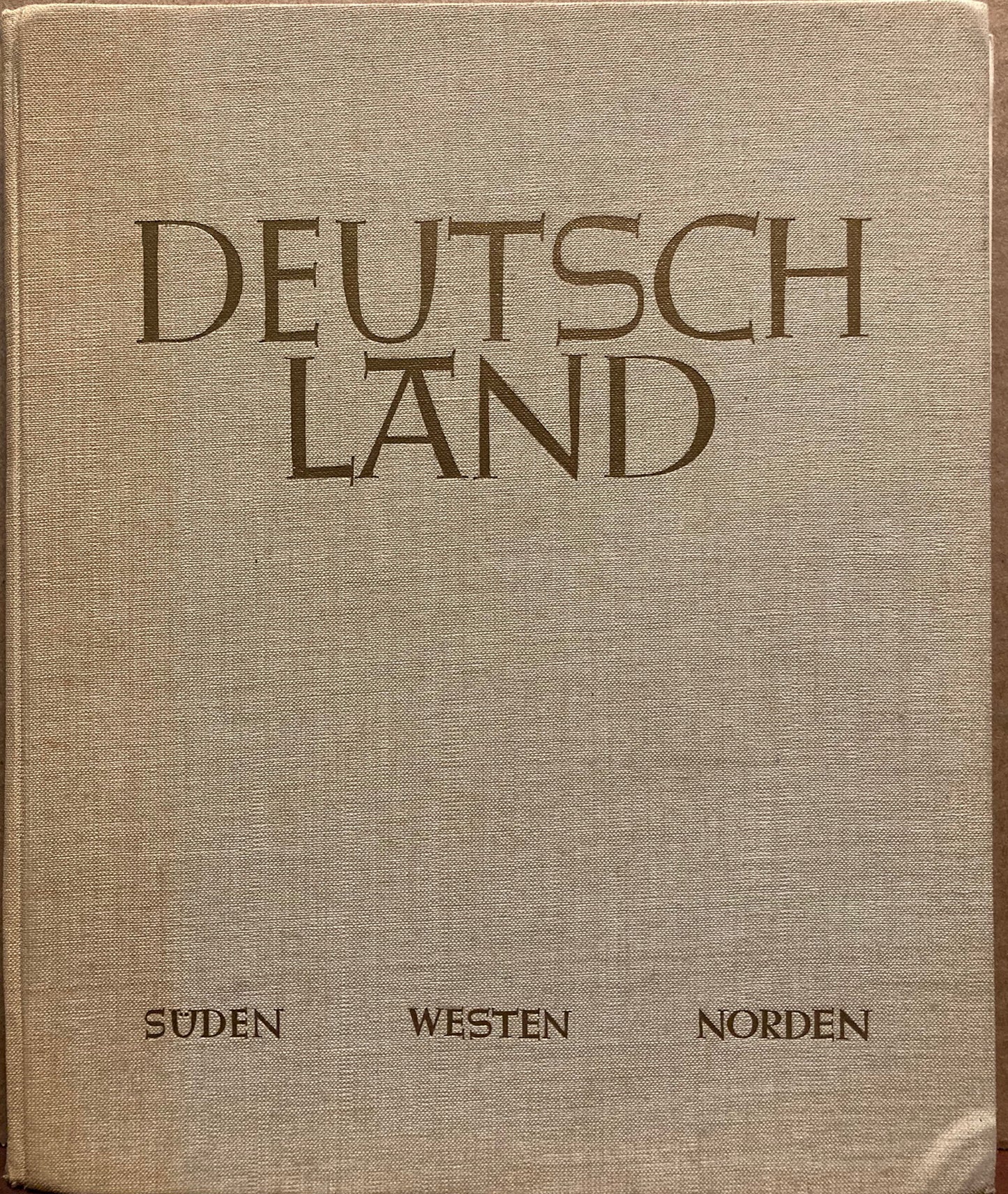
Wolff, Paul, et al. Deutschland: Suden Westen Norden. Photographs of Germany.
Wolff, Paul, et al. Deutschland: Suden Westen Norden. Photographs of Germany.
Couldn't load pickup availability
Frankfurt: Umschau Verlag, 1950. [Dr. Paul Wolff (1887–1951) was a trained physician but as a German in Strasbourg after World War I, was unable to practice medicine so turned to photography and became an early popularizer of the Leica, the first 35mm camera, which he used for the images published in his several books. His photographs also regularly appeared in annuals.] Hardcover with corner bumps, still VG. Summary:
Published in 1950 by Umschau Verlag, Deutschland: Süden Westen Norden (Germany: South West North) is a significant post-war photobook that captures a nation in the early stages of physical and spiritual reconstruction. Featuring the work of Dr. Paul Wolff, his partner Alfred Tritschler, and other notable contemporaries, the book serves as both a topographical survey and a cultural restorative.
The Aesthetic of the "Leica Masters"
The book is heavily defined by the style of Paul Wolff, the world's foremost proponent of the 35mm Leica camera.
-
Technical Precision: The imagery is characterized by the "Small Format" philosophy—sharp, spontaneous, and mobile. Even in the 1950s, Wolff’s influence ensured the book avoided the static, heavy feel of traditional landscape photography.
-
Composition: The photographs utilize dynamic angles and deep depth of field to document German architecture, industry, and landscapes with a sense of renewed clarity.
Regional Scope and Content
The title reflects a geographic survey of the Western-occupied zones (the "Trizone" which became the Federal Republic of Germany), notably omitting the East:
-
The South (Süden): Focuses on the Alpine majesty, Bavarian traditions, and the preservation of heritage.
-
The West (Westen): Documents the industrial heartland of the Rhine and Ruhr, balancing images of scenic river valleys with the grit of burgeoning post-war industry.
-
The North (Norden): Highlights the Hanseatic ports, the North Sea coast, and the flat, expansive plains of the northern territories.
Historical Significance
-
Post-War Recovery: Coming just five years after the end of WWII, the book deliberately emphasizes permanence and beauty. While some images hint at the scars of conflict, the editorial focus is on the resilience of the German landscape and the enduring nature of its cathedrals and villages.
-
Cultural Identity: It functioned as a piece of "soft diplomacy," reintroducing a peaceful, industrious, and scenic Germany to both a domestic audience and the international community.
-
The Umschau Verlag Legacy: This volume helped establish Umschau Verlag as a premier publisher of high-quality photographic "Heimat" (homeland) books, setting a standard for the travel and topographical genre in the mid-20th century.
Key Context: This book represents the bridge between the technical mastery of pre-war German photography and the "Economic Miracle" (Wirtschaftswunder) of the 1950s, using the lens to stitch a fractured country back together.