Gary Saretzky Photo Books
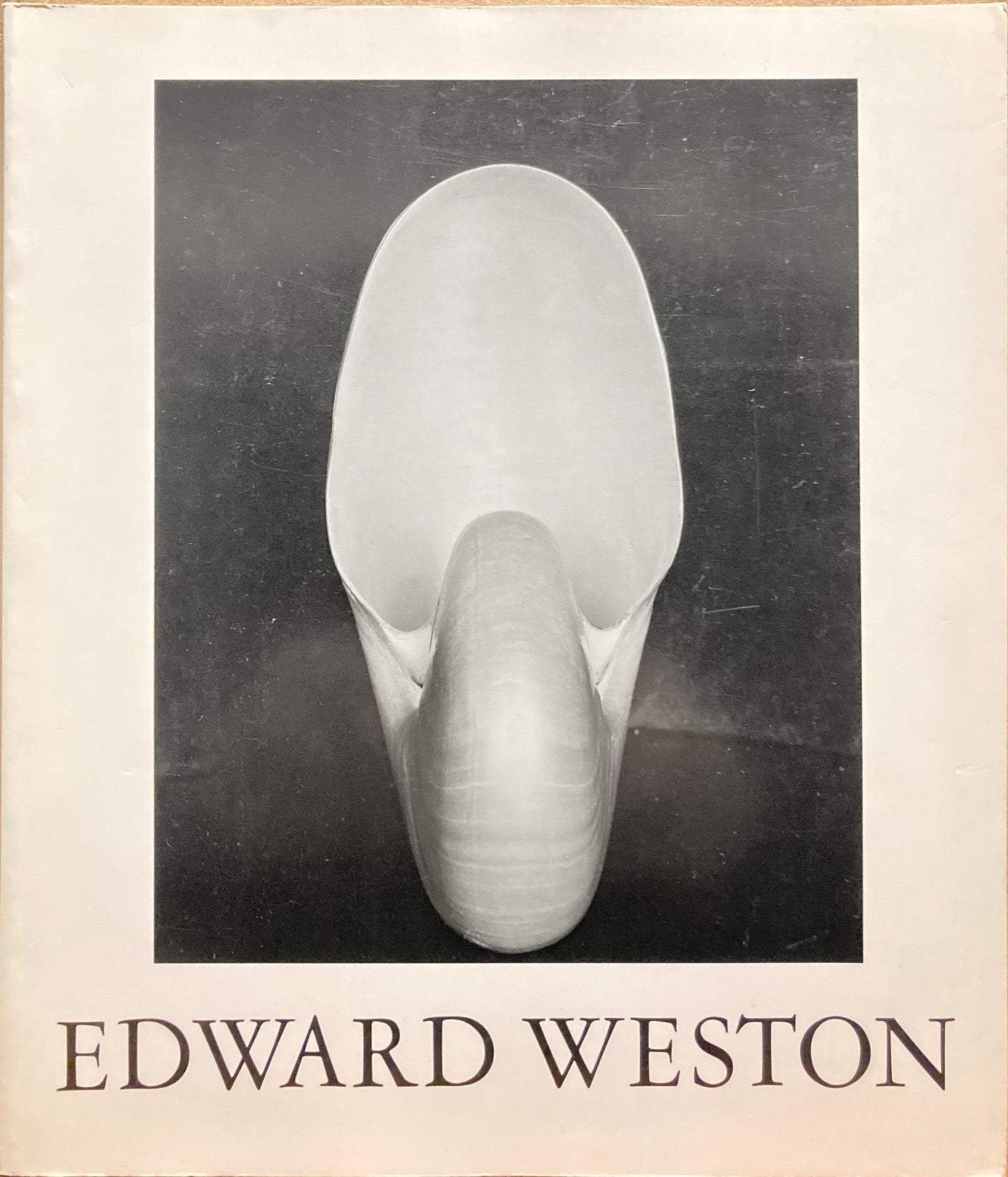
Weston, Edward. Edward Weston: The Flame of Recognition. His photographs accompanied by excerpts from the Daybooks & Letters.
Weston, Edward. Edward Weston: The Flame of Recognition. His photographs accompanied by excerpts from the Daybooks & Letters.
Couldn't load pickup availability
Aperture Monograph, 1971. ISBN 0-912334-03-7. Edited by Nancy Newhall. 104 pages. A classic collection of Weston’s photographs, including his best work from California, Mexico, Tina Modotti, shells, dunes, nudes, and others. With a bibliography, chronology of Weston’s life, and statements by Ansel Adams, Minor White, Beaumont and Nancy Newhall, Jean Charlot, and Robinson Jeffers. Introduction by Nancy Newhall. Like new, mint copy in wraps with custom made 4-mil polyester protector. This copy cannot be surpassed in condition. Another copy, near fine, minor wear. Another earlier copy, first Aperture printing, without ISBN number introduced in 1969, fine. Summary:
Edward Weston: The Flame of Recognition (originally published in 1965 by Aperture) is a definitive and deeply personal monograph edited by Nancy Newhall. It is widely considered the quintessential introduction to Weston’s work, as it seamlessly weaves together his seminal images with his own intimate writings.
The Synergy of Image and Word
The book’s primary strength is its reliance on Weston’s Daybooks (his private journals) and personal letters. This creates a "monologue" where the photographer explains his own spiritual and aesthetic evolution.
-
The Creative Process: The text reveals Weston's struggle to move beyond "Pictorialism" toward a philosophy of Previsualization, where the final print is fully conceived in the mind before the shutter is pressed.
-
The "Flame": The title refers to Weston’s belief in capturing the "quintessence" of a subject—finding the life force or "flame" within inanimate objects like shells, peppers, or rocks.
Key Visual Phases
The book traces Weston’s career through his most iconic periods:
-
Mexico: His shift toward starker, more modernist compositions during his time with Tina Modotti.
-
The Nudes: Celebrated studies of the human form treated with the same sculptural rigor as his botanical subjects.
-
Point Lobos: His later-career obsession with the gnarled cypress trees and eroded rocks of the California coast, which he viewed as a supreme expression of nature's design.
-
Natural Forms: The famous close-ups of vegetables and sea shells that transformed everyday objects into high-art abstractions.
Editorial Vision
Edited by Nancy Newhall, a close friend and collaborator of Weston, the book was designed to be a "portable exhibition."
-
Sequencing: The flow of the book is carefully curated to show how a shape in a sand dune might echo the curve of a human back, emphasizing Weston’s search for universal forms.
-
High-Quality Reproductions: The monograph is commendable for its commitment to capturing the rich tonal range and deep blacks of Weston’s original silver gelatin prints.
Significance
The Flame of Recognition remains a cornerstone of photographic literature because it does not just show the "what" of Weston’s photography, but the "why." it solidified his legacy as a monk-like figure of modernism who sacrificed material comfort for the "purity" of the photographic image.
"The camera should be used for a recording of life, for rendering the very substance and quintessence of the thing itself, whether it be polished steel or palpitating flesh." — Edward Weston