Gary Saretzky Photo Books
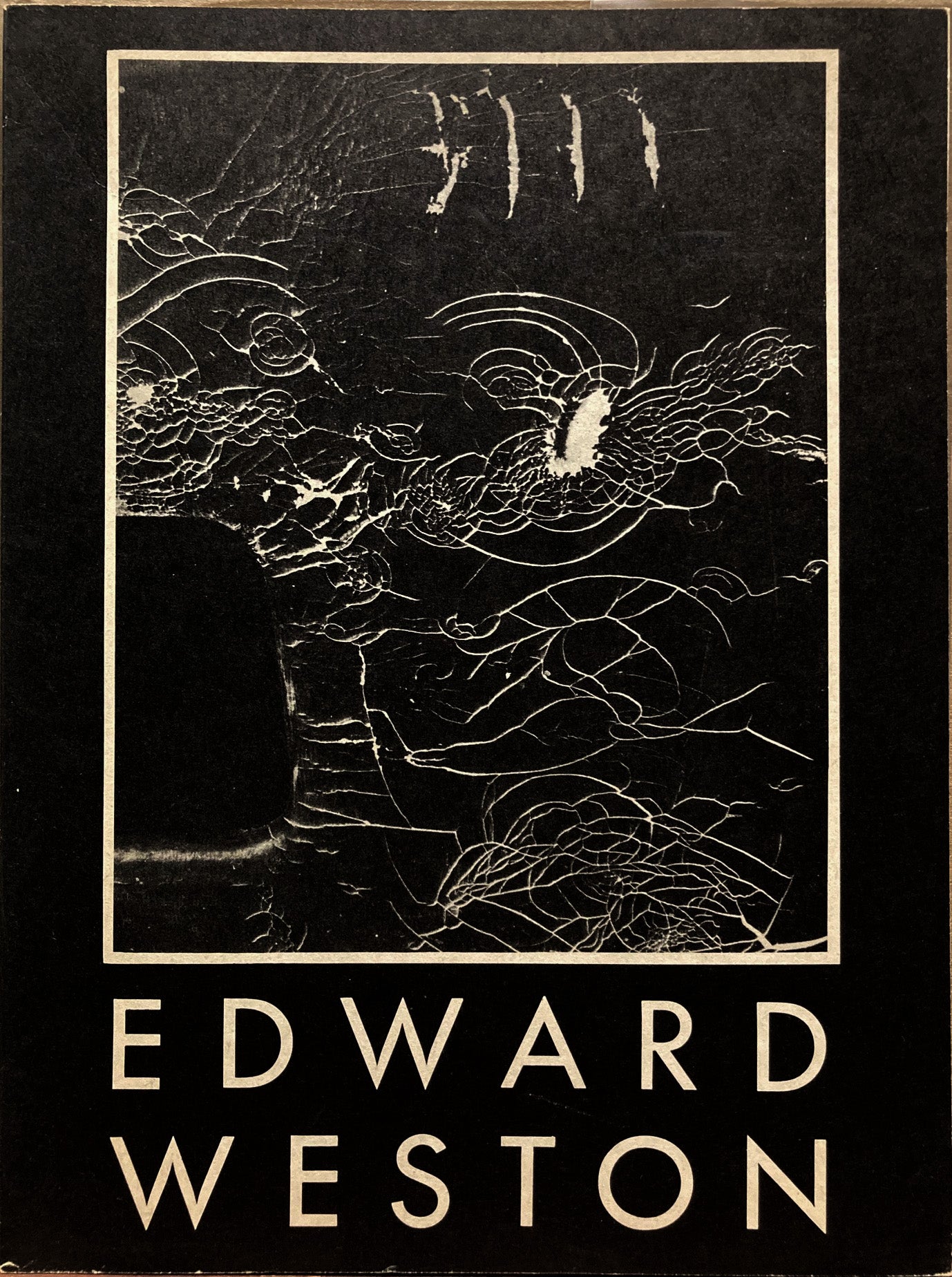
Weston, Edward. The Photographs of Edward Weston by Nancy Newhall.
Weston, Edward. The Photographs of Edward Weston by Nancy Newhall.
Couldn't load pickup availability
Museum of Modern Art, 1946. Stiff wraps, 36 pages, near fine with a modicum of wear to extremities, housed in a custom made 4-mil polyester jacket. An attractive copy of one of the first books of Weston's work. Includes chronology, list of exhibitions, and bibliography. Summary:
The Photographs of Edward Weston, published by the Museum of Modern Art (MoMA) in 1946, is a landmark monograph that served as the catalog for Weston’s major retrospective—the first comprehensive exhibition given to a photographer by the museum. Edited and with an influential essay by Nancy Newhall, it solidified Weston's position as the primary architect of modern "straight" photography.
The Manifesto of "Straight" Photography
The book emphasizes Weston's departure from the soft-focus, painterly styles of the early 20th century. Newhall presents Weston’s work as the ultimate expression of the camera’s unique capabilities:
-
Precision and Detail: The images showcased—ranging from the textures of weathered wood to the skin of a bell pepper—demonstrate his use of small apertures () to achieve maximum depth of field and sharpness.
-
Previsualization: The text explains Weston’s disciplined approach, where the final print is fully envisioned before the exposure is made, leaving no room for darkroom manipulation or cropping.
Key Content and Themes
-
The "Thingness" of Things: The book highlights Weston's ability to capture the "essence" of a subject. By isolating organic forms—shells, vegetables, and rocks—he transformed them into universal symbols of nature’s design.
-
The Human Form: It includes his revolutionary nudes, which were treated not as erotic portraits but as sculptural landscapes, emphasizing line and volume over identity.
-
Chronological Narrative: Newhall’s essay traces Weston's journey from his early days in California and his formative years in Mexico to his mature period at Point Lobos, providing the biographical context for his technical shift.
Historical Significance
-
Institutional Validation: By publishing this under the MoMA banner, Newhall and the museum effectively declared that photography was not a "lesser" art, but a medium capable of the highest level of formalist expression.
-
The Newhall-Weston Partnership: This volume marked the beginning of Nancy Newhall’s role as the definitive interpreter of Weston’s legacy. Her writing helped translate his often cryptic Daybooks into a coherent aesthetic philosophy for the public.
Legacy
The 1946 monograph remains a primary reference for the "Weston Look." It defined the aesthetic standards for a generation of photographers, advocating for a "pure" photography that relied on the integrity of the lens and the physical reality of the subject.