Gary Saretzky Photo Books
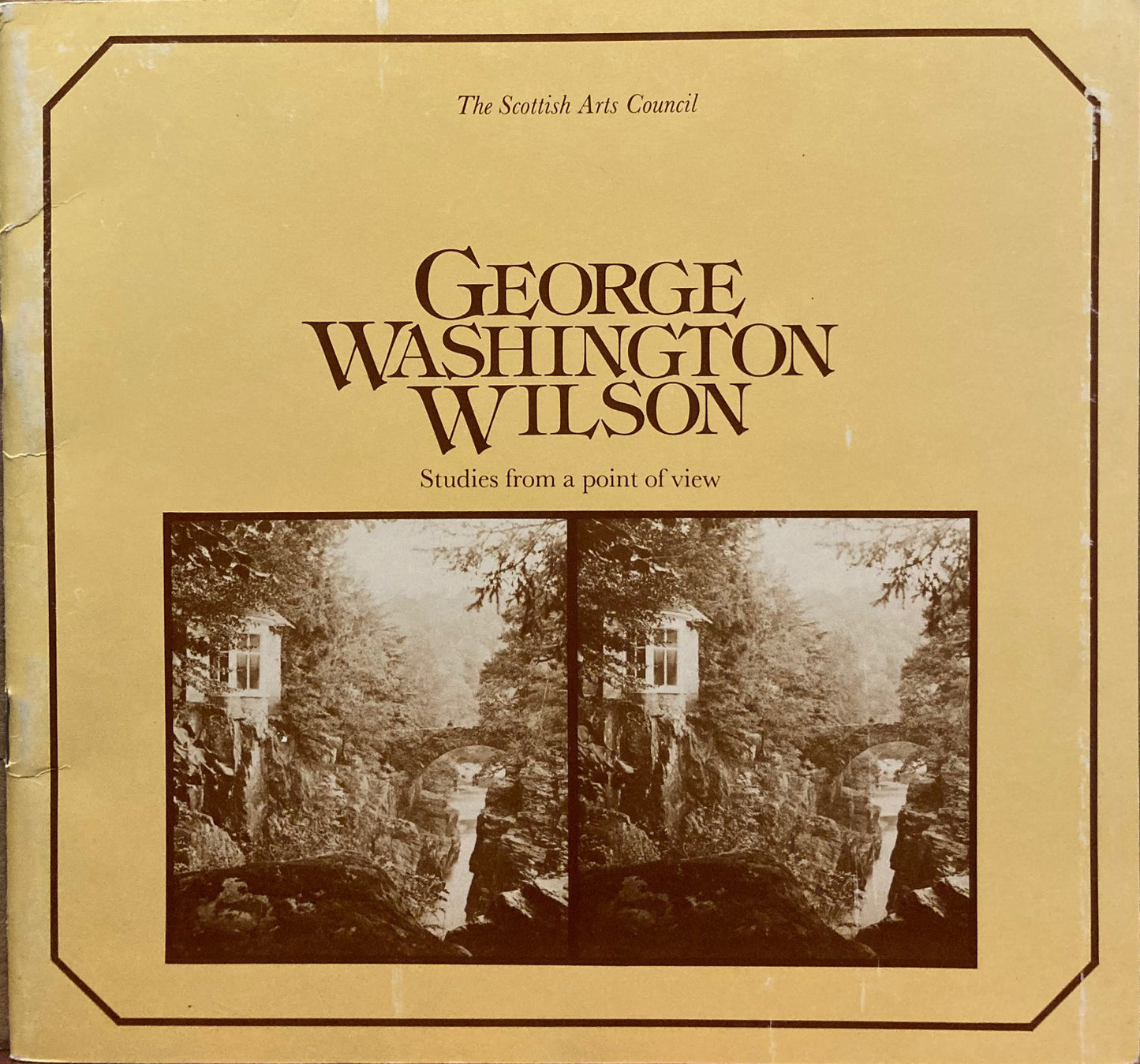
Wilson, George Washington. George Washington Wilson: Studies from a Point of View by Lesley Greene.
Wilson, George Washington. George Washington Wilson: Studies from a Point of View by Lesley Greene.
Couldn't load pickup availability
Scottish Arts Council, 1979. Issued in conjunction with an exhibition 20 January 1979-February 1979 at Aberdeen Art Gallery and Museum. Subsequently traveled to three other venues in Hawick, Oban, and Inverness. Includes checklist of 155 views of Scotland. Wraps, 30 pages, near fine with minor shelf wear. Summary:
Published in 1979 by the Aberdeen Art Gallery and Museum, George Washington Wilson: Studies from a Point of View is a scholarly monograph and exhibition catalogue by Lesley Greene. It re-evaluates the legacy of Wilson (1823–1893), who was not only Scotland’s most successful pioneering photographer but also a "Photographer to the Queen" and a master of the commercial landscape.
The "Point of View" Concept
The central thesis of Greene’s study is that Wilson was more than a mere documentarian; he was a sophisticated visual strategist.
-
Compositional Mastery: Greene analyzes how Wilson selected specific vantage points to create the "ideal" Scottish landscape—often blending the Romantic ideals of the era with a sharp, technical clarity.
-
The Tourist Gaze: The book explores how Wilson’s firm, G.W. Wilson & Co., essentially "branded" Scotland for the Victorian public, creating the iconic visual vocabulary of lochs, glens, and ruins that still defines Scottish tourism today.
Technical Innovation and Scale
The catalogue highlights Wilson’s transition from a portrait painter to a photographic industrialist:
-
Instantaneous Photography: Wilson was famous for his ability to capture moving water and clouds (most notably in his "Macpherson’s Farewell" and Loch Katrine series), a significant technical feat in the era of slow wet-collodion plates.
-
The Aberdeen Connection: Given the publisher, the book places special emphasis on Wilson’s relationship with Aberdeen, documenting his rise from a local studio to an international firm that employed hundreds of people and maintained a massive archive of glass-plate negatives.
Key Thematic Sections
-
The Royal Connection: Documentation of Wilson’s commissions for Queen Victoria and Prince Albert at Balmoral, which solidified his social and professional standing.
-
Urban and Rural Transformation: The exhibition showcased Wilson’s work in documenting the Victorian architectural boom alongside the "wild" Highlands, showing the tension between industrial progress and preserved nature.
-
The Photographic Archive: Greene touches upon the survival of the Wilson archive (now largely held by the University of Aberdeen), emphasizing its value as a primary record of 19th-century geography and social history.
Significance
Issued at a time when Victorian photography was being rediscovered by art historians, this book moved the conversation away from Wilson as a "postcard maker" toward Wilson as a significant aesthetic figure. It remains a key reference for understanding the intersection of 19th-century art, commerce, and Scottish national identity.
Note: The 1979 exhibition was a landmark event for the Aberdeen Art Gallery, asserting that Wilson’s work was a foundational pillar of the city’s cultural heritage.