Gary Saretzky Photo Books
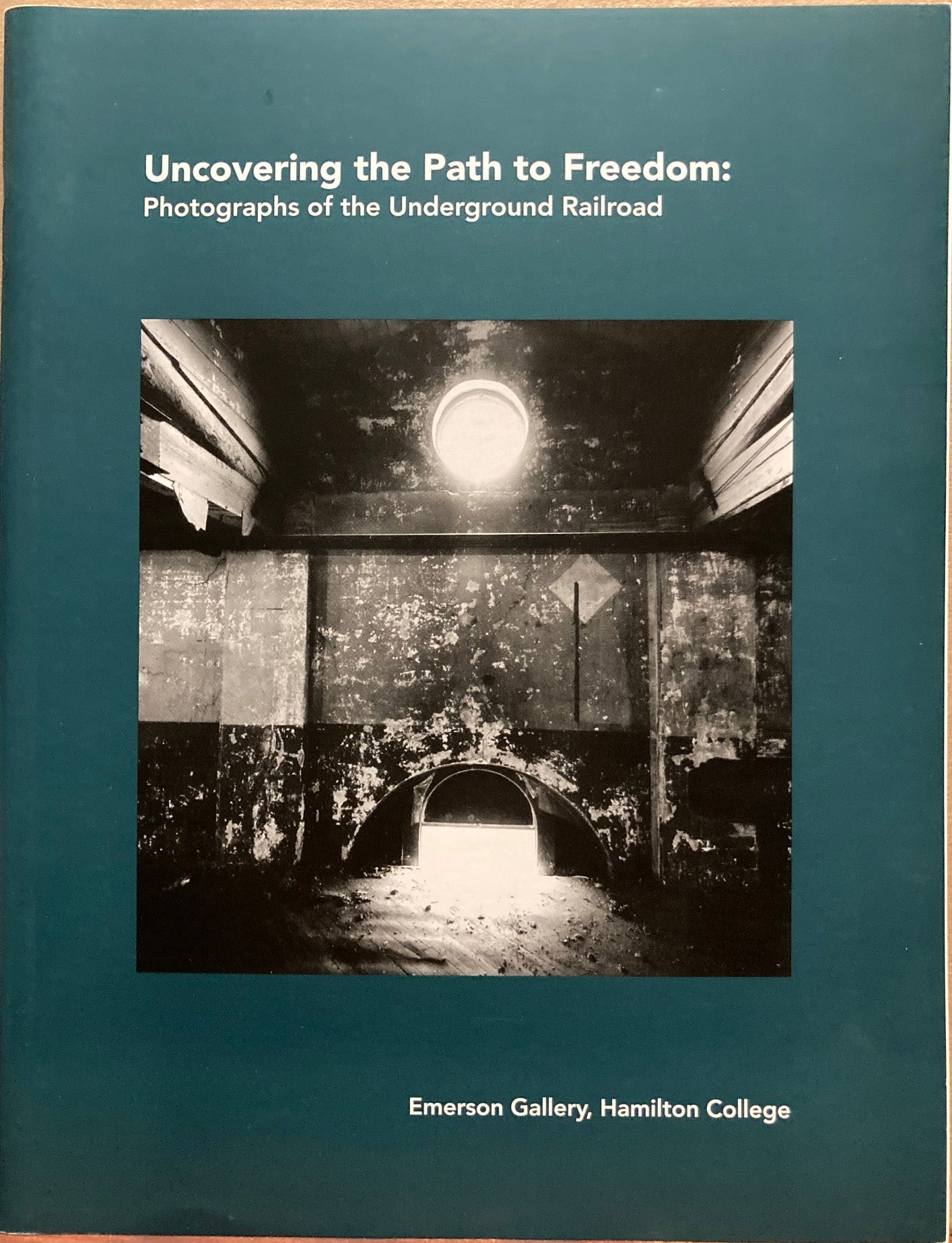
Williams, William Earle. Uncovering the Path to Freedom: Photographs of the Underground Railroad by William Earle Williams. Signed.
Williams, William Earle. Uncovering the Path to Freedom: Photographs of the Underground Railroad by William Earle Williams. Signed.
Couldn't load pickup availability
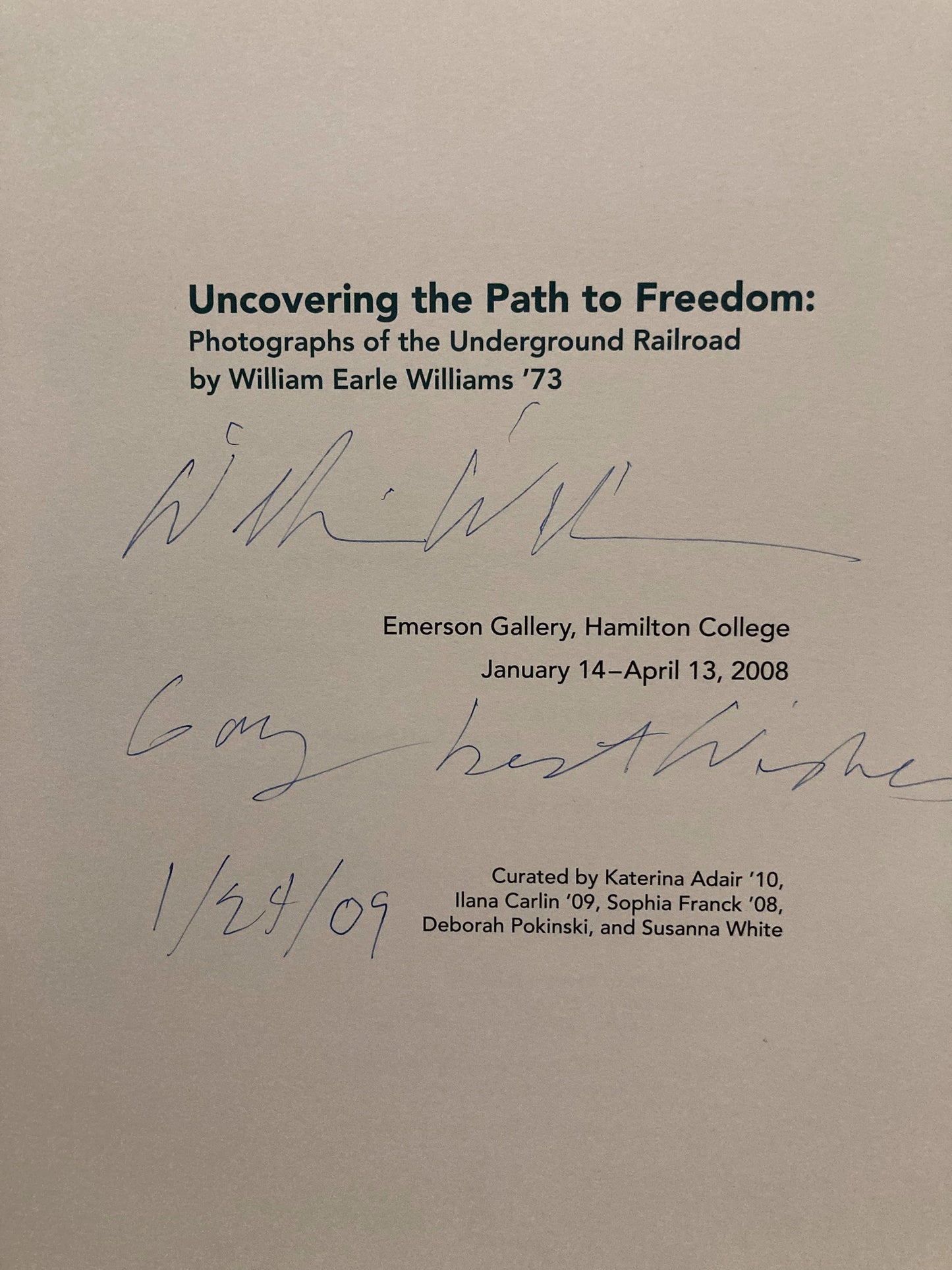
Hamilton College, 2008. Exhibit with photographs concerning a key aspect of African American history at Emerson Gallery, Hamilton College, January 14–April 13, 2008. Exhibit also held at Widener University, January 13–February 28, 2009. Texts by Susanna White and Katerina Adair. Curated by Katerina Adair, et al. With the following laid in: Errata, handout with catalog of the exhibition, and Williams' resume. SIGNED and inscribed on title page by Williams, January 24, 2009. Wraps, 30 pages, fine. Summary:
Published in 2008 by Hamilton College, this book is a profound photographic meditation on the "invisible" history of the Underground Railroad. William Earle Williams, a professor and curator at Haverford College, spent years researching and visiting sites across the American North and South to document the clandestine routes used by enslaved people seeking freedom.
The Aesthetic of the "Silent" Landscape
Williams’ approach is distinct from traditional historical documentation. Rather than focusing on statues or plaques, he captures the physical environments—forests, rivers, basements, and fields—as they exist today.
-
The Power of Place: The photographs are often stark, black-and-white landscapes that appear ordinary at first glance. However, when paired with the book's historical research, these sites become charged with the weight of the past.
-
Absence as Presence: By photographing empty spaces where significant events occurred, Williams emphasizes how much of African American history has been erased from the physical landscape or remains unmarked by traditional monuments.
Key Themes and Research
-
Historical Recovery: The book serves as a vital act of "uncovering." Williams uses maps, letters, and census data to identify specific locations—such as the Ohio River crossings or safe houses in Pennsylvania—that were instrumental to the network.
-
The Geography of Freedom: The work explores the precarious nature of the journey, highlighting the natural barriers (thick woods, waterways) that served as both obstacles and protection for those escaping.
-
Black Agency: A central theme is the highlighting of the role of free Black communities and individual abolitionists who risked their lives to maintain the network, moving the narrative away from a purely Eurocentric view of the Underground Railroad.
Significance and Legacy
-
Scholarly Contribution: The book is valued as both an art object and a historical resource. It bridges the gap between contemporary landscape photography and archival research.
-
The "Invisible" Landmark: Williams argues that a site does not need a building or a monument to be sacred. His lens transforms a common thicket or a riverbank into a site of national importance.
Visual Note: The images in the book are noted for their technical "quietness." There is a deliberate lack of drama in the lighting or composition, which forces the viewer to slow down and reflect on the historical reality hidden beneath the surface of the contemporary American landscape.