Gary Saretzky Photo Books
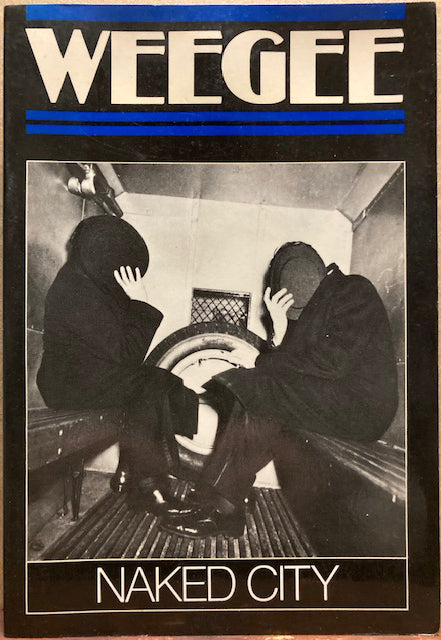
Weegee. Naked City.by Weegee (Arthur Fellig).
Weegee. Naked City.by Weegee (Arthur Fellig).
Couldn't load pickup availability
Da Capo, 1973. Wraps, apparently the 1st printing of the Da Capo reprint of the classic 1945 first edition showing the gritty underside of life in New York, featuring sudden death, fires, cross dressers, police and criminals, etc. Priced on verso at $13.50, this copy lacks the bar code that appeared on later printings. Near fine with very slight damp stain on top edge of front flyleaf. Text does not lie quite flat. Otherwise, fine. Summary:
Naked City, originally published in 1945 (with the Da Capo reprint preserving the original grit and layout), is the seminal masterpiece of Arthur Fellig, better known as Weegee. It is a raw, uncompromising portrait of New York City that redefined tabloid journalism and street photography.
The Aesthetics of the Night
Weegee earned his nickname through an uncanny, "Ouija board-like" ability to arrive at crime scenes before the police. This book compiles the fruits of those midnight shifts:
-
High-Contrast Noir: Using a Speed Graphic camera and a powerful flashbulb, Weegee created a signature look—jet-black backgrounds with subjects harshly illuminated. This style turned the gritty reality of the city into a dramatic, theatrical stage.
-
The "Accidental" Witness: While famous for his photos of murder victims and tenement fires, the book focuses equally on the spectators. Weegee was fascinated by the faces of crowds watching tragedies, capturing a voyeuristic "human comedy."
Key Themes and Content
-
Crime and Punishment: The book is famous for its visceral images of "perp walks," police investigations, and bodies on the sidewalk, stripped of any romanticism.
-
The City at Rest: Weegee also captured the softer, albeit still gritty, side of New York—couples huddled on Coney Island beach, children sleeping on fire escapes during summer heatwaves, and the exhausted denizens of 24-hour movie theaters.
-
Class Contrast: The book poignantly juxtapositions the "Opera Opening" elites in their furs with the homeless "Bowery Bums," highlighting the stark social stratification of 1940s Manhattan.
Cultural Impact
-
From News to Art: Naked City was revolutionary because it moved tabloid photography into the realm of fine art. It proved that the "low-brow" pursuit of chasing sirens could yield images of profound psychological and social depth.
-
The Weegee Persona: The book helped craft the myth of Weegee himself—the cigar-chomping, rumpled photographer who lived in a room across from police headquarters with a police-band radio under his pillow.
-
Cinematic Influence: The book was so evocative that its title was purchased for the 1948 film noir The Naked City, and its visual language heavily influenced the aesthetic of American cinema and the future of "street photography."
Significance of the Da Capo Reprint
The Da Capo edition is highly valued because it retains the original sequencing and typography designed by Weegee. The book is not just a collection of photos; it is a narrative work where Weegee’s own captions—often witty, cynical, or surprisingly sentimental—provide the "voice" of the city itself.
"To me, a picture is like a blabbermouth. It tells all, and then some." — Weegee
Note: Ascher Fellig, known as Weegee, was born on June 12, 1899, in the town of Lemburg (now in Ukraine). Fellig emigrated to New York when he was about ten. He worked in photography-related jobs for more than 15 years until 1935, when he went freelance. Having obtained permission in 1938 to install a police radio in his car, he took sensational photos of night life, auto accidents, murders, criminals, fires, and other subjects for newspapers and magazines. Weegee’s first book, Naked City, first published in 1945, established his lasting reputation. Theories about the origin of his pseudonym include his early work as a “squeegee boy,” wiping down wet prints in a darkroom and the Ouija board, since he seemed to have a sixth sense of how to arrive first at a crime scene. Weegee died on December 26, 1968, in New York.