Gary Saretzky Photo Books
Watkins, Carleton. Carleton E. Watkins, 1829-1916 by Paul Hickman.
Watkins, Carleton. Carleton E. Watkins, 1829-1916 by Paul Hickman.
Couldn't load pickup availability
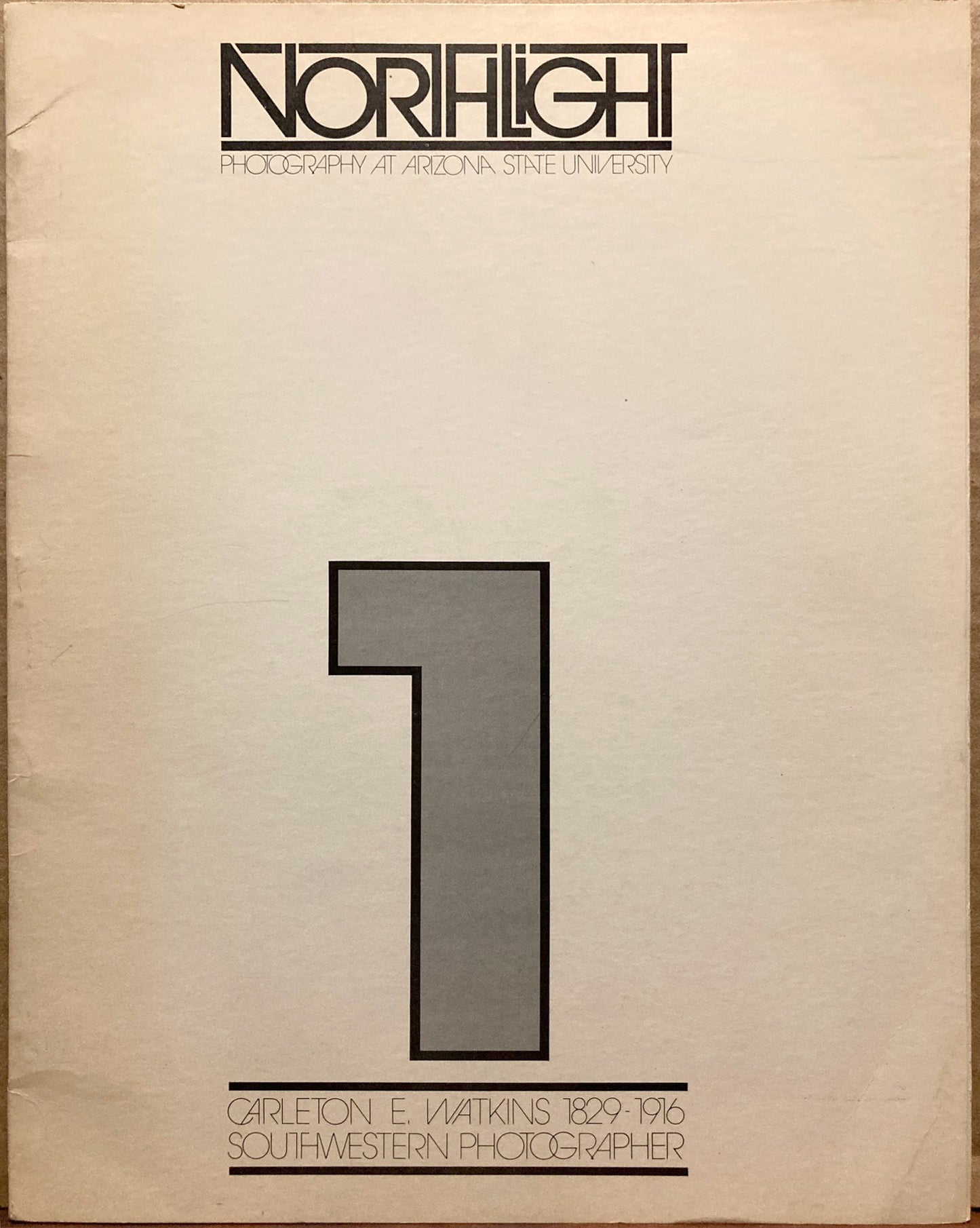
Issued as Northlight No. 1, January 1977, Arizona State University. 27 page biography plus 149 end notes in this scholarly biographical essay. Stiff wraps, VG+. Summary:
Carleton E. Watkins, 1829–1916, published in January 1977 as Northlight Number 1 by Arizona State University, is a specialized scholarly monograph authored by Paul Hickman. This publication served as the inaugural issue of the Northlight series, which was dedicated to the history and practice of photography.
A Focus on the Pioneer of the West
The book provides a rigorous biographical and critical assessment of Carleton Watkins, the man widely credited with creating the definitive visual record of the American West in the 19th century. Hickman’s research focuses on the intersection of Watkins' technical innovation and his commercial survival.
Key Content and Themes
-
The Mammoth Plate: Hickman discusses Watkins’ revolutionary use of the "Mammoth Camera," which utilized -inch glass plate negatives. This allowed Watkins to capture the Yosemite Valley and the Pacific Coast with a level of detail and scale that was unprecedented at the time.
-
Aesthetic Organization: The text explores how Watkins applied a sophisticated sense of classical composition to the "wilderness." Hickman argues that Watkins didn't just document nature; he "organized" the landscape into a series of grand, formal vistas that influenced the creation of the National Park system.
-
The Yosemite Series: A significant portion of the monograph is dedicated to the 1861 Yosemite photographs, which were instrumental in convincing the U.S. Congress to pass the Yosemite Grant in 1864.
-
Stereoscopy and Commercialism: Unlike many purely aesthetic studies, Hickman provides insight into Watkins' "The Yosemite Art Gallery" in San Francisco and his prolific production of stereoviews, which were the primary way the 19th-century public consumed his imagery.
Historical and Biographical Insight
-
Professional Struggle: Hickman details the tragic arc of Watkins’ life, including the loss of his business and his massive collection of negatives during the 1906 San Francisco Earthquake and Fire, which left the photographer impoverished and eventually blind.
-
Scholarly Contribution: Published during a period of renewed interest in 19th-century survey photography, this ASU monograph was vital in transitioning Watkins from a "forgotten commercial photographer" to a recognized master of American art history.
Significance
As the debut of the Northlight series, this volume set a high standard for academic photographic history. It remains a foundational text for understanding how Watkins used the camera to translate the physical immensity of the American frontier into a coherent, sublime visual language.