Gary Saretzky Photo Books
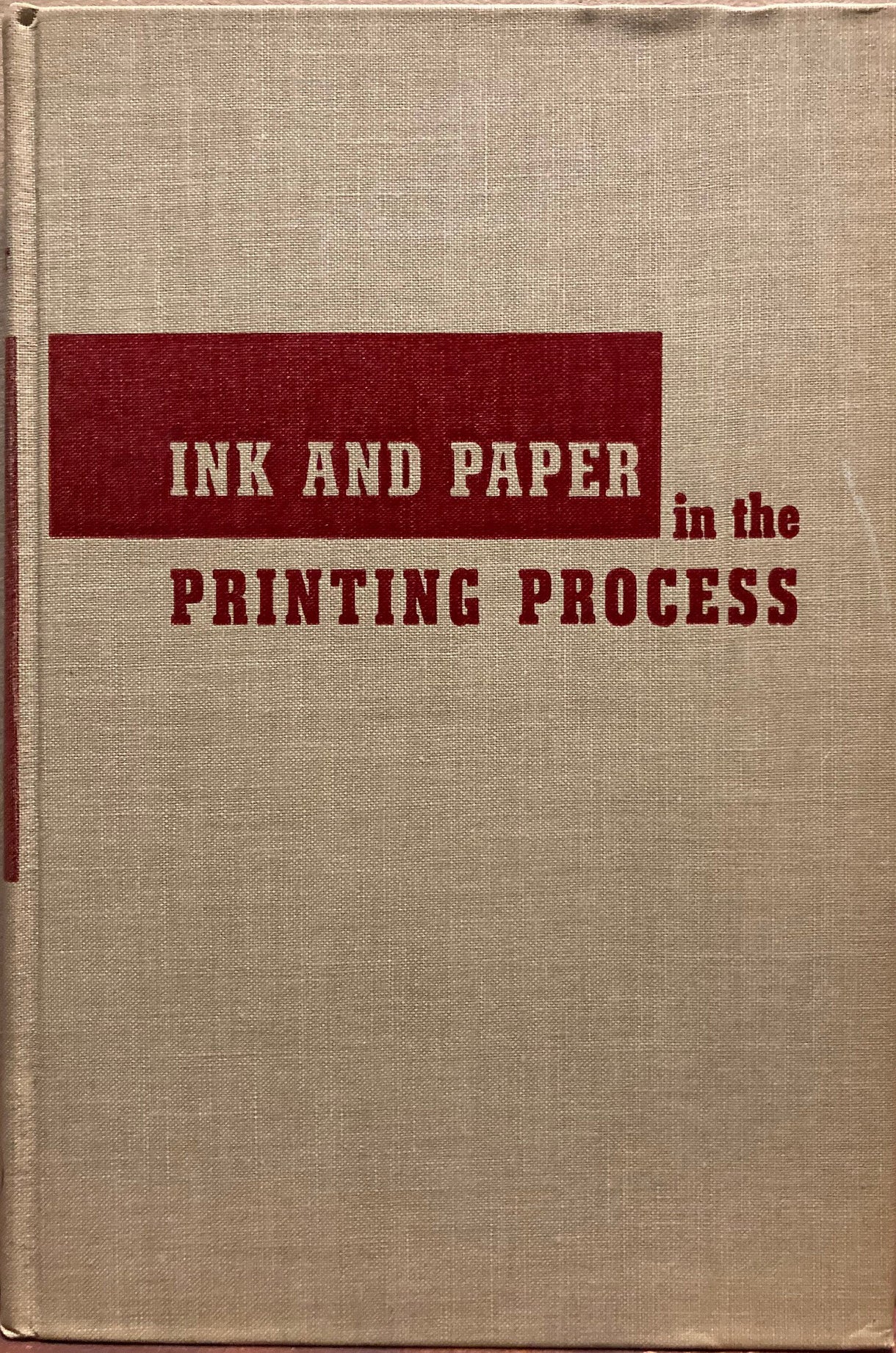
Voet, Andries. Ink and Paper in the Printing Process by Andries Voet.
Voet, Andries. Ink and Paper in the Printing Process by Andries Voet.
Couldn't load pickup availability
New York and London: Interscience Publishers, 1952. [Includes halftone, offset lithography, etc.] Gray cloth with red titling, VG+, no dust jacket. Summary:
Ink and Paper in the Printing Process, published in 1952 by Interscience Publishers, is a foundational technical treatise by Andries Voet, a noted chemist and research director in the ink industry. The book serves as a rigorous scientific bridge between the physics of fluid dynamics and the practical mechanics of graphic arts.
The Physics of the Impression
Voet’s primary objective was to move printing away from "rule-of-thumb" craftsmanship toward a predictable, measurable science. The book focuses on the interaction between the medium (ink) and the substrate (paper) during the split-second of the printing strike.
-
Ink Distribution and Transfer: A significant portion of the text is dedicated to the study of rheology—the flow of matter. Voet examines how ink behaves on rollers, how it splits between surfaces, and the mathematical variables that govern the thickness of the ink film.
-
The Concept of "Tack": The book provides one of the era’s most sophisticated analyses of "tack" (the internal cohesion of ink), explaining how it affects high-speed printing presses and its role in "picking" (where ink pulls fibers off the paper surface).
-
Capillary Action: Voet details how different paper porosities and surface tensions dictate how ink is absorbed, which in turn affects the final color density and "feathering" of the image.
Key Technical Themes
-
Discontinuous Flow: The text explores what happens to ink under the high pressure of the press, particularly the phenomenon of "misting" or "flying" in high-speed rotary printing.
-
Drying Mechanisms: Voet categorizes the various ways ink sets—through absorption, oxidation, and evaporation—providing chemical insights into how to prevent "set-off" (ink transferring to the back of the next sheet).
-
Optical Properties: The book also touches on the physics of light as it relates to the finished product, discussing how the surface of the paper and the gloss of the ink influence the viewer's perception of color and contrast.
Significance
Ink and Paper in the Printing Process remains a classic in print engineering and ink chemistry. It was one of the first comprehensive texts to apply the laws of physical chemistry to the printing plant, making it an essential historical reference for understanding the mid-century transition to high-speed, industrialized lithography and letterpress.
Target Audience: Chemists, ink manufacturers, and printing engineers seeking to understand the microscopic and molecular interactions that occur the moment paper meets the press.