Gary Saretzky Photo Books
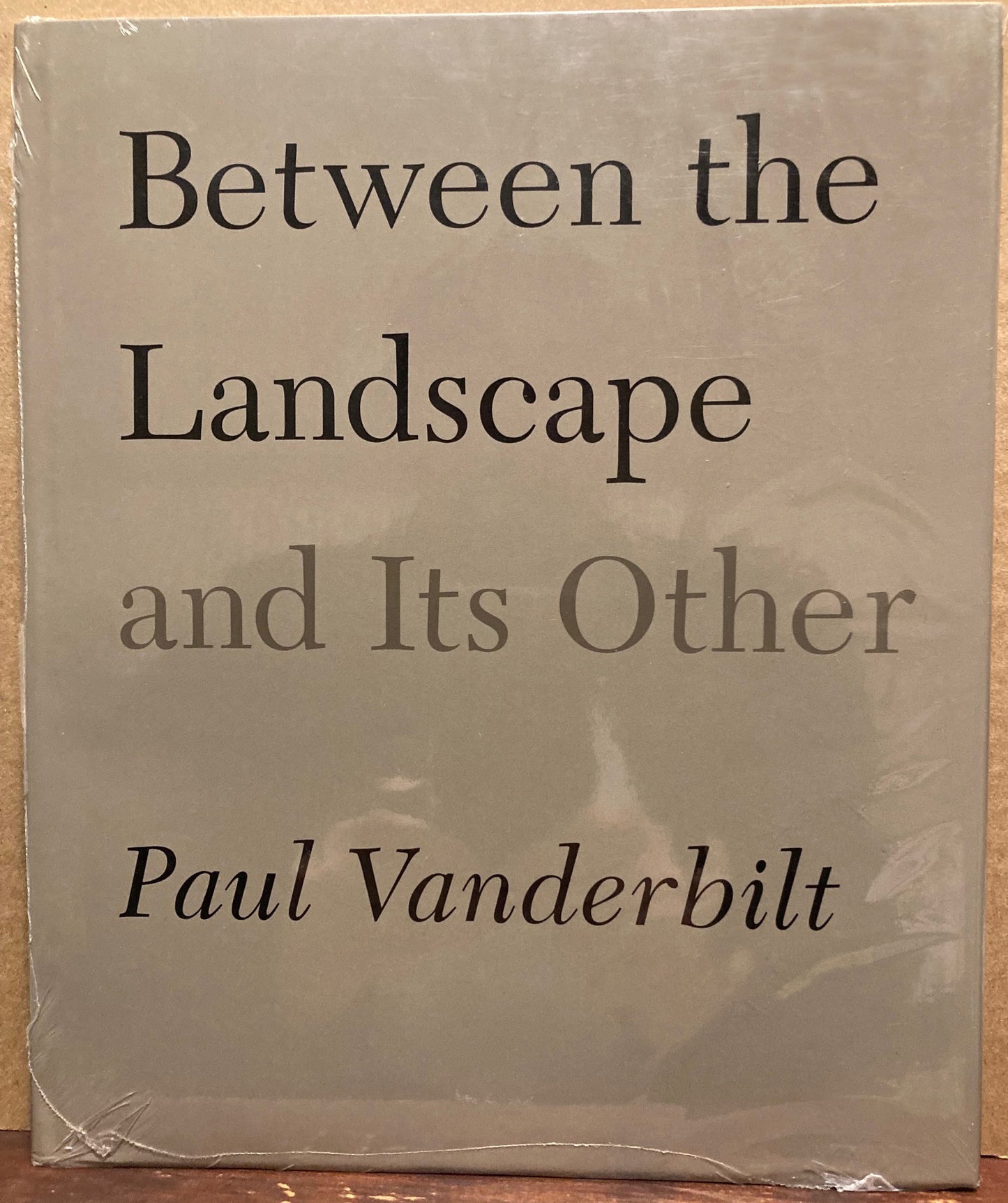
Vanderbilt, Paul. Between the Landscape and Its Other by Paul Vanderbilt.
Vanderbilt, Paul. Between the Landscape and Its Other by Paul Vanderbilt.
Couldn't load pickup availability
John Hopkins, 1993. 1st edition. [Fine black-and-white photographs by Vanderbillt, intelligently sequenced. Paul Vanderbilt (1905–1992) was a photographer and visual materials archivist who organized the huge FSA photograph files at the Library of Congress and later directed, and established the subject headings for, the visual materials collection at the State Historical Society of Wisconsin, now the Wisconsin Historical Society. He was a fine landscape photographer who carefully sequenced his prints in exhibitions.] Fine, new with dust jacket, in original unopened shrink wrap. Summary:
Between the Landscape and Its Other (1993), published by The Johns Hopkins University Press, is the definitive intellectual testament and artistic memoir of Paul Vanderbilt (1905–1992). Published posthumously, this 160-page illustrated volume acts as a philosophical treatise on photography, metaphor, and the art of archival sequencing, successfully summarizing a lifetime spent pioneering unorthodox ways of engaging with visual history.
The Curatorial Premise: Recombinant Iconography
Vanderbilt did not consider himself a traditional photographer or a standard filing clerk; he identified as an "iconographer." Having famously transformed Roy Stryker’s massive Farm Security Administration (FSA) archive at the Library of Congress into a structured research tool, and later building the Iconographic Collections at the State Historical Society of Wisconsin, Vanderbilt used this book to outline his theory of "recombinant visual materials":
-
The Mutable Image: He argues that a photograph's meaning is never static or permanently fixed by the original intent of the person who took it.
-
The Elusiveness of Truth: Rejecting the mid-century obsession with finding absolute literal "truth" in a document, Vanderbilt asserts that photography is a language of questions rather than answers. The true life of an image begins after it is finished, morphing depending entirely on the context in which it is viewed.
Thematic Panels and Metaphor
The core structural feature of the book is its presentation of Vanderbilt’s celebrated thematic panels and pairings.
-
The Visual Reshuffling: Vanderbilt purposefully pulled from diverse "stockpiles" of imagery—mixing his own sharp, minimalist mid-century landscape photographs of rural Wisconsin with forgotten historic portraits, casual snapshots, blueprints, and archival documents.
-
Creating a Sensorium: By placing these wildly disparate images side-by-side and pairing them with his own poetic, philosophical texts, Vanderbilt forced a conceptual spark. The text outlines how this physical grouping transforms ordinary objects into deep, universal metaphors, prompting viewers to discover "unnamable unities" and hidden emotional charges within the grid.
Landscape and Language
The "Landscape" in the book's title refers to both the literal physical geography Vanderbilt spent decades shooting (fields, architecture, small towns) and the internal mental landscape of human memory. The "Other" represents the elusive, poetic subtext that binds disparate memories together. Vanderbilt weaves commentary across chapters touching upon psychology, semantics, and values, consistently advocating for a renewed sense of "wonder and the sublime" when looking at the everyday world.
Significance
Between the Landscape and Its Other is highly regarded by art theorists and museum archivists for its curatorial philosophy. Decades before digital culture turned "curating" and image-aggregating into everyday behaviors, Paul Vanderbilt successfully proved that organizing, pairing, and re-contextualizing existing images is a profound fine-art medium in its own right—one capable of unlocking the hidden psychological depths of life itself.