Gary Saretzky Photo Books
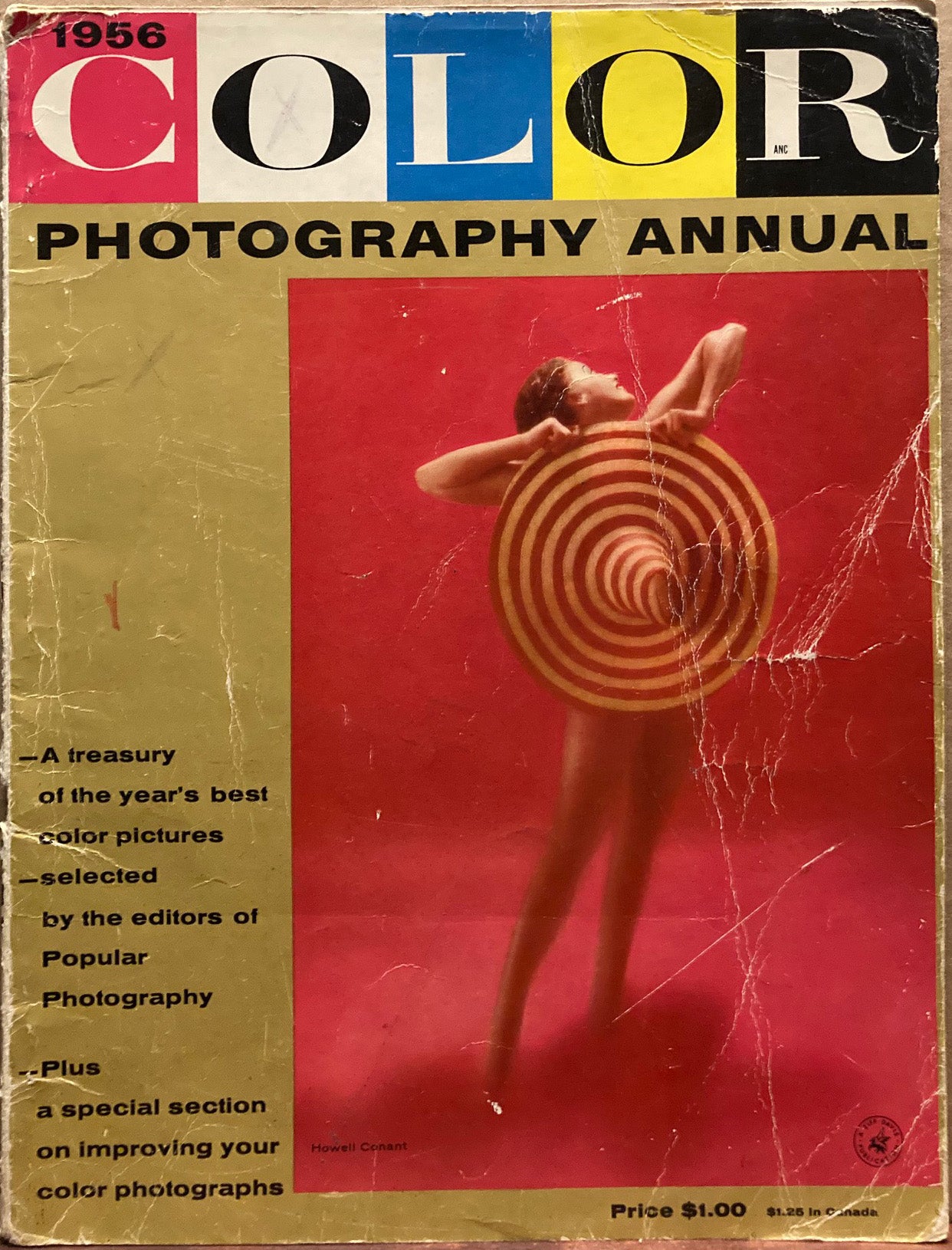
Annuals. Color. 1956 Color Photography Annual. A Treasury of the Year's Best Color Pictures Selected by the Editors of Popular Photography.
Annuals. Color. 1956 Color Photography Annual. A Treasury of the Year's Best Color Pictures Selected by the Editors of Popular Photography.
Couldn't load pickup availability
Ziff-Davis, 1956. Featuring "The Search for Color: A Short History," by Beaumont Newhall, with illustrations by Elias Goldensky, Louis Ducos du Hauron, James W. McDonough, Edward Steichen, et al.; Masters of Color: Irving Penn and Eliot Elisofon; The Future of Color: A Symposium, with Penn, Elisofon, Edward K. Thompson, and others; tips on improving your color photography, and more. Copies available: 1. VG- with cover creases and scratches, short piece missing from spine. Popular Photography business reply envelope stuck to page near back of book. 2. Good with cover creases and scratches, piece missing from spine. Two pages with photos by Jerry Yulsmann (not to be confused with Jerry N. Uelsmann) and Hy Peskin replaced with photocopies. Summary:
The 1956 Color Photography Annual, compiled by the editors of Popular Photography, serves as a landmark document marking the era when color transitioned from a technical novelty to a dominant creative force. At a time when Kodachrome and Ektachrome were becoming more accessible, this treasury curated the pinnacle of commercial, journalistic, and artistic color work.
Historical Perspective: "The Search for Color"
A cornerstone of the annual is an essay by Beaumont Newhall, the preeminent photo-historian of the time. Newhall traces the medium’s evolution from the earliest chemical experiments to the present.
-
Early Pioneers: The text is illustrated with works by Louis Ducos du Hauron (an early theorist of subtractive color) and James W. McDonough.
-
Artistic Evolution: It highlights the transition from the experimental Autochromes of Edward Steichen to the refined technical mastery of Elias Goldensky, contextualizing color as a long-standing pursuit finally reaching maturity.
Masters of Color: Penn and Elisofon
The annual highlights two titans of the industry who defined the aesthetic standards of the 1950s:
-
Irving Penn: Featured for his meticulous, minimalist studio work. Penn’s contribution demonstrates how color could be used with the same formal rigor and "painterly" restraint as black-and-white.
-
Eliot Elisofon: A LIFE magazine staffer known for his "color control," Elisofon is showcased for his ability to use color expressively and dramatically, often using filters to enhance the emotional tone of a scene.
The Future of Color: A Symposium
A forward-looking centerpiece of the book is a symposium featuring Irving Penn, Eliot Elisofon, and Edward K. Thompson (Managing Editor of LIFE).
-
Predicting Dominance: The participants discuss the inevitability of color becoming the standard for storytelling and advertising.
-
Technical vs. Creative: The dialogue explores the tension between the complex technical requirements of color processing and the need for photographers to maintain their creative "eye" amidst the chemistry.
Core Themes and Significance
-
The "Treasury" Concept: By selecting the "best pictures" of the year, the editors established a new canon for color photography, moving it away from the casual "snapshot" and toward high art.
-
Instructional Value: Like many Popular Photography publications, the annual provided technical data for the featured images, serving as a textbook for amateurs hoping to replicate the results of the masters.
Historically, the 1956 Annual captured a "tipping point." It arrived just as color was moving out of the exclusive realm of high-budget fashion and into the hands of the general public, forever changing the visual language of the 20th century.