Gary Saretzky Photo Books
Untitled 4. Anthony Hernandez, Joseph Jachna.
Untitled 4. Anthony Hernandez, Joseph Jachna.
Couldn't load pickup availability
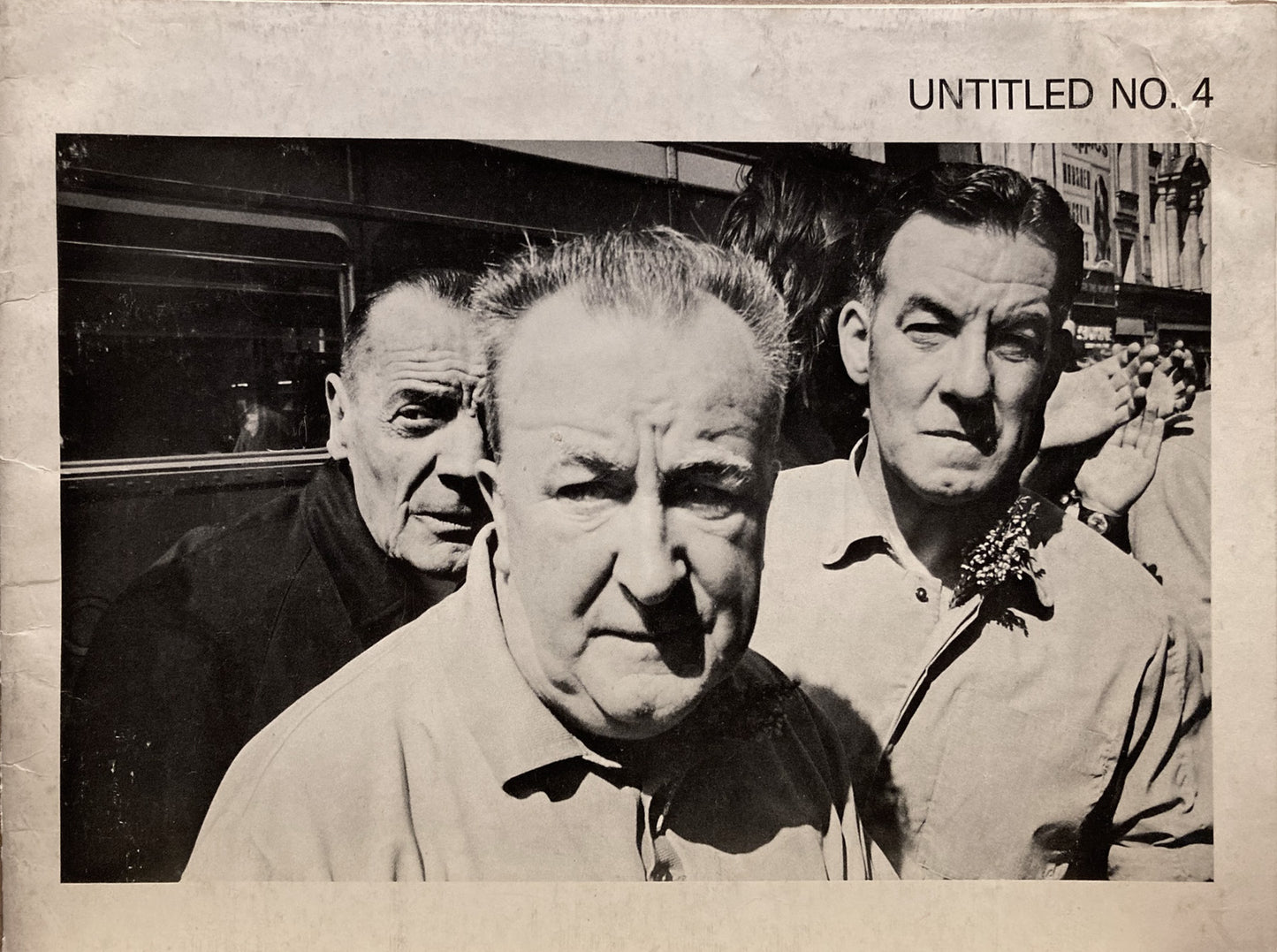
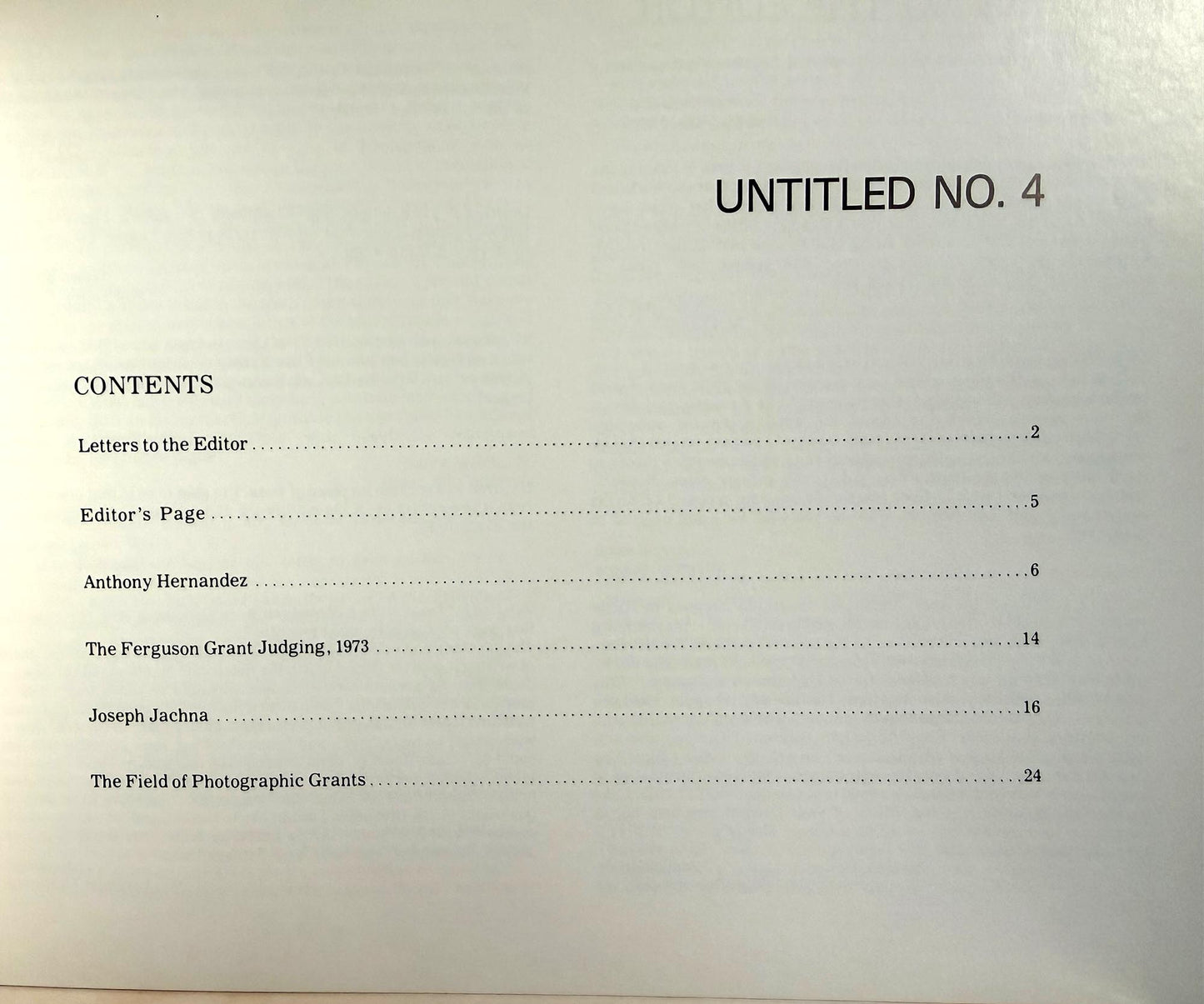
Friends of Photography, 1973. Featuring work by Anthony Hernandez in Saigon and Joseph Jachna, water images. An early number of this collectible series for which 58 were issued, 1972-1998. Very good, wraps, staple bound, crimp upper right corner of cover and scuff inside cover. A respectable copy. Summary:
Untitled 4: Anthony Hernandez, Joseph Jachna (1974) is a slim, softcover photography catalog published by the Friends of Photography in Carmel, California. Functioning as the fourth volume in their dedicated Untitled quarterly publication series, the book serves as a dual retrospective, providing an early mid-career look at two highly distinct, influential American photographers: Anthony Hernandez and Joseph Jachna.
Key Content and Artistic Styles
The catalog splits its focus equally, showcasing two diametrically opposed yet complementary approaches to the photographic medium:
-
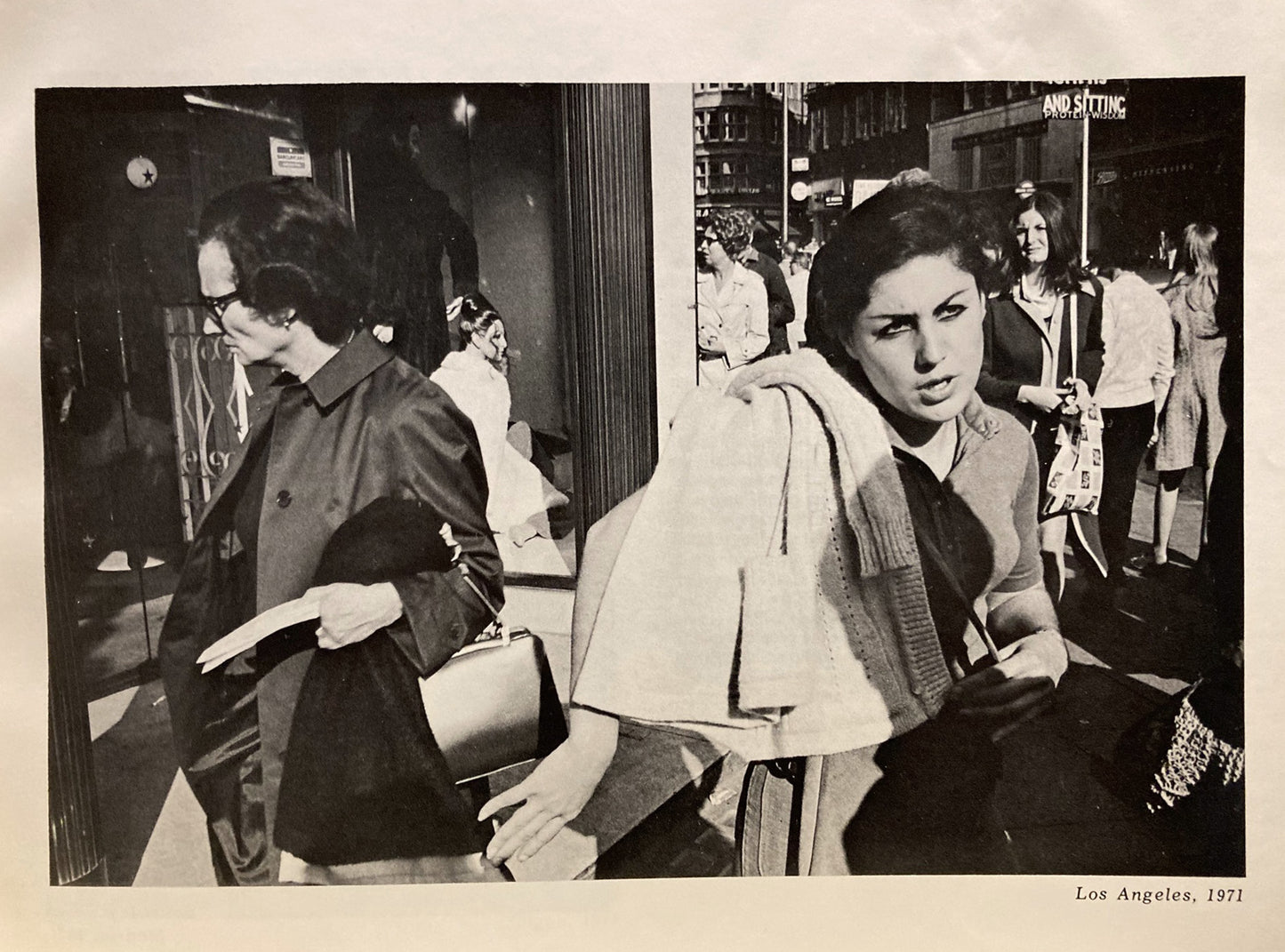
Anthony Hernandez (The Urban Landscape): Hernandez’s section documents his pioneering contribution to street photography. Utilizing a large-format camera held at waist level, his sharp, high-contrast black-and-white images capture ordinary citizens navigating the concrete, sun-bleached streets of downtown Los Angeles. His work rejects romanticized portraiture, focusing instead on the alienation, spatial dynamics, and grit of the modern urban environment.
-
Joseph Jachna (The Abstract Natural Landscape): In stark contrast, Jachna’s section highlights his deeply spiritual and formalist exploration of nature. A graduate of Chicago’s Institute of Design under the mentorship of Harry Callahan and Aaron Siskind, Jachna uses macro perspectives, unconventional angles, and mirror reflections to transform natural elements—such as water, ice, and sky—into surreal, fluid abstractions that challenge the viewer's perception of space.
Significance
Untitled 4 is a crucial historical document of 1970s American photography, capturing a moment when the medium was branching into wildly different directions. By pairing Hernandez's raw, documentary-driven urban realism with Jachna's cerebral, design-oriented natural abstraction, the publication highlights the vast, dual capability of the camera to act as both a mirror to society and a window into the subconscious.