Gary Saretzky Photo Books
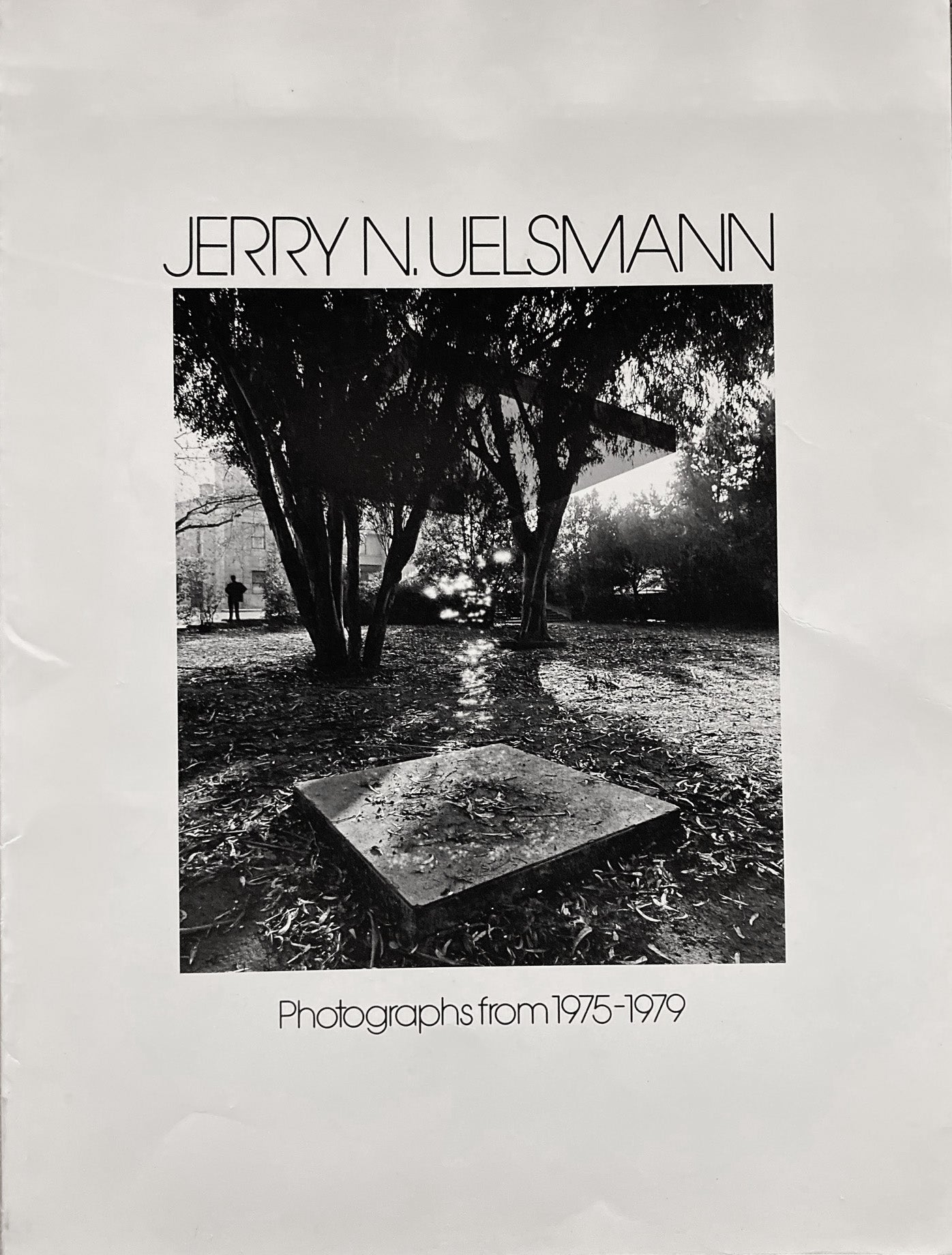
Uelsmann, Jerry N. Jerry N. Uelsmann. Photographs from 1975-1979.
Uelsmann, Jerry N. Jerry N. Uelsmann. Photographs from 1975-1979.
Couldn't load pickup availability
Edited and with an introduction by Steven Klindt. Essay by Jim Enyeart. Produced in conjunction with an exhibit at Chicago Center for Contemporary Photography, Columbia College, Chicago, Illinois, January 18-March 1, 1980. 75 full page illustrations of surrealistic photography. Stiff illustrated wraps (not issued in hard cover). Minor crimp and indentations, VG+ in custom made 4-mil polyester protector. Uncommon title. Summary:
Jerry N. Uelsmann: Photographs from 1975–1979 (1980) is a critically important exhibition catalog published by the Chicago Center for Contemporary Photography at Columbia College Chicago. Produced to accompany a major solo exhibition running from January 18 to March 1, 1980, this publication tracks a hyper-creative five-year period where Uelsmann pushed his legendary darkroom alchemy into deeper, more complex allegorical territory.
Edited and introduced by Steven Klindt, with a major critical essay by prominent photo-historian and curator James Enyeart, the volume documents Uelsmann's mid-career dominance over the analog surrealist medium.
1. Critical Essays and Theoretical Context
The publication provides a rigorous intellectual framework to decode Uelsmann's complex visual puzzles:
-
Steven Klindt’s Introduction: Klindt positions the exhibition as a crucial transition point. He analyzes how Uelsmann, by the dawn of the 1980s, had fully solidified his technique of "post-visualization," moving the art world past the debate of whether darkroom manipulation was valid and forcing a focus on the meaning behind the constructions.
-
Jim Enyeart’s Essay: Enyeart contributes an essential, close-reading analysis of Uelsmann’s working methodology. He breaks down how Uelsmann seamlessly pieces together wildly disparate negatives—manipulating scale, shadow, and perspective—to construct an alternative psychological reality that operates on the logic of dreams and symbols.
2. Visual Focus and Evolving Motifs (1975–1979)
The catalog showcases a curated selection of rich, high-contrast black-and-white plates documenting Uelsmann's output from the late 1970s. While maintaining his signature style, this body of work displays an increased formal complexity:
-
The Domestic and the Wild: A major recurring motif in this specific era is the aggressive integration of nature into interior spaces—such as roots breaking through hardwood floors, clouds functioning as ceilings, and forests growing inside grand parlors.
-
The Fragmented Figure: Features floating, disembodied hands, glowing torsos, and human silhouettes integrated directly into rock formations and water, exploring themes of isolation, universal connection, and mortality.
-
Architectural Illusions: The plates highlight his masterful use of symmetry, featuring impossible reflections, hovering structures, and doorways opening out into empty sky or deep woods, challenging the viewer's spatial awareness.
Significance
Jerry N. Uelsmann: Photographs from 1975–1979 stands as an invaluable historical ledger of late-20th-century photography. By compiling five years of Uelsmann’s peak darkroom mastery under the scholarly direction of Steven Klindt and Jim Enyeart, the Columbia College Chicago catalog successfully proved that Uelsmann's unique brand of visual poetry was not a static gimmick, but an ever-evolving, profound exploration of the human subconscious.
