Gary Saretzky Photo Books
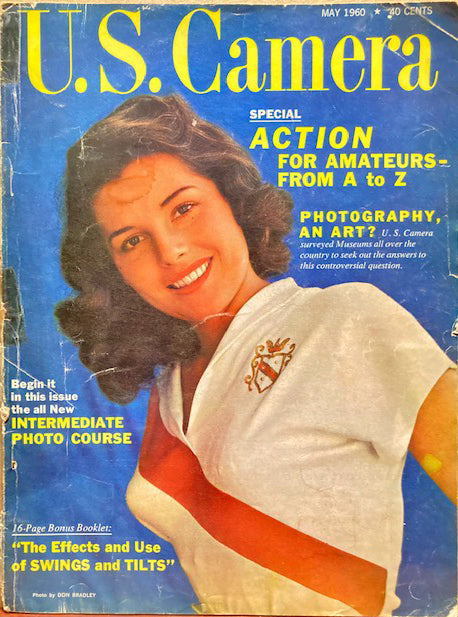
U.S. Camera. May 1960. Includes "Photography, An Art?" with survey of museums across the U.S.
U.S. Camera. May 1960. Includes "Photography, An Art?" with survey of museums across the U.S.
Couldn't load pickup availability
Technical articles on 8mm home movies with sound; swings and tilts; intermediate photo course on lighting; color photography by Arthur Rothstein. Numerous camera ads for Nikon, Minolta, Yashica, Kodak, Rolleiflex, et al. Rear cover detached, worn on spine. Summary:
U.S. Camera (May 1960), edited by Tom Maloney, is a pivotal mid-century issue of the premier American photography magazine. Published during a transitional era when photography was fiercely fighting to solidify its status within the fine-art establishment, this specific issue serves as an invaluable cultural and historical time capsule.
The undisputed centerpiece of the magazine is the groundbreaking, comprehensive special report titled "Photography, An Art?", which features an extensive national survey of major museums across the United States.
The Feature Report: "Photography, An Art?"
This extensive editorial investigative piece tackles the decades-long institutional debate over whether the photographic medium belonged in elite fine-art galleries alongside classical painting and sculpture.
The Museum Survey
The editors conducted a sweeping, nationwide survey of America's leading cultural institutions to map out their official policies, financial budgets, and general attitudes toward collecting and exhibiting photography. The findings revealed a deep institutional divide across the country:
-
The Champions: The report highlights trailblazing institutions like the Museum of Modern Art (MoMA) in New York (under the visionary direction of Edward Steichen) and the George Eastman House in Rochester, which treated photography as a vital, independent fine art with dedicated departments, permanent galleries, and active acquisition budgets.
-
The Traditionalist Resistance: Conversely, the survey exposes that many major metropolitan and regional museums still relegated photography to the basement of "historical documentation" or "commercial craft." Many institutions admitted to having no permanent photography collections, no dedicated curatorial staff, and zero budget allocated for purchasing photographic prints.
-
The Verdict: The feature acts as both a report card and a rallying cry, urging the American museum establishment to modernize its definitions of art and recognize the camera as a legitimate tool of profound individual expression.
Additional Visual and Technical Features
True to the classic U.S. Camera format, the May 1960 issue balances high-level art-world politics with practical darkroom engineering and portfolios from legendary image-makers:
-
Master Portfolios: The issue features high-quality, gravure-style print reproductions showcasing contemporary masters of photojournalism and fashion photography. These portfolios serve as the physical proof to back up the "Photography, An Art?" essay, demonstrating flawless composition, emotional depth, and elite visual storytelling.
-
Technical Gear and Darkroom Labs: The back half of the magazine is packed with late-1950s/early-1960s gear reviews, tracking the rapid industry rise of Japanese 35mm Single-Lens Reflex (SLR) cameras and automated light meters. It includes deep-dive columns on film chemistry, speed ratings, and processing techniques aimed at helping amateur darkroom enthusiasts achieve exhibition-quality prints.
-
Vintage Advertising: The issue is heavily illustrated with mid-century advertisements from iconic photographic giants like Kodak, Ansco, Leica, and Polaroid, capturing the booming consumer landscape of post-war American hobby photography.
Significance
The May 1960 issue of U.S. Camera remains highly prized by photo-historians and collectors. By compiling the "Photography, An Art?" museum survey, publisher Tom Maloney successfully documented the exact structural turning point of the medium—capturing the institutional anxiety, regional biases, and ultimate triumph of photography as it permanently forced its way into the grand halls of American art history.
