Gary Saretzky Photo Books
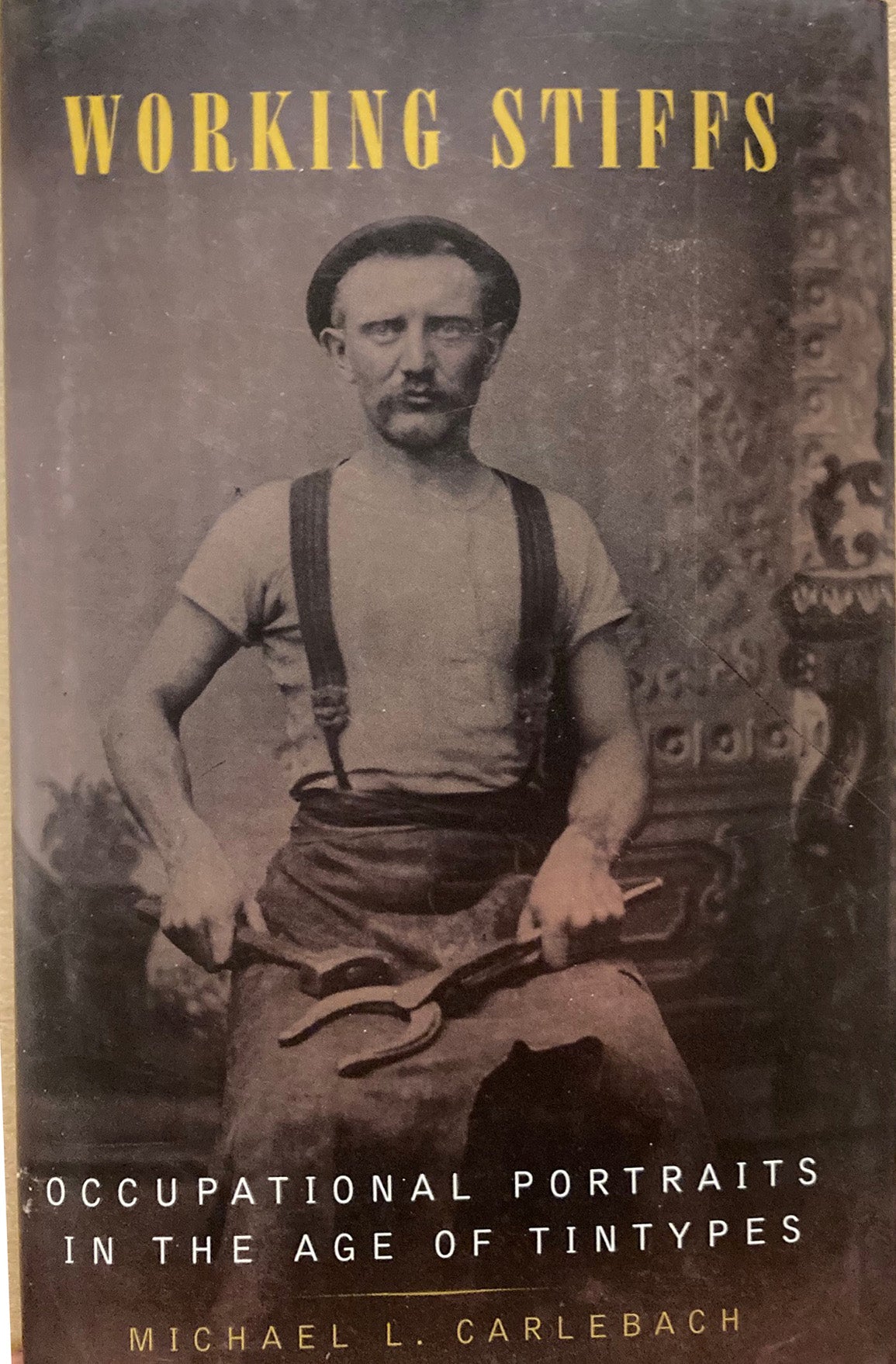
Tintypes. Working Stiffs: Occupational Portraits in the Age of Tintypes by Michael Carlebach.
Tintypes. Working Stiffs: Occupational Portraits in the Age of Tintypes by Michael Carlebach.
Couldn't load pickup availability
Smithsonian Institution, 2001. 1st edition, 1st printing, like new with protected dust jacket. Occupational tintypes from the collection of photographer Ken Heyman. Issued at $25.95. Summary:
Here is the revised summary, omitting external references:
Working Stiffs: Occupational Portraits in the Age of Tintypes by Michael L. Carlebach explores a unique genre of 19th-century photography: "occupational portraits," which captured everyday working-class Americans posing proudly with the tools of their trades.
Core Themes and Insights
-
The Rise of the Tintype: Patented in 1856, the tintype was cheap, durable, and fast to produce. Carlebach explains how this technological shift democratized photography. For the first time, common laborers—who were previously excluded from the expensive portrait culture of the upper classes—could afford to document themselves.
-
Pride in Craftsmanship: The book showcases a variety of tintypes featuring ordinary workers, including plumbers holding wrenches, carpenters with saws, textile workers with spindles, and icemen with tongs. These images reflect a direct dignity; the subjects intentionally chose to be remembered by their labor rather than their leisure.
-
A Shield Against Industrialization: The late 19th century marked a shift toward a depersonalized, factory-driven system. These portraits functioned as a way for a disappearing class of self-employed artisans and journeymen to assert their individuality and the essential nobility of their work.
-
Historical Re-evaluation: While mainstream history has sometimes dismissed tintypes as cheap novelties, they serve as invaluable cultural artifacts. The book contrasts these historical images with modern conventions, noting that contemporary portraiture is far more likely to document lifestyle and material possessions than the actual labor that defines a person's days.
