Gary Saretzky Photo Books
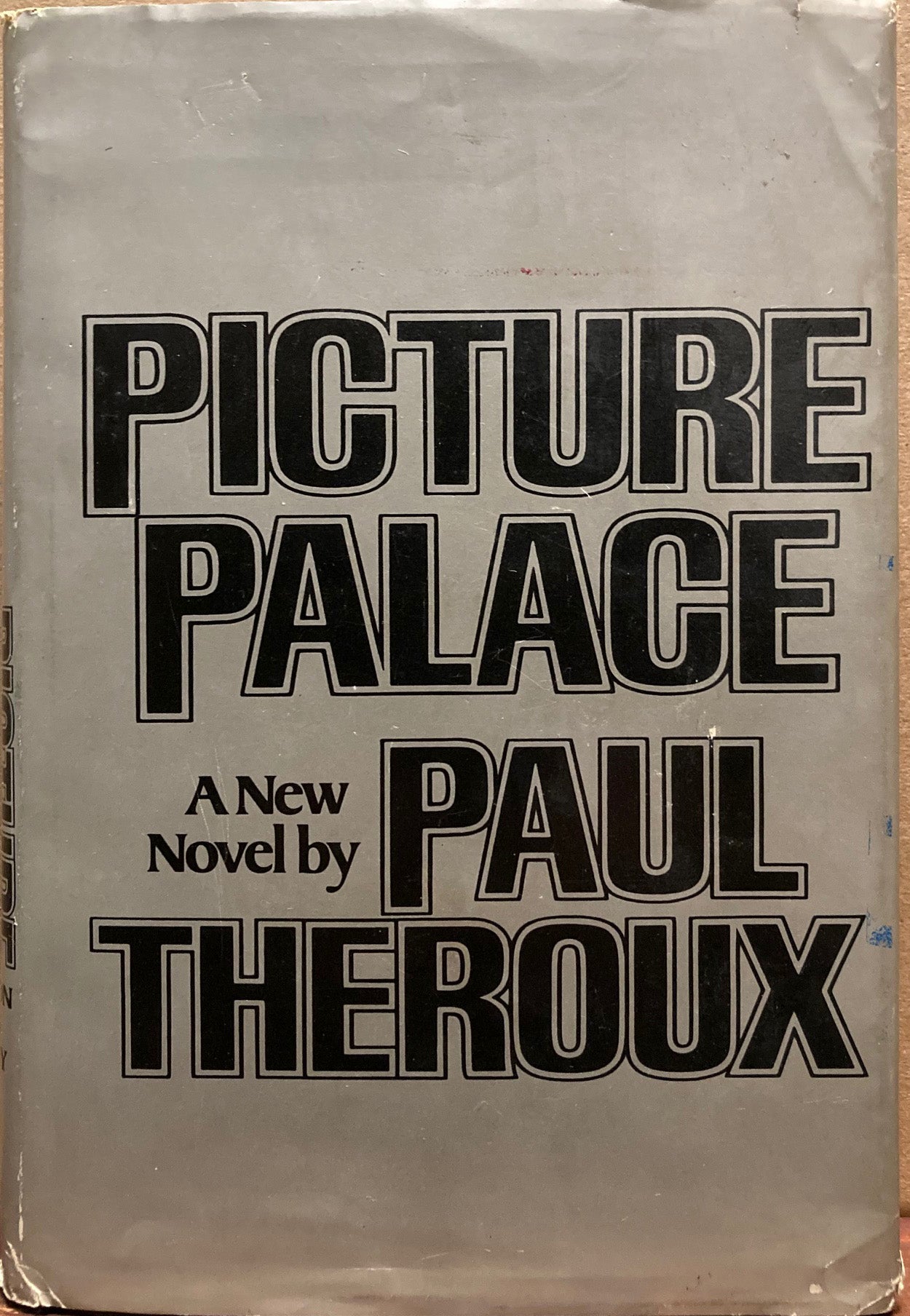
Theroux, Paul. Picture Palace, novel by Paul Theroux re woman photographer.
Theroux, Paul. Picture Palace, novel by Paul Theroux re woman photographer.
Couldn't load pickup availability
Houghton Mifflin, 1978. 1st edition. [Novel about a woman photographer who, like Imogen Cunningham and Clara Sipprell, photographs Alfred Stieglitz with his own camera but temporarily loses her sight after seeing her brother and sister copulating.] Summary:
Picture Palace is a satirical novel by American author Paul Theroux. Combining elements of historical fiction and psychological drama, the book explores the relationship between art, memory, and emotional trauma.
Plot Overview
The story centers on Maude Coffin Pratt, a cantankerous, fiercely independent 70-year-old woman who is widely considered one of the world's greatest living photographers. Renowned for her uncanny ability to strip away the masks of her subjects, Maude has spent fifty years photographing the famous, the obscure, and the obscene—including literary and artistic icons.
As a young archivist arrives at her home to assemble a comprehensive retrospective of her life's work, Maude is forced to look through thousands of her old prints. This deep dive into her physical archives triggers a parallel journey into the "picture palace" of her mind, unearthing heavily suppressed memories and exposing the dark secrets behind her creative drive.
Key Themes
-
Art as a Crutch and Salvation: The novel explores the idea that artistic genius often stems from emotional arrest or personal deformity. For Maude, the camera was initially a tool to capture the attention of her older brother, Orlando, with whom she shared a desperate, incestuous passion. Her career was born out of a desire to see and be seen by him.
-
The Illusion of Sight: After witnessing a devastating betrayal involving Orlando and their sister, Phoebe, Maude experiences a psychological period of hysterical blindness. Theroux uses this to examine the duality of vision: Maude can capture the objective truth of the world through a lens, yet remains willfully blind to her own tragic realities.
-
The Exploitative Nature of Photography: Through Maude's cynical interactions with cultural figures, the novel satirizes the photography world and critiques the medium as a predatory act that "peels away layers" of its subjects while allowing the artist to remain safely hidden behind the shutter.
The novel serves as a vibrant, complex character study of a woman who spent her entire life exposing the inner secrets of others to avoid facing the tragedies of her own.
Copies available:
- Very good with dust jacket with price label on flyleaf.
- Very good without dust jacket.