Gary Saretzky Photo Books
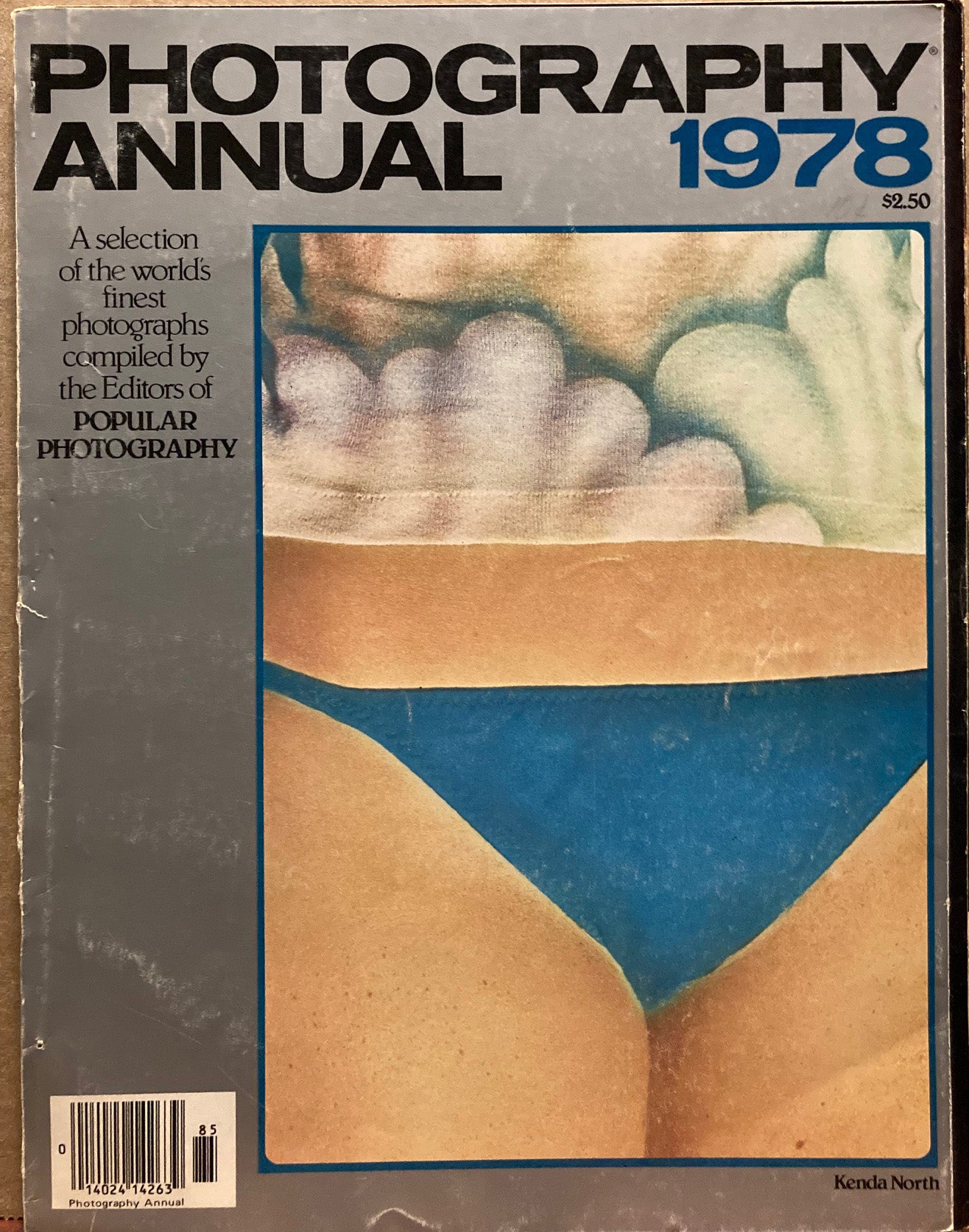
Annuals. Photography Annual 1978. A Selection of Fine Photographs Compiled by the Editors of Popular Photography.
Annuals. Photography Annual 1978. A Selection of Fine Photographs Compiled by the Editors of Popular Photography.
Couldn't load pickup availability
Edited by Jim Hughes. Ziff-Davis, 1977. Portfolios by David Attie, Roger Freeman, Ivan Farkas, B.A. King, Atget, Max Waldman, Marcus Halevi, Cheryl Younger, J. Seeley, Roberto Salbitani, Rosamond Wolff Purcell, Arno Minkkinen, Elizabeth Heyert, Christian Vogt, Kenneth McGowan, Kenda North, Sonja Bullaty, Press Pictures, JoAnn Callis, Mark Feldstein, Garret Korfitzen; Olivia Parker, Steven Hirsch, Nancy Crampton, Robert Gray. Articles include "Art & Money: Selling Out Is Hard to Do," with interviews with Duane Michals, Neal Slavin, Eva Rubinstein, Ryszard Horowitz, Ralph Gibson, Henry Sandbank, Paul Katz, Eve Sonneman, Marvin Heiferman, Jill Freedman, Harold Jones, Dick Frank, and Michael de Camp, with photos of the photographers. VG+, wraps as issued, with chip at base of spine. Summary:
The Photography Annual 1978, published by Popular Photography, serves as a critical survey of the medium during a decade of massive institutional growth. It captures the tension between photography’s established history and its burgeoning status as a high-commodity art market asset.
Key Discussion: "Art & Money"
The centerpiece of the volume is the provocative article "Art & Money: Selling Out Is Hard to Do." Through a series of interviews with photographers and gallerists, it addresses the existential and financial shift occurring in the late 70s.
-
The Commercial vs. The Artistic: Figures like Duane Michals, Ralph Gibson, and Eva Rubinstein discuss the difficulty of maintaining artistic integrity while navigating the newfound interest from collectors.
-
The Industry Perspective: Interviews with insiders like Marvin Heiferman, Harold Jones, and Jill Freedmanprovide a behind-the-scenes look at how the "fine art photograph" was being priced, marketed, and institutionalized.
-
The Commercial Crossover: Ryszard Horowitz and Henry Sandbank offer insights into the sophisticated world of high-end advertising photography and its relationship to personal vision.
Featured Portfolios
The annual balances contemporary experimentalism with a reverence for the past, featuring a wide range of aesthetic approaches:
-
The Historical Anchor: Eugène Atget is featured, providing a classical foundation for the modern portfolios and highlighting the era's renewed interest in early 20th-century documentation.
-
Theatrical and Figurative: Max Waldman, known for his haunting images of theater and dance (specifically Marat/Sade), contributes work that emphasizes the camera's ability to capture raw, staged emotion.
-
Conceptual and Narrative: David Attie showcases his innovative multi-image montages and "composite" style that influenced commercial and editorial photography.
-
Landscape and Environment: B.A. King and Roger Freeman present differing views of the landscape—one focusing on the poetic and personal, the other on formal precision.
-
Technical Innovation: J. Seeley is featured for his high-contrast, graphic "ortho" film techniques, which push photography toward the realm of printmaking and op-art.
-
Street and Social Observation: Portfolios by Marcus Halevi, Cheryl Younger, and Ivan Farkas document various facets of the human condition, from the gritty urban environment to more intimate social studies.
Core Themes
-
The Professionalization of Art: The issue reflects a time when "being a photographer" transitioned from a craft to a multifaceted career involving galleries, grants, and high-end print sales.
-
Diversity of Form: From Eve Sonneman’s diptychs to the "Straight" documentary tradition, the 1978 annual illustrates that there was no longer a single "correct" way to use the camera.
Significance
Photography Annual 1978 is a landmark for historians because it documents the birth of the modern photography market. By pairing the "Art & Money" symposium with a diverse array of portfolios, the editors highlighted the central conflict of the era: how to treat photography as a serious art form while managing its newfound commercial success.