Gary Saretzky Photo Books
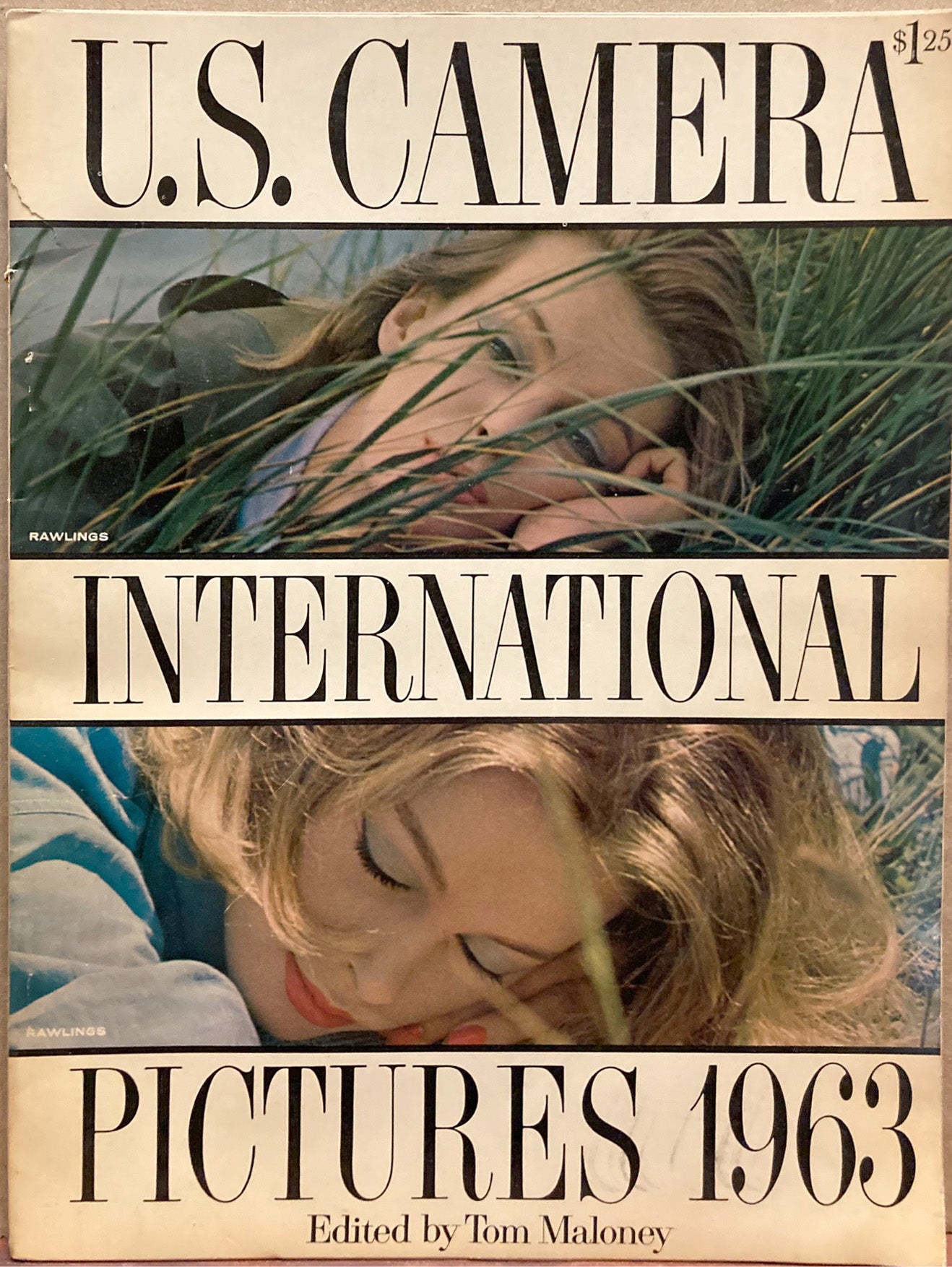
Annuals. U.S. Camera International Pictures Annual 1963.
Annuals. U.S. Camera International Pictures Annual 1963.
Couldn't load pickup availability
U.S. Camera Publishing, 1962. Edited by Tom Maloney. Includes section on President John F. Kennedy and family. Photographers and subjects include Ken Heyman; Frances McLaughlin-Gill; Ansel Adams; Norman Parksinson; Rolf Winquist; Peter Fink; Duane Michals; Pirkle Jones; Carl Sandburg; Edward Steichen; Frank Horvat; Jeanloup Sieff; Bert Stern; Kathryn Abbe; Ken Heyman; George W. Martin; Harold Halma; Will Connell; Algeria; Congo, Polaris; Astronauts; David Douglas Duncan; Picasso; John F. Kennedy; Philippe Halsman; David Plowden; Yousuf Karsh; W. Suschitzky; Brett Weston; Rolf Tietgens; George Krause; Harvey Zucker. Softcover with wear on spine, very good. Summary:
U.S. Camera International Pictures Annual 1963, edited by Tom Maloney, is a powerful editorial time capsule that captures the optimism and the burgeoning tension of the early 1960s. This volume is particularly significant for its intimate portrayal of the American presidency and its documentation of global geopolitical shifts.
The Camelot Feature: JFK and Family
The centerpiece of this edition is a major section dedicated to President John F. Kennedy.
-
Public and Private: The photographs go beyond official portraiture to show the "First Family" in relaxed, candid moments. This section solidified the "Camelot" image in the American psyche, showcasing a young, photogenic leadership that was inseparable from its visual representation.
-
The New Frontier: The imagery links the Kennedy administration to the era's technological triumphs, including features on Astronauts and the Polaris missile program.
Major Portfolios and Master Studies
The 1963 Annual features a "who's who" of both the Old Guard and the emerging "New York School" avant-garde:
-
The Masters: Ansel Adams and Brett Weston contribute high-fidelity landscapes and abstractions, while Yousuf Karsh and Philippe Halsman provide their signature, psychologically deep portraits of world leaders and icons.
-
David Douglas Duncan (Picasso): A standout feature showcases Duncan’s intimate look at Pablo Picasso. These photos capture the artist in his studio and home, revealing the domestic life of a modern art titan.
-
Duane Michals: This volume marks an early appearance of Michals, who would go on to revolutionize the medium with his narrative sequences and handwritten text.
-
The Fashion Visionaries: Norman Parkinson, Frank Horvat, and Jeanloup Sieff represent the "New Look" in fashion photography—moving the genre out of the studio and into the streets with a sense of cinematic motion.
Global Conflict and Humanism
Reflecting the volatile political climate of 1962, the annual contains gritty, "concerned" photojournalism from the front lines:
-
Algeria and the Congo: Extensive coverage of the decolonization struggles and civil wars in Africa provide a stark, somber contrast to the glamour of the Kennedy and Picasso features.
-
Ken Heyman: Heyman’s work stands out for its sociological depth, capturing human behavior across diverse cultures with a warm, observant eye.
-
George Krause: Represents a darker, more gothic turn in street photography, focusing on the textures of poverty and faith.
Technical and Artistic Balance
-
The Steichen-Sandburg Connection: The book explores the creative kinship between photographer Edward Steichen and poet Carl Sandburg, celebrating the intersection of American literature and visual art.
-
Industrial Landscapes: David Plowden continues his documentation of the vanishing American industrial age, focusing on the stark beauty of bridges and locomotives.
-
The "U.S. Camera" Aesthetic: As always, the volume is meticulously printed, often featuring Technical Data for the photographs, serving as both an art gallery and a masterclass for the 35mm and 120-roll film era.
Significance
The 1963 Annual is a study in power and personality. By placing the "New Frontier" of the Kennedy White House alongside the ancient creativity of Picasso and the raw violence of the Congo, the editors presented a world that was rapidly modernizing but still deeply scarred. It remains a vital reference for the transition from the mid-century "Life Magazine" style to a more complex, multifaceted visual world.