Gary Saretzky Photo Books
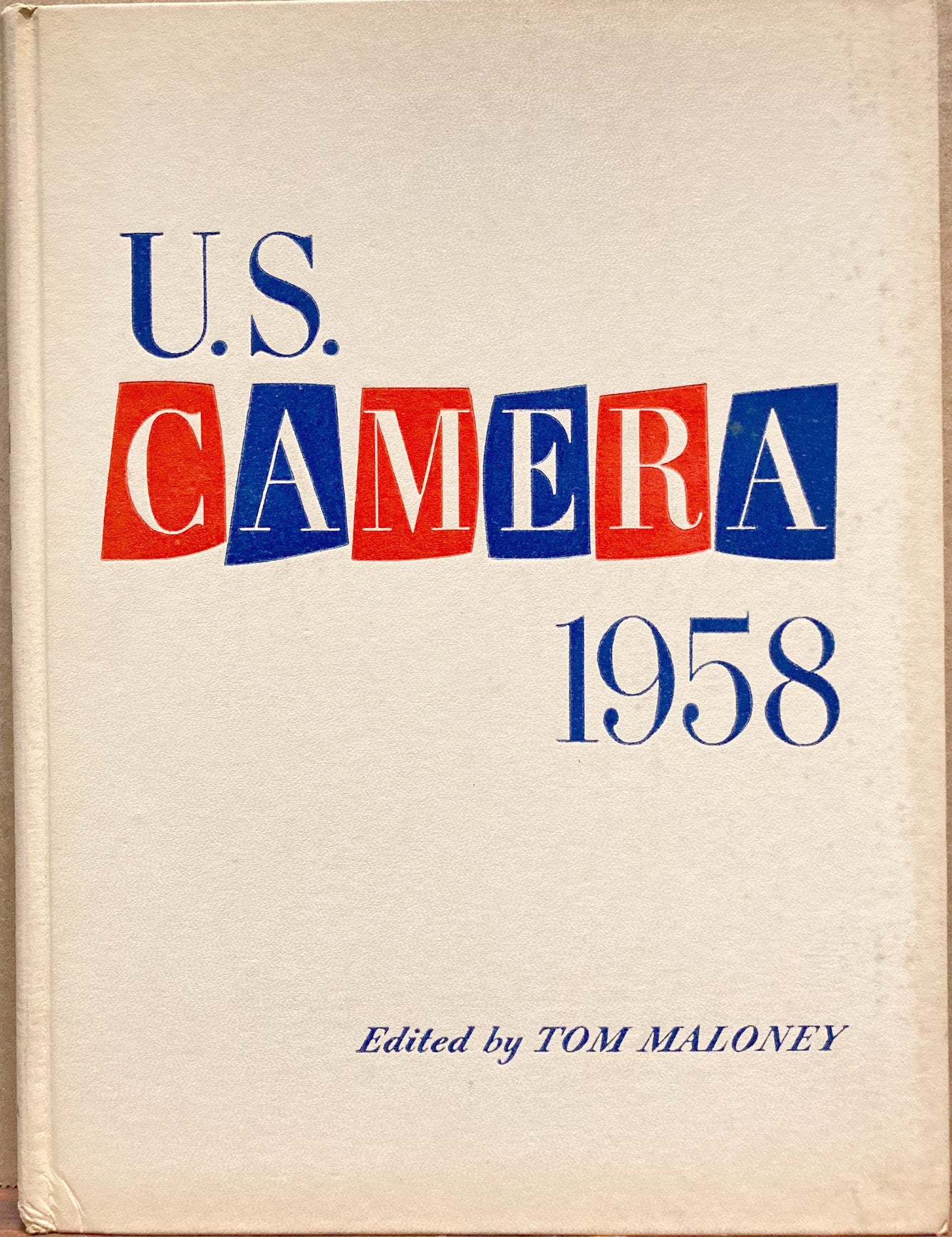
Annuals. U.S. Camera Annual 1958. Featuring Robert Frank.
Annuals. U.S. Camera Annual 1958. Featuring Robert Frank.
Couldn't load pickup availability
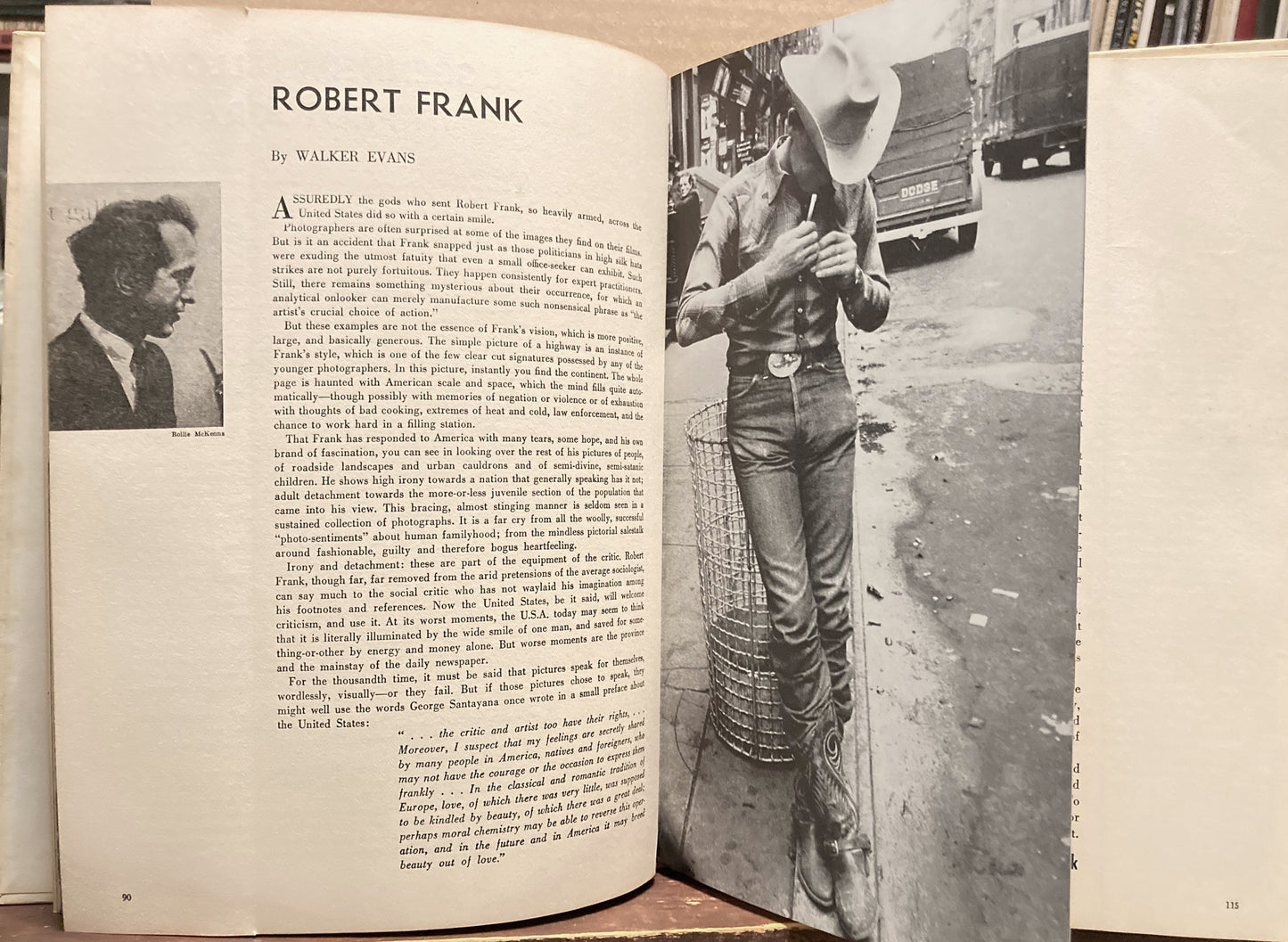
U.S. Camera Publishing, 1957. Edited by Tom Maloney. [With special section containing the first publication of photos from Robert Frank, The Americans, including some that didn't make the final cut, with an introduction by Walker Evans. Other contributors include Brassai; Dan Weiner; B. Gallagher; Andreas Feininger; Harold Feinstein; Peter Basch; Ferenc Berko; Edouard Boubat; Bill Brandt; Wynn Bullock; René Burri; Joe Clark; Larry Colwell; Andre De Dienes; Mario Giacomelli; Frank Horvat; Hoyningen-Huene; Anthony Armstrong Jones; Charles Kerlee; Dorothea Lange; Jacques Lowe; Russell Lee; Rollie McKenna; Wayne Miller; Louis Stettner; W. Suschitzky; Todd Walker; Rolf Winquist; Michael Wolgensinger; Harold Feinstein; Space program; Hungary; Eugene Cook; New York Art Directors Club; Richard Avedon; Irving Penn, et al.] Hardcover, illustrated paper over boards, not issued with dust jacket but just a plain glassine wrapper, which is not present on this copy. Good plus with darkening and yellowing along fore edges and along bottom edge of rear cover; moderate shelf wear; internally near fine. Summary:
U.S. Camera Annual 1958, edited by Tom Maloney, is one of the most significant volumes in the history of photographic literature. It is primarily revered for hosting the first American publication of images from Robert Frank’s The Americans, a sequence that would fundamentally alter the trajectory of 20th-century photography.
The Robert Frank Breakthrough
The centerpiece of this edition is the portfolio of Robert Frank. At the time, Frank’s work was considered radical and "anti-photographic" due to its grainy, tilted, and somber perspective on the American Dream.
-
The "Unpublished" Images: This section is unique because it includes several photographs from Frank's cross-country journeys that were ultimately excluded from the final 1958/59 book editions of The Americans.
-
Introduction by Walker Evans: The inclusion of an introduction by Walker Evans—the dean of American documentary photography—served as a crucial "passing of the torch." Evans provided the intellectual framework to understand Frank’s "clinical" and "ironic" eye.
Global Turmoil and Scientific Frontiers
Reflecting the geopolitical tensions of 1957, the Annual contains raw, historical documentation of major world events:
-
The Hungarian Revolution: Gritty, on-the-ground coverage of the 1956 uprising against Soviet rule, capturing the violence and desperation in the streets of Budapest.
-
The Space Program: In the wake of the Sputnik launch, this volume features early scientific and speculative imagery regarding the "Space Race," reflecting a world suddenly obsessed with the cosmos.
-
New York Art Directors Club: A curated look at the intersection of photography and high-end commercial design, showcasing how the "New Vision" was being applied to advertising.
A Diverse Masterclass
The 1958 edition acts as a bridge between the "Humanist" school and the emerging "New Realism":
-
The Giants: Portfolios by Richard Avedon and Irving Penn represent the pinnacle of studio control and elegance, while Bill Brandt and Brassaï provide a darker, more surreal European perspective.
-
The Humanist Lens: Dorothea Lange and Russell Lee (of FSA fame) represent the American documentary tradition, while Edouard Boubat and René Burri offer lyrical observations of post-war global life.
-
Formalism and Light: Wynn Bullock and Andreas Feininger contribute deep explorations of nature, scale, and the physics of light.
-
Street and Style: Notable contributions from Louis Stettner, Harold Feinstein, and Mario Giacomellihighlight the trend toward more subjective, emotionally charged street photography.
Portraits of the Arts
-
Eugene Cook: A specialized section focusing on the world of music and theater, capturing the kinetic energy of performers and composers.
-
Anthony Armstrong-Jones: An early look at the work of the man who would become Lord Snowdon, showing his burgeoning talent for environmental portraiture.
Significance
The 1958 Annual is a "Holy Grail" for collectors because it represents the exact moment the "Snapshot Aesthetic" went mainstream. By placing Robert Frank’s gritty, skeptical view of the U.S. alongside the polished brilliance of Avedon and the historical weight of Dorothea Lange, the editors successfully mapped the past, present, and future of the medium. It is the volume that proved photography had moved beyond "the beautiful" into the realm of "the honest."