Gary Saretzky Photo Books
Sullivan, Connie. Petroglyphs of the Heart by Connie Sullivan.
Sullivan, Connie. Petroglyphs of the Heart by Connie Sullivan.
Couldn't load pickup availability
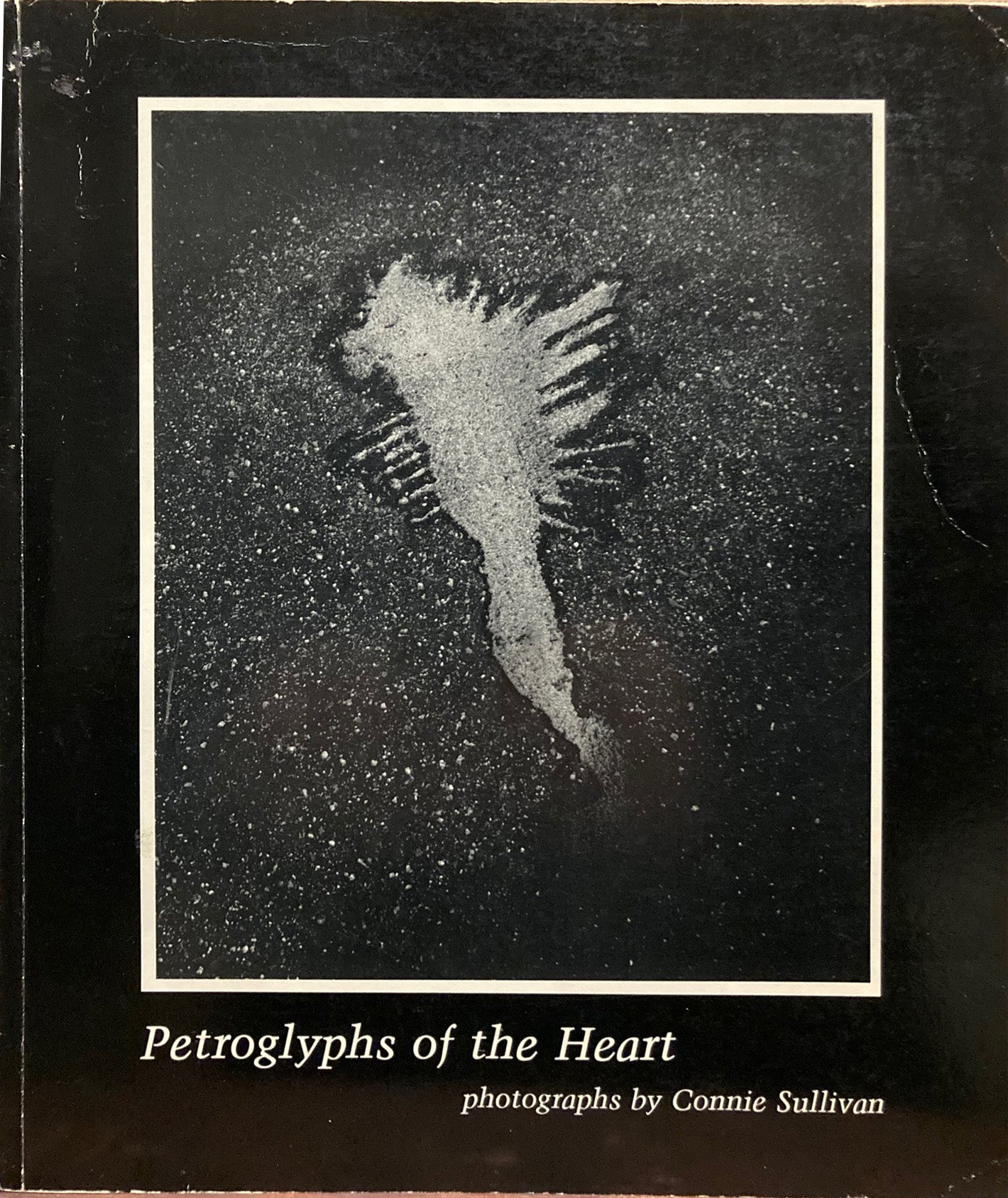
Morgan and Morgan, 1983. Introduction by Arnold Gassan. Wraps with several scuff marks, very good. Metaphorical dark photos of rocks. 64 pages, 62 plates, plus two photos on illustrated covers.
Connie Sullivan (born 1934) is an American fine art photographer known for her expressive, innovative imagery and masterful control of monochromatic light and shadow. Based in the Greater Cincinnati area, Sullivan’s work gained broad acclaim with her first major solo exhibition at the Contemporary Arts Center in Cincinnati in 1983. That same year, Morgan & Morgan published a dedicated monograph of her photographic imagery titled Petroglyphs of the Heart. Over a multi-decade career, her experimental visual works have been presented in solo and group exhibitions across North America, Europe, and Asia. Sullivan has been awarded prestigious creative fellowships from both the National Endowment for the Arts and the Ohio Arts Council, and her fine art prints are held in numerous private and museum collections internationally, including the Centre Pompidou.
Petroglyphs of the Heart is an intimate, expressive photography monograph that explores the deep intersections of human emotion, memory, and symbolic visual forms.
Key Elements of the Work
-
The Imagery: The monograph features 56 high-contrast, black-and-white photographs by Connie Sullivan that trace a highly focused and prolific period of artistic practice.
-
The Subject Matter: Much like the ancient rock carvings referenced in the title, the photographs lean heavily toward the abstract and the elemental. Rather than straightforward documentary images, the collection showcases a series of intimate, textured, and deeply evocative visual abstractions. It captures organic forms, fragments of landscapes, and close-ups that feel like coded, symbolic markings.
-
The Prose Contributions: The book features a formal introduction that provides a critical framework for interpreting the complex visual vocabulary of the work.
Narrative Intent
The monograph operates on a deeply psychological level, treating the camera as a tool to unearth and register internal emotional states. By likening the photographs to "petroglyphs of the heart," the work suggests that human feelings, vulnerabilities, and passions leave permanent, weathered impressions within our internal landscapes—much like prehistoric art carved into stone. Ultimately, the collection is a quiet, visual journey meant to bridge the gap between abstract art and the raw topography of human emotion.
