Gary Saretzky Photo Books
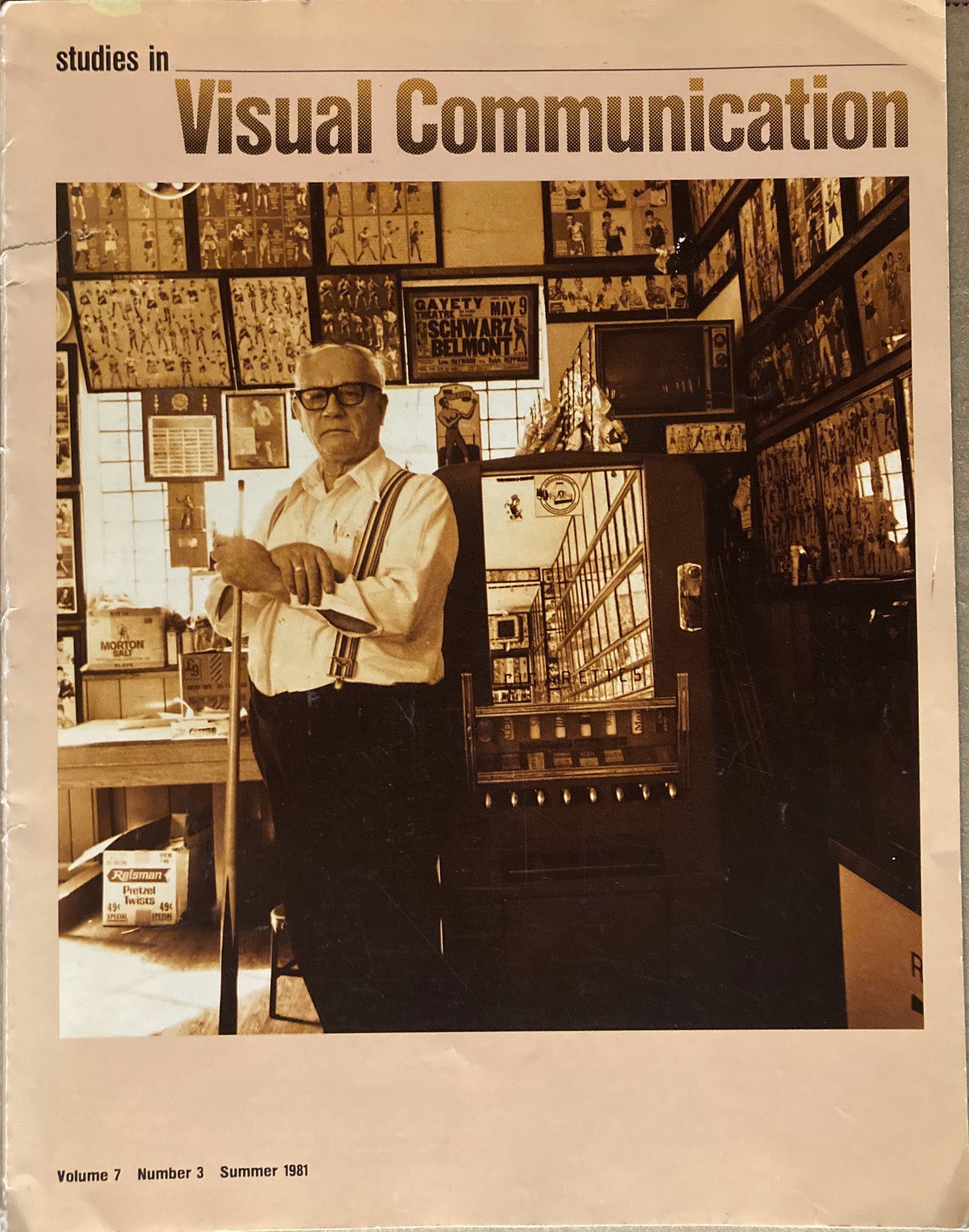
Studies in Visual Communication, Volume 7, Number 3, Summer 1981.
Studies in Visual Communication, Volume 7, Number 3, Summer 1981.
Couldn't load pickup availability
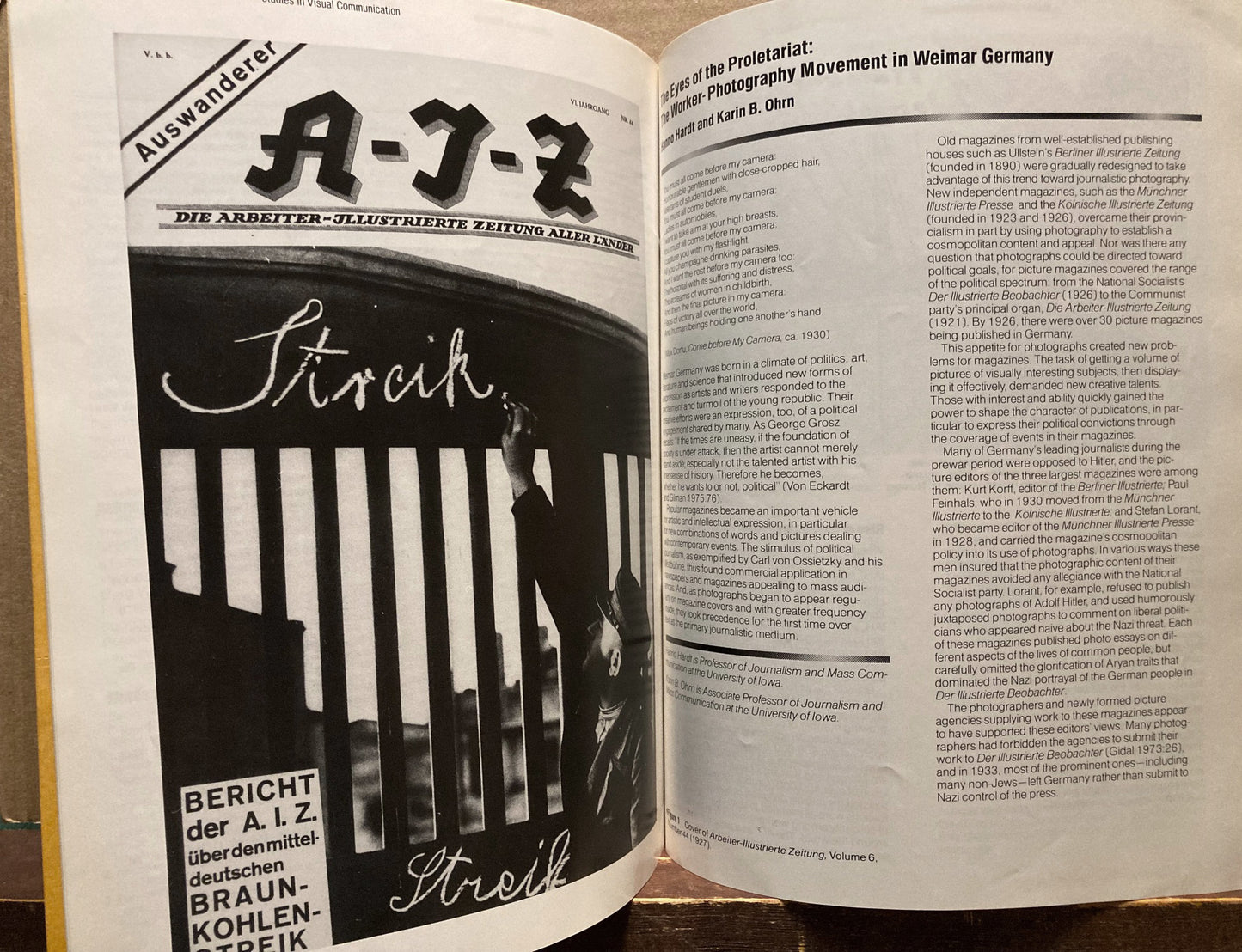
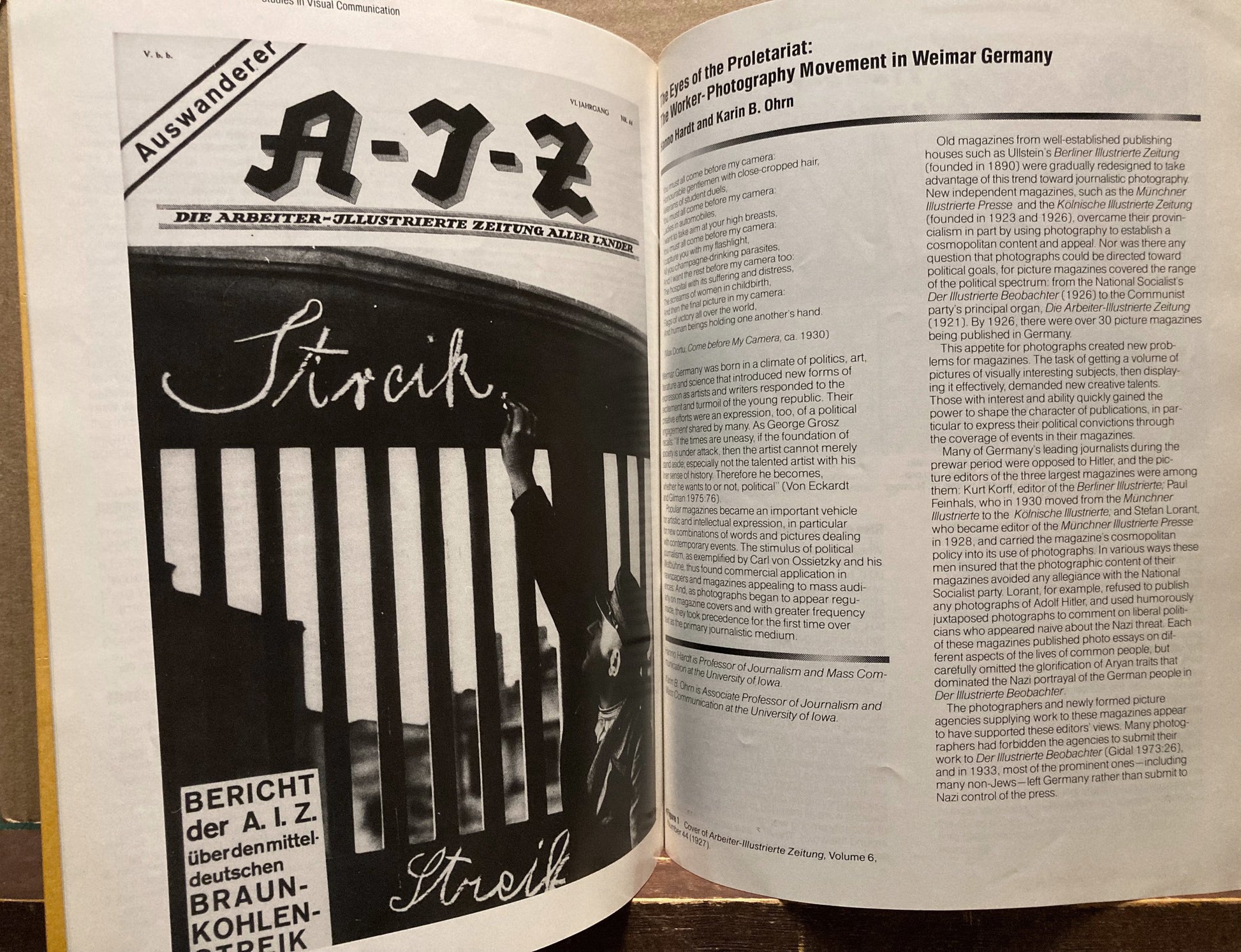
Larry Gross and Jay Ruby, editors. Subjects include Worker Photography Movement in Western Germany; AIZ magazine; Willi Munzenberg; Lilly Becher; Picture Magazines; and Der Arbeiter-Fotograf. Article by Hanno Hardt and Karin B. Ohrn on German worker photographers who influenced formation of the Photo League in New York, although that American organization is not discussed. Other articles on a documentary project in East Baltimore by Linda G. Rich, et al. and “Pose Preference in Social and Business Photographs" by Janet Mills Ragan and Albert D. Smouse. Complete issue, 96 pages, very good with wear at spine tips. Summary:
Studies in Visual Communication (Volume 7, Number 3, Summer 1981) is a 96-page academic journal dedicated to the sociological, anthropological, and historical analysis of visual media.
Key Elements of the Work
-
The Worker-Photography Movement: A primary anchor of this issue is a substantial historical analysis titled "The Eyes of the Proletariat: The Worker-Photography Movement in Weimar Germany." This research explores how working-class photographic collectives and pictorial magazines utilized the camera as a political and social tool, subsequently influencing global photographic leagues.
-
Documentary and Community Studies: The issue features a deep dive into regional documentary practice, specifically highlighting a comprehensive documentary project focused on the community and changing urban landscape of a major industrial city.
-
Empirical Visual Analysis: Moving into behavioral science, the volume includes specialized research titled "Pose Preference in Social and Business Photographs." This study analyzes the structural, sociological, and psychological implications behind how individuals present themselves in different photographic contexts.
Narrative Intent
The journal serves to bridge the gap between rigorous academic theory and practical visual media. By compiling historical essays on political photography alongside contemporary community documentation and psychological behavior studies, the issue furthers the field's core mission: analyzing how visual images are constructed, used, and understood as a primary form of human communication.