Gary Saretzky Photo Books
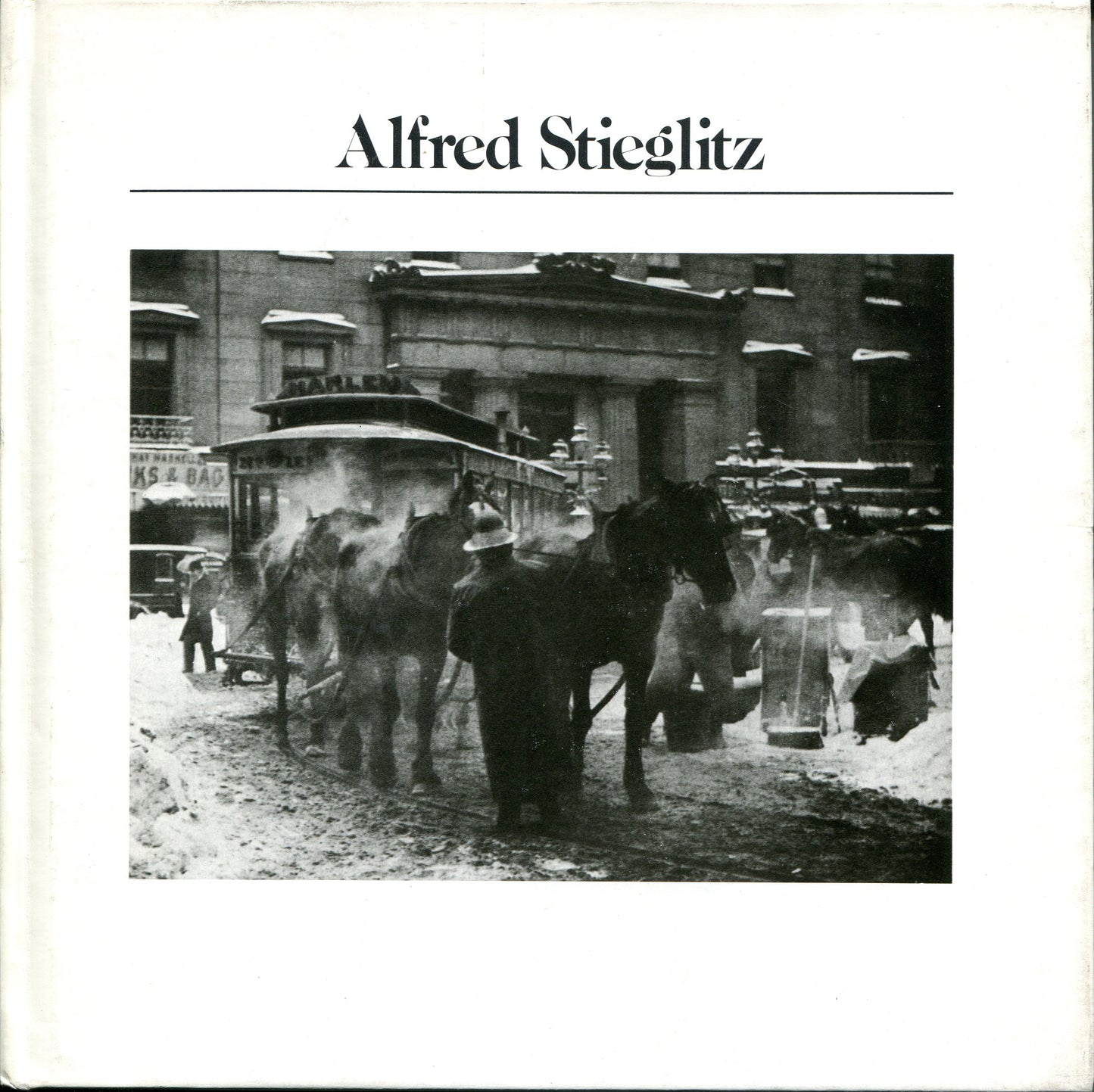
Stieglitz, Alfred. Alfred Stieglitz. Aperture History of Photography Series No. 3 by Dorothy Norman.
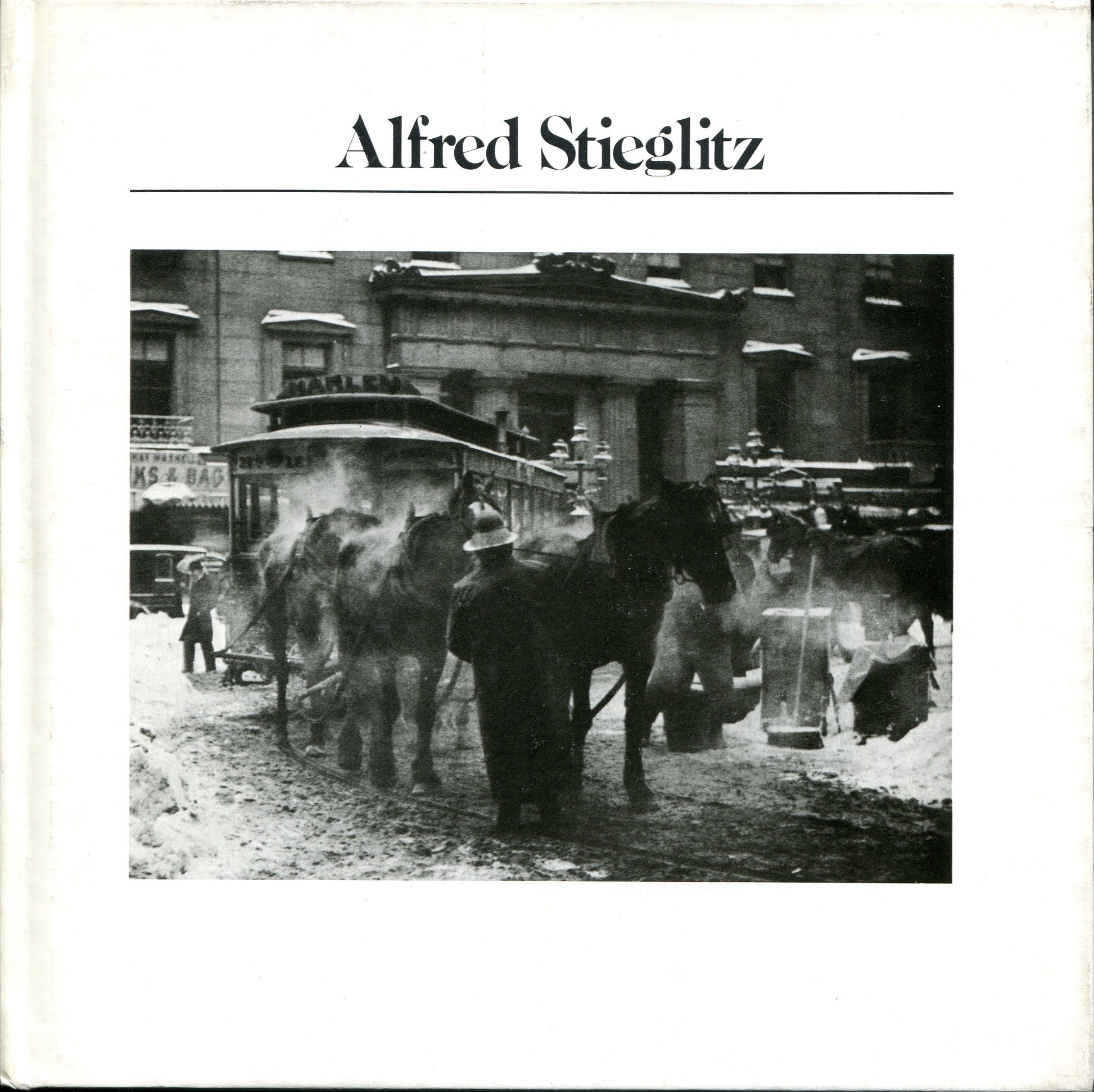
Stieglitz, Alfred. Alfred Stieglitz. Aperture History of Photography Series No. 3 by Dorothy Norman.
Couldn't load pickup availability
Aperture, 1976. Fine, like new, $25. Another copy with attractive bookplate of previous owner and joyful inscription referencing an evening enhanced by Alice B. Toklas' "follies."
Alfred Stieglitz (1864–1946) was a pioneering American photographer, publisher, and gallery director who was instrumental in establishing photography as a recognized fine art in the United States and introducing European modernism to the American public. Born in Hoboken, New Jersey, Stieglitz studied photochemistry in Berlin under Hermann Wilhelm Vogel, where he developed a rigorous command of photographic chemistry alongside a commitment to artistic expression. Returning to New York, he spearheaded the Photo-Secession movement, advocating for Pictorialism before championing straight, unmanipulated photography that embraced sharp focus, tone, and structural clarity—exemplified by his iconic 1907 masterpiece, The Steerage. Through his landmark journal Camera Work (1903–1917) and his avant-garde galleries, including 291 and An American Place, Stieglitz introduced American audiences to European modernists like Auguste Rodin, Henri Matisse, and Pablo Picasso alongside groundbreaking American photographers. His personal practice extended to expressive series such as Equivalents—abstract cloud studies exploring photography’s capacity to evoke emotional states—and a multi-decade photographic portrait study of painter Georgia O'Keeffe, his artistic partner and wife, solidifying his position as the central patriarch of 20th-century American art photography.
Alfred Stieglitz (1976) is a concise monograph published as the third installment in the acclaimed Aperture History of Photography Series. Authored by Dorothy Norman—Stieglitz's long-time associate, muse, and biographer—this compact volume serves as an accessible introduction to the life and work of the pioneer who forced the art world to accept photography as a legitimate fine art.
Key Elements of the Work
-
The Structured Portfolio: True to the Aperture series format, the book is built around a curated selection of full-page, high-quality black-and-white reproductions. It chronologically traces his evolution, featuring his early European street scenes, the revolutionary New York images (such as The Steerage and Winter, Fifth Avenue), his pioneering abstract cloud series (Equivalents), and his intimate portraits of artist Georgia O'Keeffe.
-
Biographical Overview: Norman provides a distilled, authoritative biographical essay that condenses her decades of personal research and firsthand conversations with Stieglitz. The text contextualizes his fierce battles against commercialism and academic conventions.
-
The Catalyst for Modernism: The book outlines Stieglitz's indispensable role as a cultural impresario. It highlights his leadership of the Photo-Secession movement, his publication of the landmark journal Camera Work, and his introduction of modern European and American avant-garde art to the United States through his legendary gallery, 291.
Narrative Intent
The volume functions as a definitive primer on Stieglitz’s enduring legacy. By presenting his most iconic imagery alongside a focused narrative of his philosophy, Norman demonstrates how Stieglitz successfully married a mastery of "straight photography" (unmanipulated prints) with a deeply spiritual, expressive intent, establishing a blueprint for modern photographic practice.