Gary Saretzky Photo Books
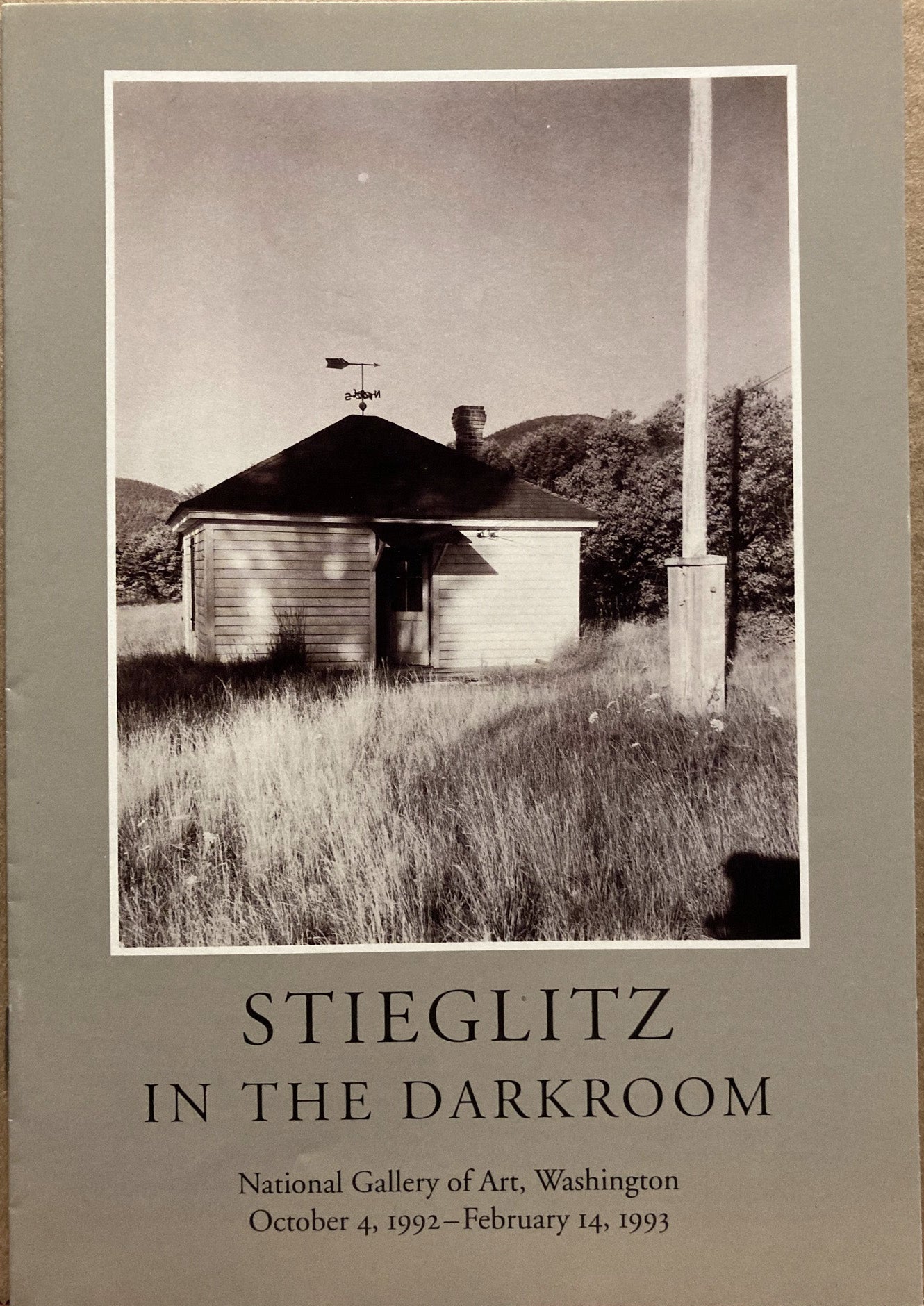
Stieglitz, Alfred. Stieglitz in the Darkroom. October 4, 1992–February 14, 1993. Signed.
Stieglitz, Alfred. Stieglitz in the Darkroom. October 4, 1992–February 14, 1993. Signed.
Couldn't load pickup availability
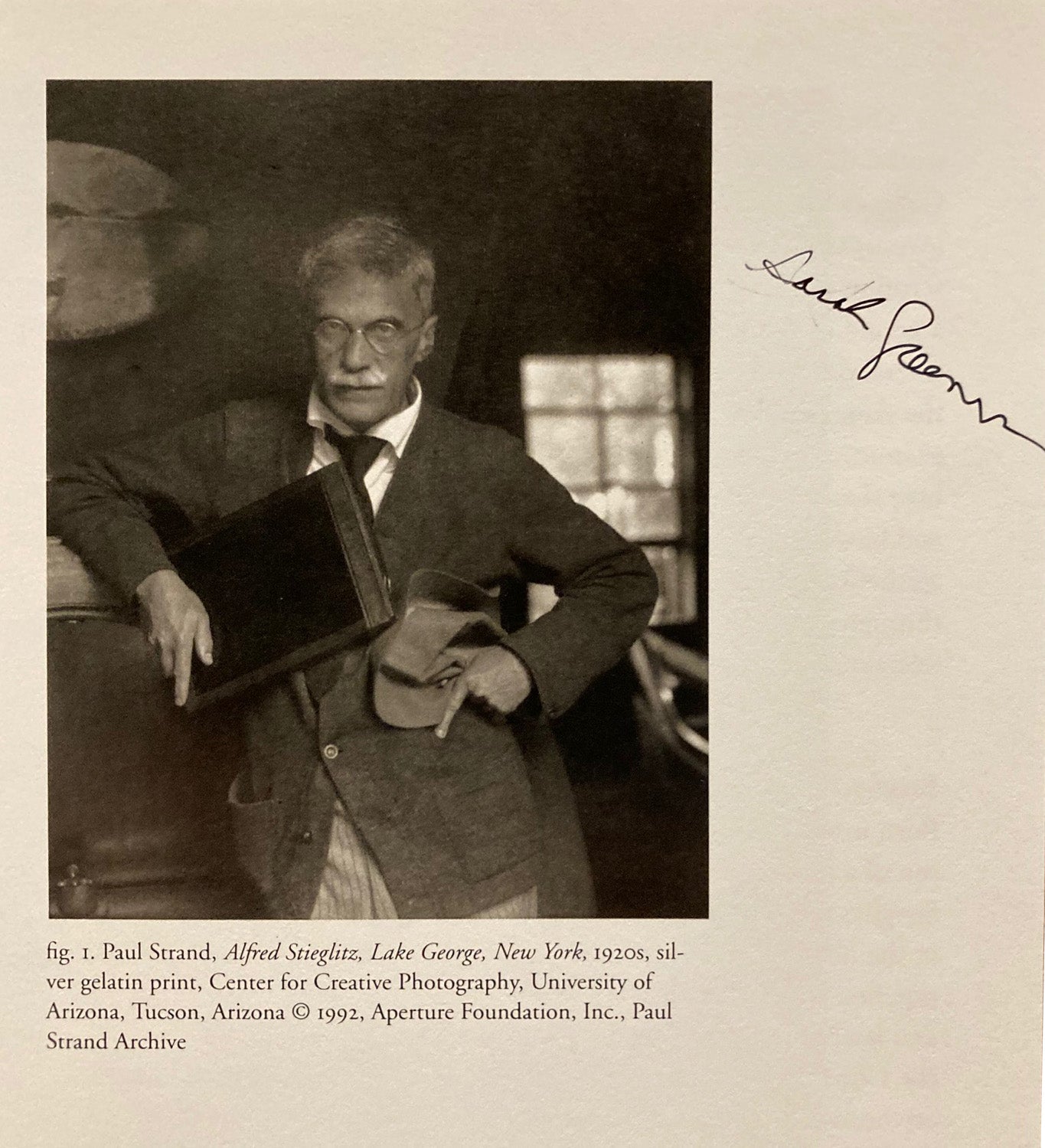
Pamphlet issued for exhibit, National Gallery of Art, Washington, DC, 1992. Essay by Sarah Greenough explains how Stieglitz reprinted his earlier work to be more consistent with his preferences after WWI. Like new. Another copy, like new, SIGNED by Sarah Greenough.
Alfred Stieglitz (1864–1946) was a pioneering American photographer, publisher, and gallery director who was instrumental in establishing photography as a recognized fine art in the United States and introducing European modernism to the American public. Born in Hoboken, New Jersey, Stieglitz studied photochemistry in Berlin under Hermann Wilhelm Vogel, where he developed a rigorous command of photographic chemistry alongside a commitment to artistic expression. Returning to New York, he spearheaded the Photo-Secession movement, advocating for Pictorialism before championing straight, unmanipulated photography that embraced sharp focus, tone, and structural clarity—exemplified by his iconic 1907 masterpiece, The Steerage. Through his landmark journal Camera Work (1903–1917) and his avant-garde galleries, including 291 and An American Place, Stieglitz introduced American audiences to European modernists like Auguste Rodin, Henri Matisse, and Pablo Picasso alongside groundbreaking American photographers. His personal practice extended to expressive series such as Equivalents—abstract cloud studies exploring photography’s capacity to evoke emotional states—and a multi-decade photographic portrait study of painter Georgia O'Keeffe, his artistic partner and wife, solidifying his position as the central patriarch of 20th-century American art photography.
Stieglitz in the Darkroom (1992) is a specialized exhibition catalog published by the National Gallery of Art in Washington, D.C., to document a focused, career-spanning exhibition held from October 4, 1992, to February 14, 1993. Authored by Sarah Greenough, the museum's preeminent curator of photographs, the publication isolates a vital but often overlooked facet of Alfred Stieglitz’s genius: his unmatched technical virtuosity and evolving philosophy inside the darkroom.
Key Elements of the Work
-
The "Key Set" Resource: The catalog details an exhibition of 75 photographic prints curated strictly from the National Gallery’s ultimate "Key Set"—the definitive archive of over 1,600 master prints selected, mounted, and preserved by Stieglitz himself, which entered the museum via gifts from his widow, Georgia O'Keeffe.
-
Technical Mastery as Artistry: Greenough’s text moves past Stieglitz's reputation as a cultural promoter to examine him as a hands-on darkroom craftsman. The booklet investigates his precise, meticulous control over chemistry, paper choices, and processing methods, proving that his final prints were not lucky snapshots but highly calculated material fabrications.
-
Evolution of Printing Mediums: The publication tracks his shifting material preferences across decades. It contrasts his early, velvety platinum prints and hand-pulled photogravures (celebrated in his journal Camera Work) with the crisp, cool-toned gelatin silver prints he championed later in life as he transitioned toward "straight photography."
-
Comparative Visual Studies: The exhibition and checklist highlight how Stieglitz often printed the exact same negative using different chemical techniques to achieve vastly different emotional moods. Iconic examples featured include his atmospheric Winter, Fifth Avenue (1893), his radical night photography prints from 1896, and a comparison between the landmark 1915 photogravure of The Steerage alongside an exceedingly rare gelatin silver rendering of the same negative.
Narrative Intent
The volume functions as a critical re-evaluation of the physical labor behind early modern photography. By analyzing Stieglitz's technical choices, Greenough demonstrates that the darkroom was not merely a site of mechanical reproduction for him, but a vital studio space where composition, tonal range, and raw optical truth were unified to establish the camera as a medium of high-art expression.
