Gary Saretzky Photo Books
Stieglitz, Alfred. America and Alfred Stieglitz by Waldo Frank, Lewis Mumford, Dorothy Norman, et al.
Stieglitz, Alfred. America and Alfred Stieglitz by Waldo Frank, Lewis Mumford, Dorothy Norman, et al.
Couldn't load pickup availability
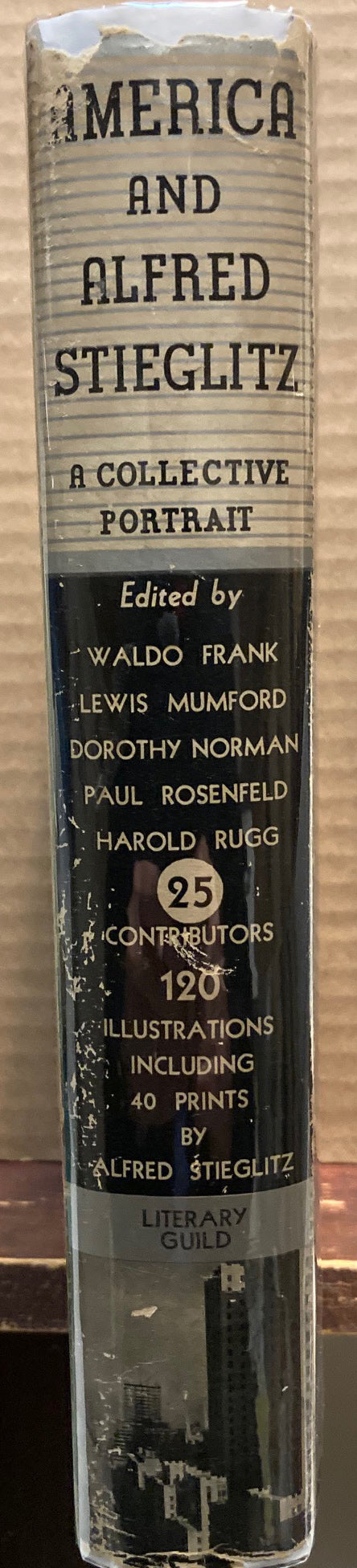
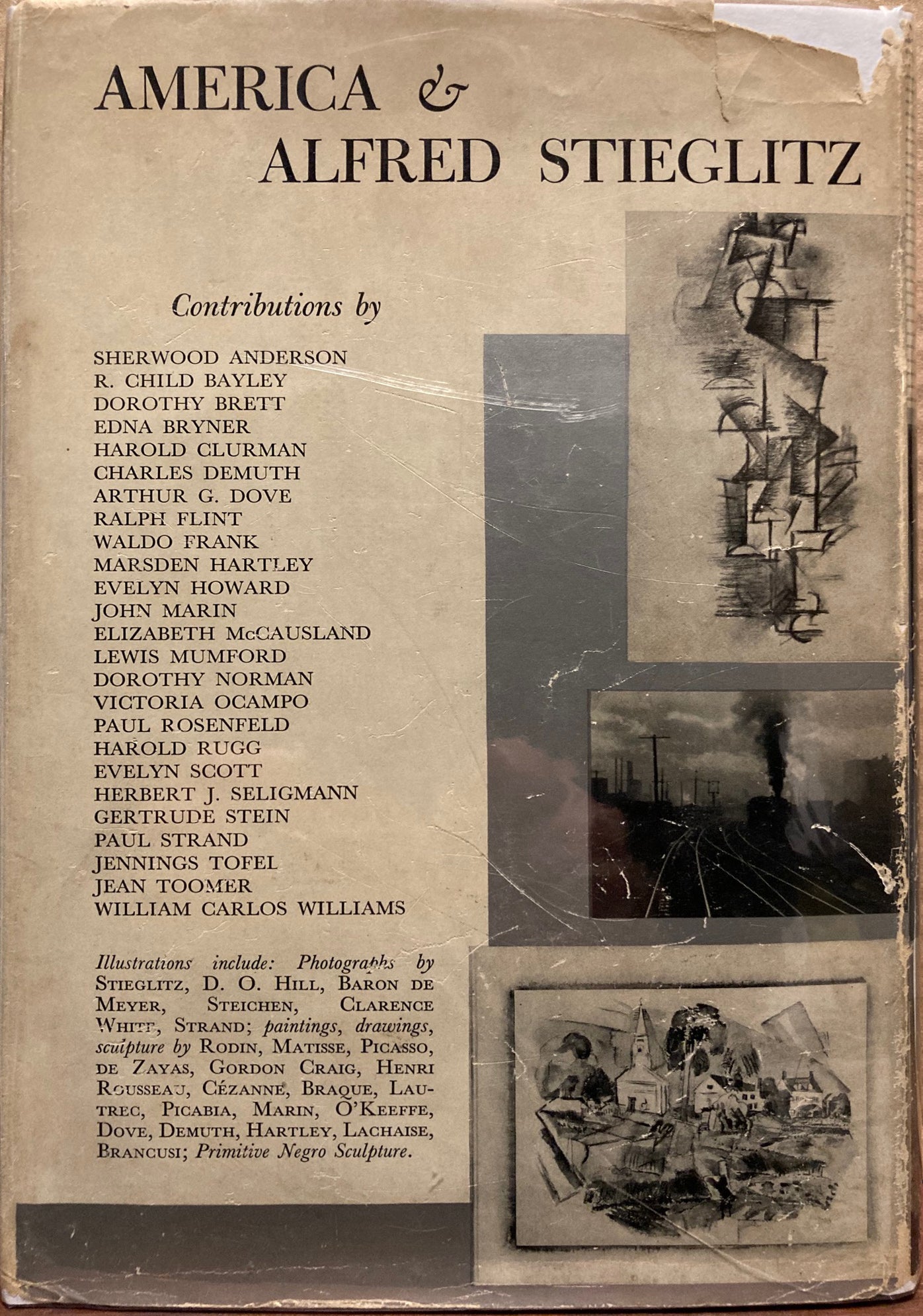
America and Alfred Stieglitz: A Collective Portrait (originally published in 1934 by the Doubleday, Doran & Company, and later reissued by the Literary Guild) is a pioneering, multi-author monograph that serves as both a cultural analysis and a literary tribute to the father of modern American photography. Released to commemorate Stieglitz's 70th birthday, this unique volume was collectively edited and authored by a vanguard circle of his contemporaries, including Waldo Frank, Lewis Mumford, Dorothy Norman, Paul Rosenfeld, and Harold Clurman, featuring contributions from 25 prominent intellectuals and artists of the era.
Key Elements of the Work
-
The "Collective Portrait" Concept: Rather than a traditional, linear biography written by a single detached historian, the book is structured as a mosaic of critical essays, poems, and personal recollections. This collaborative approach mirrors the communal, laboratory-like atmosphere of the various galleries Stieglitz founded and operated throughout his lifetime.
-
The Sociological Matrix: A central focus of the volume—championed by prominent cultural critics like Lewis Mumford and Waldo Frank—is the contextualization of Stieglitz within the broader trajectory of American civilization. The authors analyze how his uncompromising art crusade acted as a direct, spiritual antidote to the rampant industrialization, cold commercialism, and machine-age materialism that dominated post-Civil War America.
-
The Creative Crucible: The text documents Stieglitz's immense impact as an institutional catalyst. Contributors from various disciplines detail his stewardship of the Photo-Secession movement, his publication of Camera Work, and his introducing of modern European and native American avant-garde artists (such as Georgia O'Keeffe, John Marin, and Arthur Dove) to a culturally conservative public.
-
Philosophical Manifestos: The book serves as a vital primary source for Stieglitz’s own mature philosophies. The essays heavily unpack his core concepts, specifically "straight photography" (unmanipulated camera work) and his theory of Equivalents—the idea that a visual image must serve as a direct physical manifestation of the artist's inner, subjective psychological state.
Narrative Intent
The volume functions as a monumental mid-career canonization of Alfred Stieglitz while he was still actively working out of his final gallery, An American Place. By analyzing his life through a matrix of art history, philosophy, and sociology, the authors successfully frame Stieglitz not merely as a master technician of the camera, but as a prophetic cultural force who permanently altered the landscape of the United States by establishing a distinct, indigenous modern consciousness.
Copies available:- VG with good, chipped dust jacket with chips along spine, "H" written on back of dust jacket, and attractive Harvard bookplate of previous owner, George R. Dewhurst, who is mentioned in a 1933 Harvard Alumni Bulletin as being from New Bedford and having been awarded a University Scholarship.
- VG with good chipped dust jacket that has chips along spine.
- VG with VG dust jacket chipped on edges in a few places with a little wear along spine.
- Good with split hinges, moderate wear at corners, without dust jacket and old price label on front flyleaf.