Gary Saretzky Photo Books
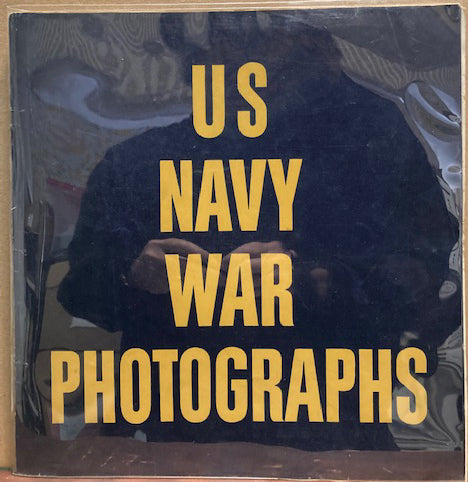
Steichen, Edward, compiler. U.S. Navy War Photographs. Pearl Harbor to Tokyo Harbor.
Steichen, Edward, compiler. U.S. Navy War Photographs. Pearl Harbor to Tokyo Harbor.
Couldn't load pickup availability
U.S. Camera Publishing [ca. 1946]. Published by Tom Maloney's U.S. Camera at the request of Secretary of the Navy James Forrestal. Commander Edward Steichen (1879–1973) was responsible for photography for the Navy during World War II. 108 pages, approximately 11 x 11.5 inches, blue wraps with yellow titling. Notoriously fragile binding (three staples) professionally repaired and strengthened, with a custom made polyester jacket. First few pages with light foxing on edge. Superb photographs by Charles Kerlee, Wayne Miller, et al. Very good. Summary:
U.S. Navy War Photographs: Pearl Harbor to Tokyo Harbor (originally published in 1946 by U.S. Camera) is a historic World War II photographic record compiled by the legendary photographer Captain Edward Steichen, USNR, and edited by Tom Maloney. This 128-page volume serves as the definitive public anthology of the extraordinary combat and documentary imagery produced by the U.S. Naval Aviation Photographic Unit during the war in the Pacific.
Key Elements of the Work
-
The "Steichen Unit" Legacy: At age 62, following the attack on Pearl Harbor, Steichen was recruited by the U.S. Navy to form an elite, specialized photographic team. This book compiles over 100 of the finest black-and-white combat prints captured by Steichen and his hand-picked unit of masters, including Wayne Miller, Charles Kerlee, Horace Bristol, Victor Jorgensen, and Charles Fenno Jacobs.
-
Focus on the Human Element: While the collection features staggering imagery of major military hardware and events—ranging from the devastation of Pearl Harbor to the final Japanese surrender aboard the USS Missouri in Tokyo Bay—it deliberately eschews cold propaganda. Guided by Steichen’s strict mandate to "photograph the man, the little guy," the heart of the book captures the exhausting, terrifying daily lives of ordinary sailors, marines, aviators, and cooks enduring the crucible of war.
-
Cinematic and Emotional Compositions: The publication showcases the unit's technical and artistic innovations using medium-format cameras. The curated images capture fleeting, high-stakes realities: pilots waiting grimly in carrier ready rooms, shrapnel bursting over flight decks during Kamikaze attacks, the geometric sweep of invasion fleets, and the profound grief of burials at sea.
-
Editorial Mastery: The volume reflects Steichen's unique editorial eye. Acting as chief editor during the war, Steichen personally reviewed the raw combat film sent to Washington, meticulously utilizing cropping and tonal adjustments to maximize the psychological and graphic impact of each frame before its release to the civilian press.
Narrative Intent
The volume functions as a monumental bridge between military documentation and fine-art photojournalism. By anthologizing these official Navy, Marine Corps, and Coast Guard photographs immediately following the Allied victory, Steichen and Maloney created an enduring, raw visual testament that honors the collective sacrifice of the individual service member, forever changing how modern warfare is preserved in the public consciousness.
Note: Edward Steichen had several significant careers in photography. In the early 1900s, Steichen, who was born in Luxembourg on March 25, 1879, worked with Alfred Stieglitz in the Photo Secession and helped establish photography as an art medium through his highly manipulated gum bichromate prints, such as his 1904 self portrait. After service in WWI, when as Major Steichen he played a key role in organizing aerial reconnaissance photography for the U.S. Army in France, he became chief fashion photographer for Vogue and Vanity Fair. During WWII, as the oldest commissioned officer in the U.S. Navy, Commander Steichen was the Director of the Naval Aviation Photographic Unit and curated innovative thematic photo exhibits, “Power in the Pacific” and “Road to Victory,” at the Museum of Modern Art, New York, where in 1947, he became Director of Photography. Among the many exhibitions he presented at MoMA before his retirement in 1961, “The Family of Man” (1955), Steichen’s plea for world peace, subsequently traveled worldwide and was seen by nine million people. The catalog, the best selling photo book of all time, is still in print. The exhibit is now installed at Clervaux Castle, Luxembourg, and continues to fascinate both the general public and scholars. Steichen died on March 25, 1973 in West Redding, Connecticut.
