Gary Saretzky Photo Books
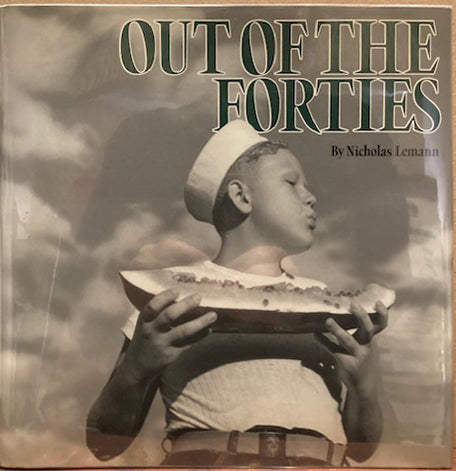
Standard Oil Project. Out of the Forties by Nicholas Lemann.
Standard Oil Project. Out of the Forties by Nicholas Lemann.
Couldn't load pickup availability
Texas Monthly Press, 1983. 1st printing. Photographs form the Standard Oil Project, especially Texas and Louisiana, near the end of World War II, directed by Roy Stryker, formerly in a similar role at the Farm Security Administration and the Office of War Information. Photographers include Esther Bubley; Russell Lee; Edwin and Louise Rosskam; Sol Libsohn; Gordon Parks; Harold Corsini; John Vachon; Todd Webb. Hardcover with dust jacket, near fine with near fine dust jacket, slight bowing of covers. Summary:
Summary of Out of the Forties by Nicholas Lemann
Out of the Forties (1983) is a compelling blend of photojournalism, oral history, and social commentary written by journalist and historian Nicholas Lemann. The book explores the profound socio-economic transformations in mid-century America by tracking down the everyday people captured in historical photographs.
The Foundation: The Standard Oil Archive
The book's visual backbone relies on a massive archive of 85,000 photographs commissioned in the mid-to-late 1940s by Standard Oil of New Jersey (now ExxonMobil). Under the direction of Roy Stryker—the legendary photo archivist who had previously headed the Farm Security Administration (FSA) photography project during the Great Depression—renowned documentary realists like Gordon Parks, Russell Lee, Berenice Abbott, Esther Bubley, and John Vachon were hired. Though intended as a public relations campaign to bolster the oil giant’s image, the project resulted in an unparalleled documentary portrait of everyday American life.
Core Narrative & Structure
Rather than publishing a simple art book, Lemann selects specific photographs from five primary industrial and rural locations—including New Jersey, Texas, and the Gulf Coast—and uses them as a historical launching pad.
-
Oral History: Lemann tracks down the actual, unnamed individuals featured in the 1940s photographs (such as Texas cowboys, teenagers watching television, and refinery workers) to interview them decades later in the early 1980s.
-
The "Before and After": The book contrasts the black-and-white snapshots of the post-WWII era with the contemporary realities of the interviewees' lives, documenting how they, their families, and their communities evolved over forty years.
Key Themes
-
The Paradox of Progress: Lemann uncovers a fascinating contradiction in the American psyche: most of the people he interviewed felt that American society and culture as a whole had gone downhill since the 1940s, yet their own individual lives, material wealth, and personal freedom had undeniably improved.
-
Erosion of Community: The book examines how postwar prosperity and modernization gradually weakened the tightly knit social bonds, family structures, and community reliance that defined the 1940s.
-
Race and Class: Through the lens of industrial work and shifting demographics, Lemann explores early indicators of the major social upheavals—such as the Great Migration and changing class dynamics—that would reshape modern America.
