Gary Saretzky Photo Books
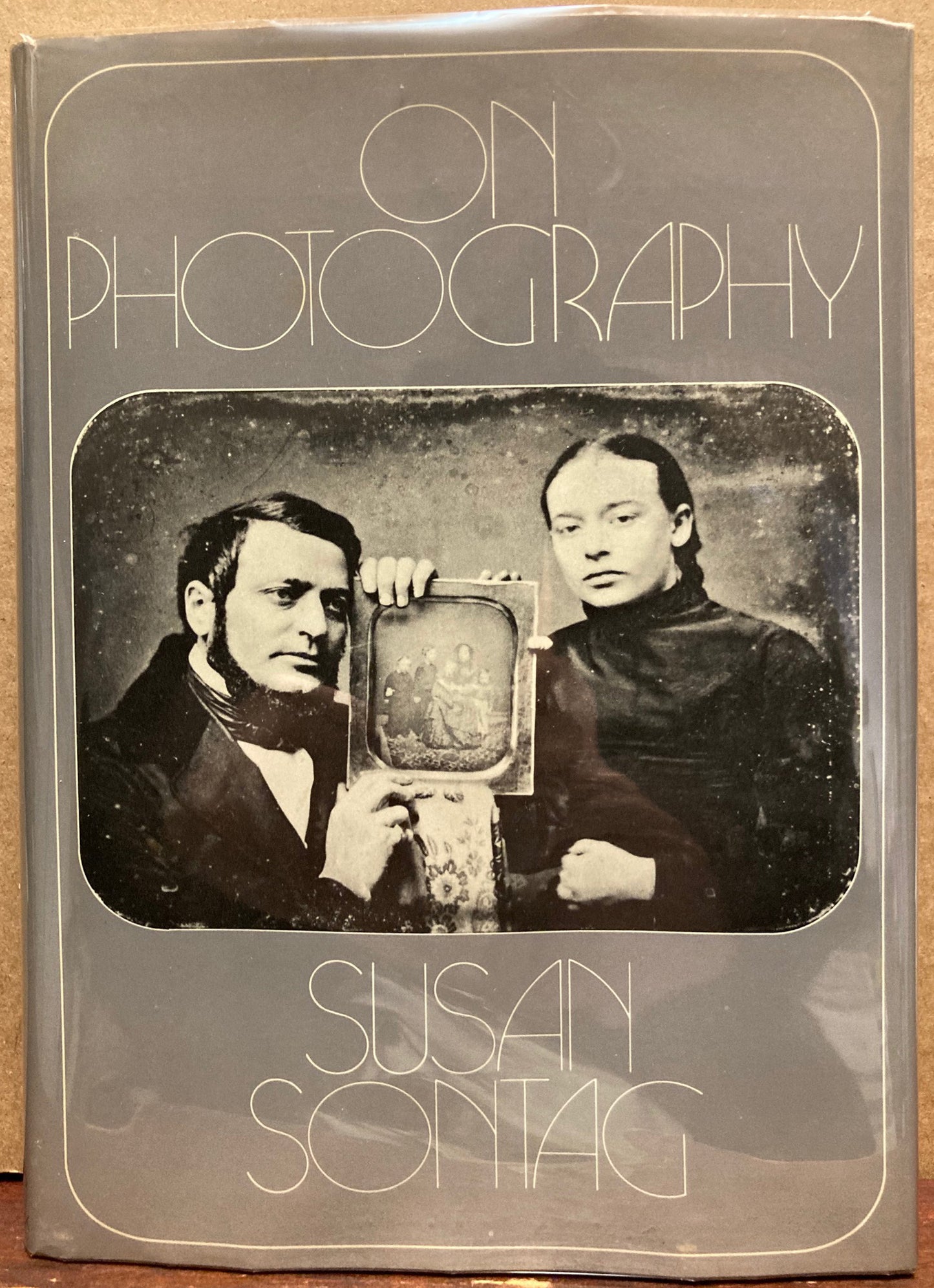
Sontag, Susan. On Photography by Susan Sontag.
Sontag, Susan. On Photography by Susan Sontag.
Couldn't load pickup availability
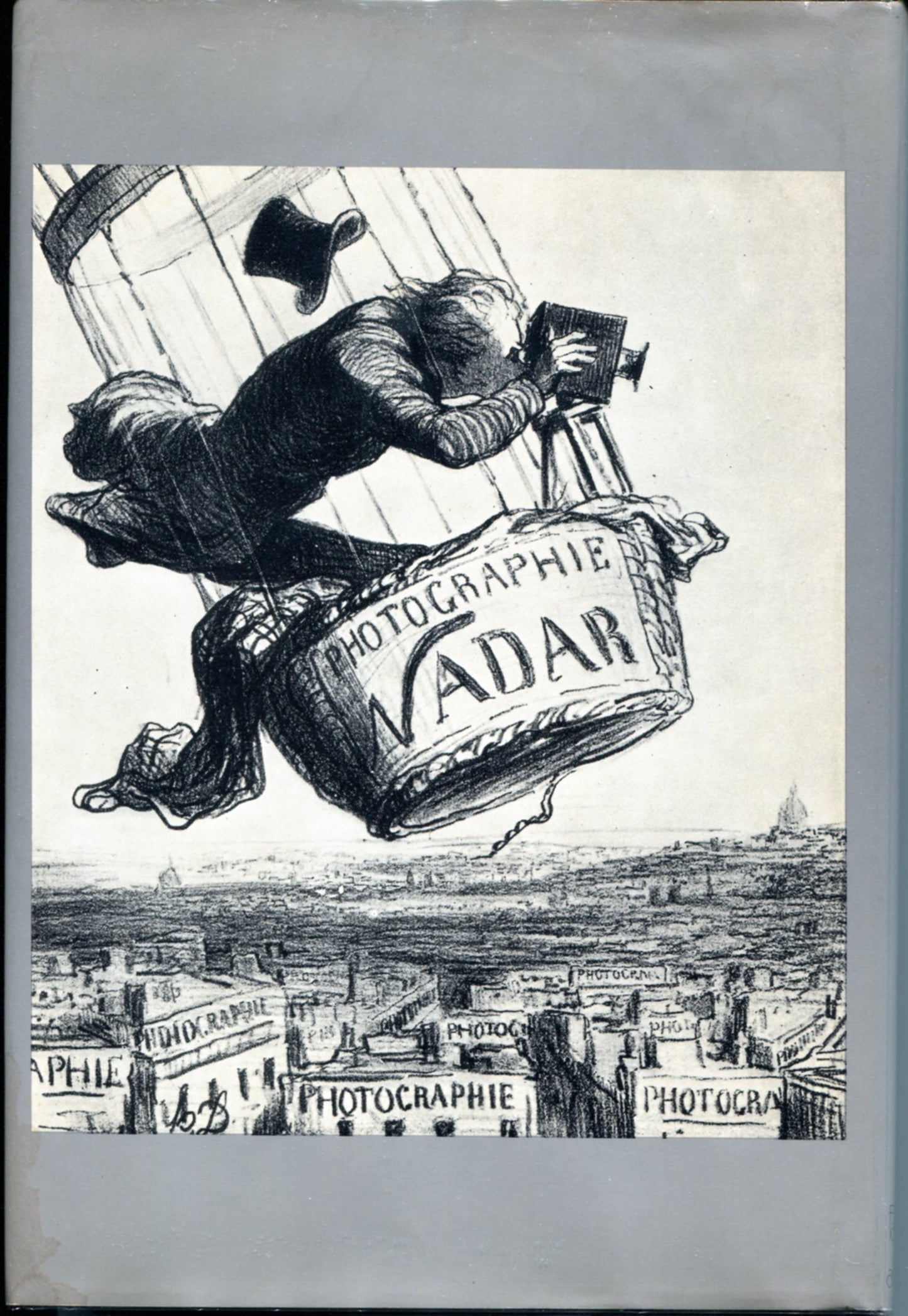
Farrar, Straus and Giroux, 1977. [The most widely read and controversial book of photographic criticism in the 1970s and one of the most quoted books on photography, this book "considers the relation of photography to art, to conscience, and to knowledge. These highly acclaimed essays, which originally appeared in somewhat different form in the New York Review of Books, contain illuminating discussions of the work of such important photographers as Nadar, Muybridge, Stieglitz, Atget, Paul Strand, Edward Weston, August Sander, Walker Evans, Cartier-Bresson, Robert Frank, Richard Avedon, and Diane Arbus." At the end of the book is a chapter with quotations by the names above plus an interesting assortment of others including Bruce Davidson, Louis-Jacques-Mandé Daguerre, Frederick Sommer, Dorothea Lange, Margaret Bourke-White, John Szarkowski, Helmut Gernsheim, Duane Michals, Agatha Christie, Moholy-Nagy, Garry Winogrand, George Tice, Minor White, Jerry Uelsmann, Julia Margaret Cameron, Elizabeth Barrett, Emmet Gowin, Lewis Hine, Nietzsche, Schopenhauer, Walter Benjamin, Clarence John Laughlin, and others.] Summary:
Originally published in 1977, On Photography is a seminal collection of essays by cultural critic Susan Sontag. Rather than analyzing the technical aspects of the medium, Sontag explores the profound philosophical, psychological, and sociological implications of photography in modern society. She argues that the omnipresence of images has fundamentally altered how human beings perceive reality, history, and the pain of others.
Core Philosophical Arguments
-
The Appropriation of Reality: Sontag famously argues that "to photograph is to appropriate the thing photographed." Taking a picture is an act of containment and control. Photographs turn the world into a series of consumable objects, giving people the illusion of knowledge and mastery over reality while actually distancing them from firsthand experience.
-
Photography as an Aesthetic Consumerism: The book treats photography as an insatiable consumerist tool. Modern life demands that experiences be validated by images—people go on vacation not just to see a place, but to accumulate photographs that prove they were there.
-
The Erosion of Meaning: Sontag notes that photographs decouple images from their context. A horrific war photograph and a fashion advertisement can exist on the same page or in the same gallery, reducing all human experience to a uniform level of aesthetic appreciation.
Key Concepts and Themes
-
The Aesthetic Distortion of Truth: Unlike text, which is understood as an interpretation, a photograph is widely accepted as direct evidence of truth. Sontag dismantles this, explaining that every photograph is a highly subjective choice—deciding what to frame, what to exclude, and how to light a subject. It is an interpretation passing itself off as an unmediated fact.
-
Desensitization to Suffering: In her essay "Melancholy Objects," Sontag explores how the constant bombardment of shocking or tragic images acts as an anesthetic. Instead of inciting political or moral action, the sheer volume of horrific photographs blunts human conscience and desensitizes the public to suffering.
-
The Chronology of Mortality: Sontag views photographs as a memento mori—a literal reminder of death. By freezing a single, unrepeatable slice of time, every photograph testifies to time's relentless melt and the eventual vulnerability and death of the subject.
Cultural Impact and Legacy
On Photography remains a foundational text in media studies, art history, and visual sociology. Sontag’s critique anticipated the hyper-visual nature of the digital age, foreseeing how a culture saturated with cameras would eventually value the image of an event over the event itself.
Copies available:
- 1st printing, fine with price-clipped dust jacket that has a crease in inner front flap.
- Book Club edition, dust jacket somewhat darkened on spine, otherwise fine.