Gary Saretzky Photo Books
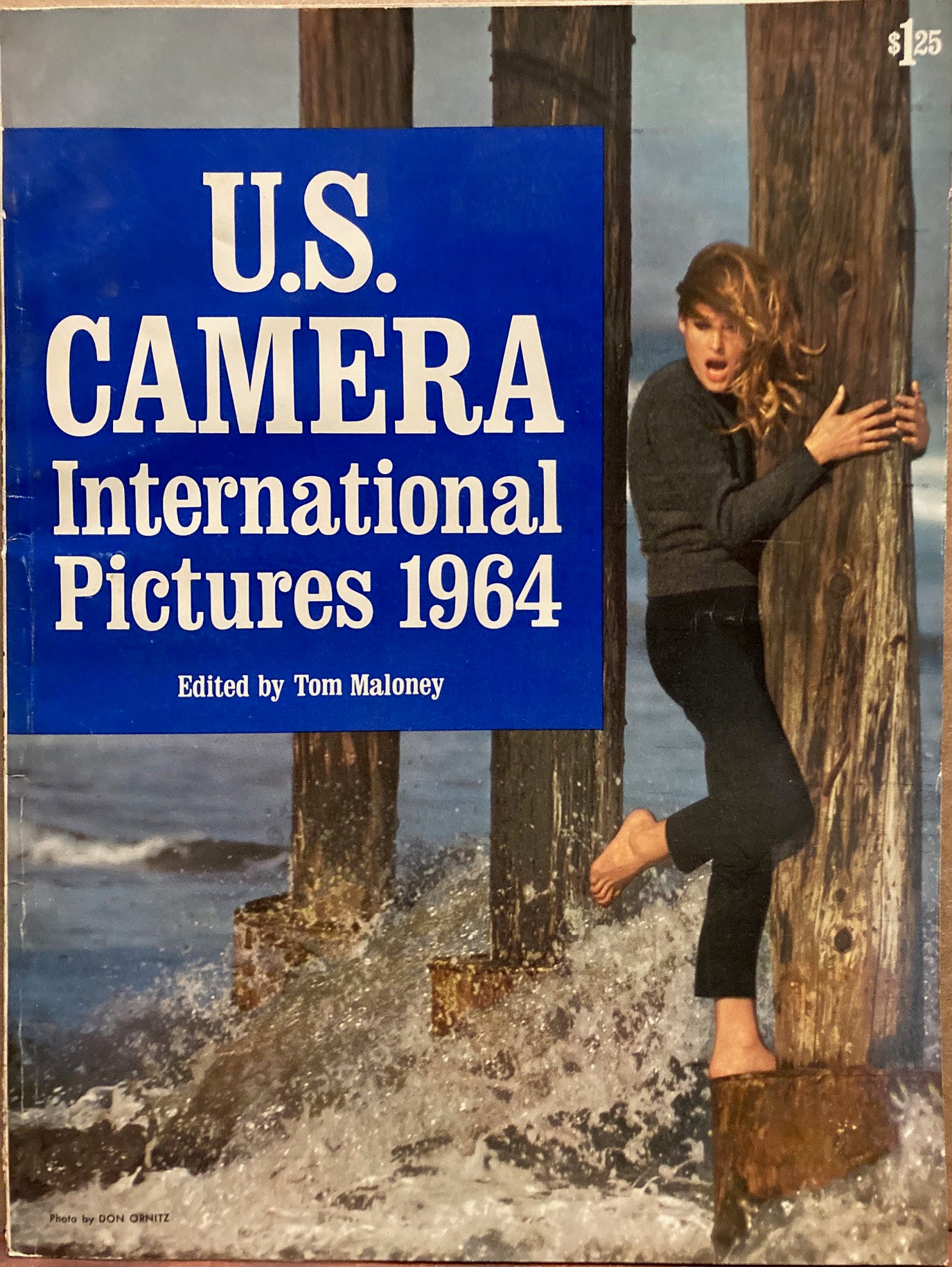
Annuals. U.S. Camera International Pictures Annual 1964.
Annuals. U.S. Camera International Pictures Annual 1964.
Couldn't load pickup availability
U.S. Camera Publishing. 1963. Edited by Tom Maloney. Includes excerpt from Margaret Bourke-White's autobiography. Photographers include David Attie; Esther Bubley; Margaret Bourke-White; Roddy McDowell; David Attie; New York Press Photographers; Onofrio Paccione; Erich Vetter; Harold Halma; Guy Gillette; Ken Heyman; Laella Goehr; Bob Willoughby; Fred Lyon; Edward Gallob; W. Suchitzky; Ann Treer; Walter Chandoha; Koro Honjo; Edouard Bobat; John Swope; Robert Monroe; Yale Joel; Hoyningen-Huene; Lilo Raymond; Gerry Frank; Leon Levinstein; Linda Bartlett; Ollie Atkins; Minor White; Fee Schlapper; John Stewart; Charles E. Rotkin; Marilyn Silverstone; David Plowden; Ollie Atkins; Fred J. Maroon; George Silk; John Rawlings; Arnold Newman, et al. Fine, softcover. Summary:
U.S. Camera International Pictures Annual 1964, edited by Tom Maloney, is a significant volume that leans heavily into the "international" and "autobiographical" power of the medium. Arriving in the early 1960s, it captures the bridge between the stoic, mid-century documentary tradition and a more intimate, personality-driven approach to photography.
The Centerpiece: Margaret Bourke-White
A major highlight of this edition is an extensive excerpt from Margaret Bourke-White’s autobiography, Portrait of Myself.
-
The Narrative: The section provides a rare look at the woman behind the camera, discussing her pioneering work for LIFE, her coverage of the Soviet Union, and her legendary persistence in the field.
-
The Visuals: Accompanying the text are some of her most iconic images, reinforcing her status as the preeminent female photojournalist of the 20th century.
Diverse Portfolios and New Directions
The 1964 Annual is characterized by its eclectic mix of "Old Guard" masters and rising experimentalists:
-
The "Personality" Photographers: This issue features work by Roddy McDowall and Bob Willoughby, who were instrumental in bringing a cinematic, behind-the-scenes intimacy to celebrity and film set photography.
-
The Masters of Form: Arnold Newman (environmental portraiture), Minor White (philosophical abstraction), and John Rawlings (fashion and nudes) represent the high-art wing of the publication.
-
The Street and the Social: Leon Levinstein, Ken Heyman, and Esther Bubley provide the candid, humanistic street-level observations that define the "New York School" and the "Concerned Photographer" movement.
International and Specialized Features
-
Global Perspectives: True to its title, the annual includes work from a diverse international cast, including Edouard Boubat (France), W. Suschitzky (UK), and Koro Honjo (Japan), offering a comparative look at how different cultures were interpreting the post-war world.
-
Onofrio Paccione & David Attie: These photographers represent the cutting edge of 1960s commercial and conceptual photography. Attie, in particular, was known for his innovative use of multiple exposures and montage.
-
The Landscape of Industry: David Plowden and Charles E. Rotkin provide soaring, industrial views of the American landscape, focusing on the majesty of steam engines, bridges, and aerial topography.
-
New York Press Photographers: A dedicated section showcases the best in local news photography, highlighting the grit, speed, and drama of daily journalism in NYC.
Technical and Thematic Balance
-
The "Cats and Dogs" Portfolio: A charming but technically rigorous section featuring Walter Chandoha, the world's most famous photographer of domestic animals, illustrating that "great photography" could extend to even the most common subjects.
-
Scientific and Aerial Views: The book continues the U.S. Camera tradition of including "non-art" photography, such as technical, scientific, and aerial surveys that reveal patterns invisible to the naked eye.
Significance
The 1964 Annual is particularly valued for its focus on the photographer as a storyteller. By leading with Bourke-White’s personal history, the editors signaled a shift in the public’s interest: they no longer just wanted to see the world through the camera; they wanted to understand the person who held it. This volume remains a definitive record of the moment when photography became as much about "personality" as it was about "the picture."