Gary Saretzky Photo Books
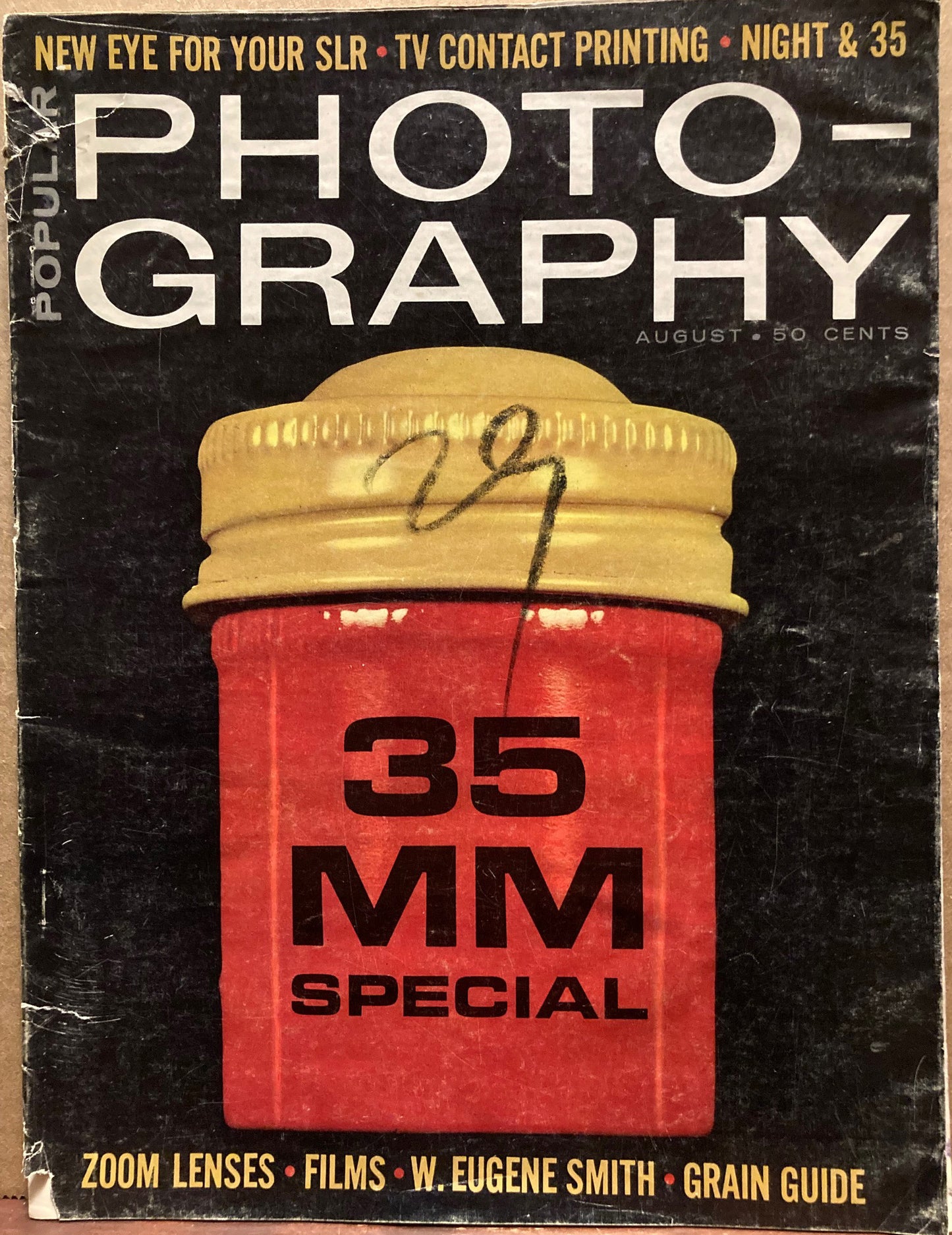
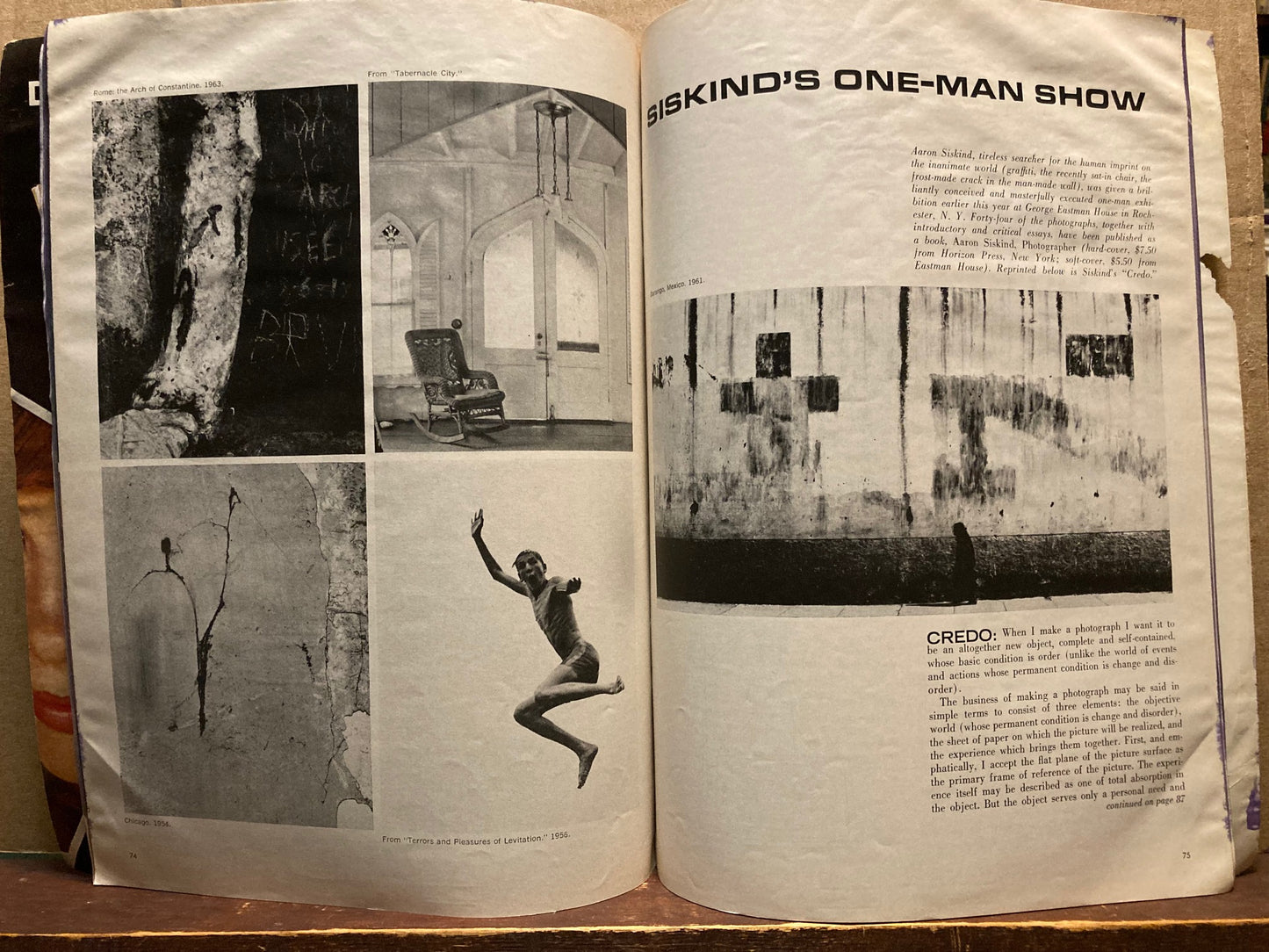
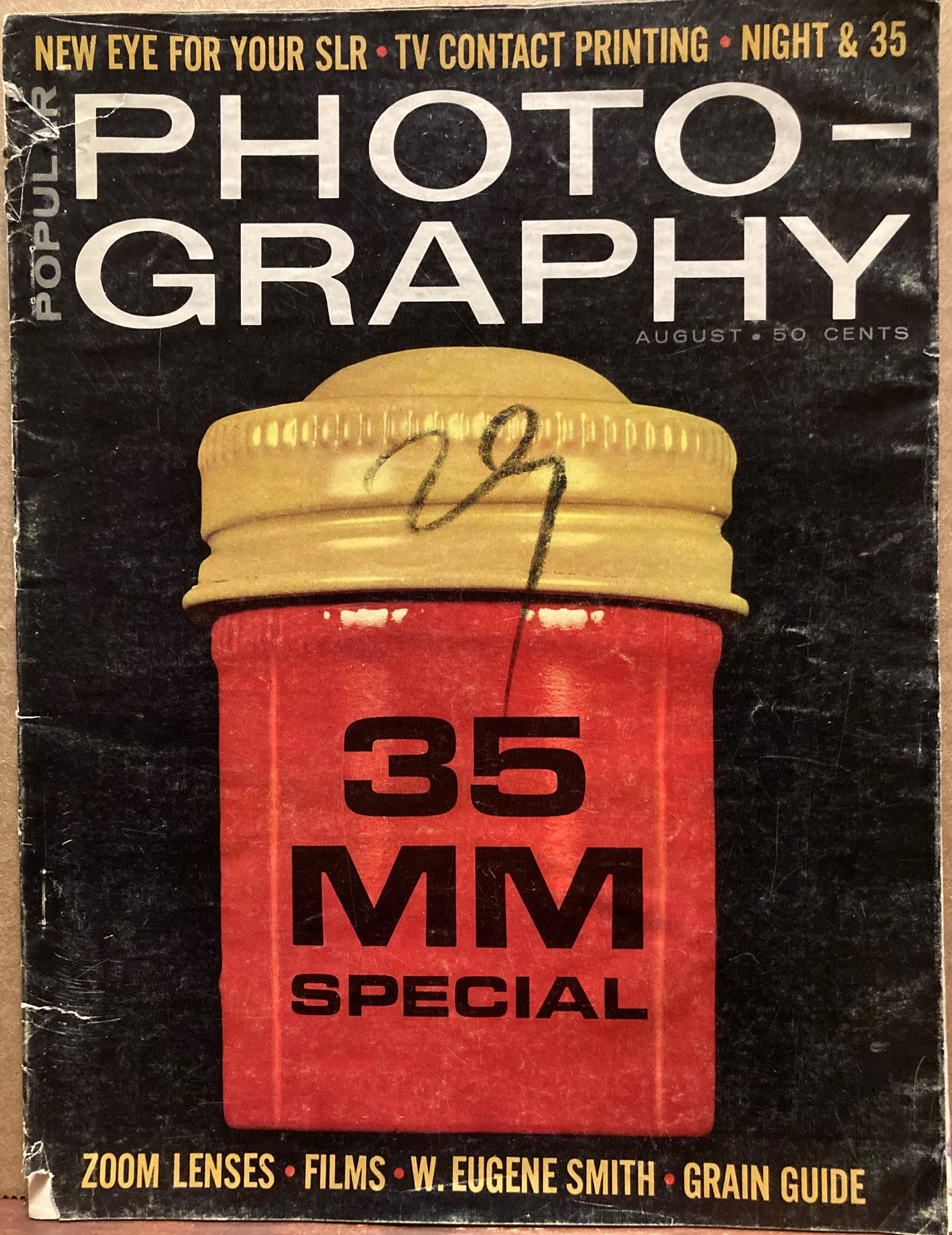
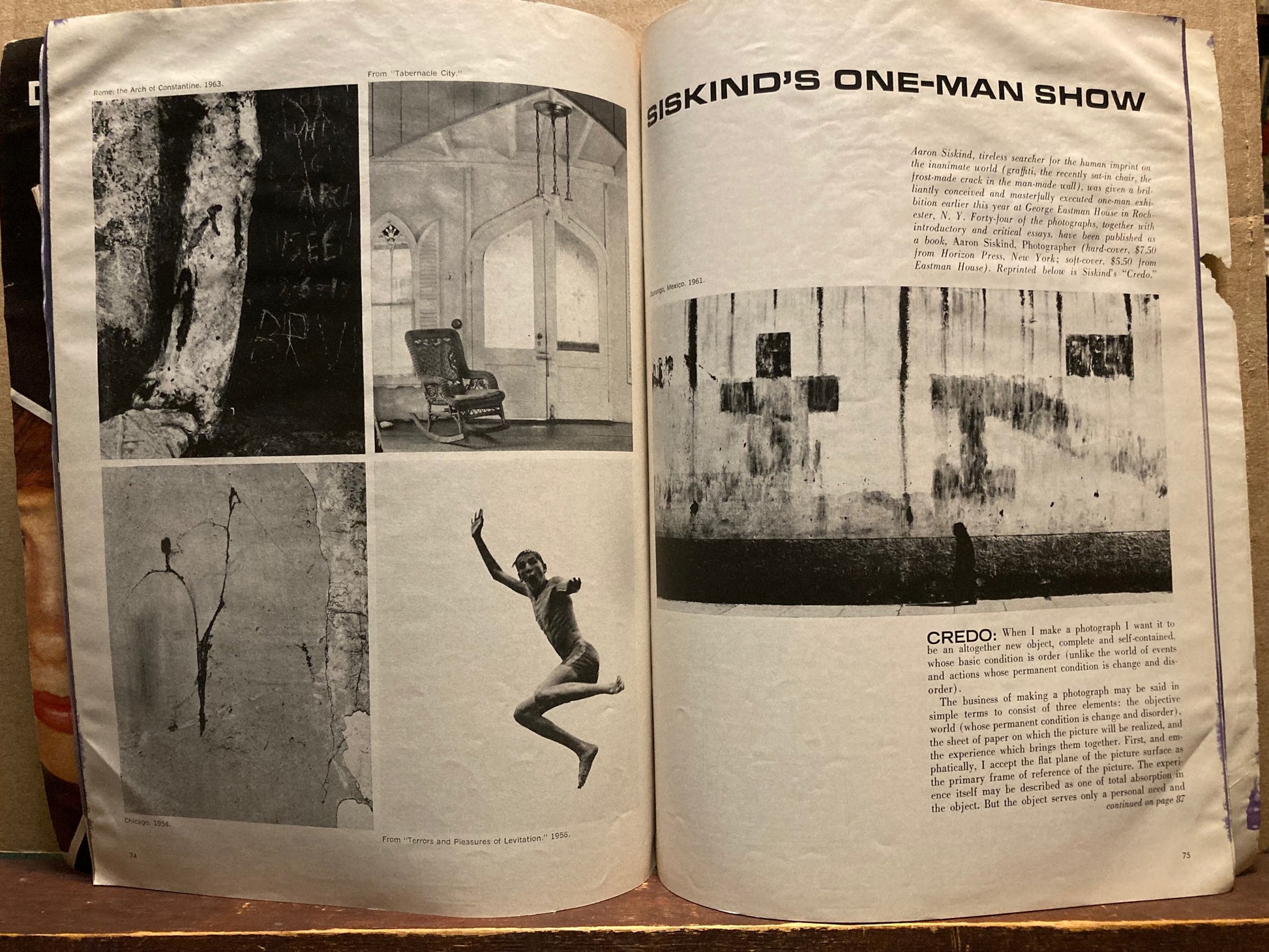
Siskind, Aaron. "Siskind's One-Man Show," in Popular Photography, 57:2 (August 1965), pages 74-75, 87.
Siskind, Aaron. "Siskind's One-Man Show," in Popular Photography, 57:2 (August 1965), pages 74-75, 87.
Couldn't load pickup availability
Includes Siskind's "Credo," reprinted from Aaron Siskind: Photographer, with five photographs. Issue also includes "Shooting Without Stopping," pages 46-49 with five photographs by W. Eugene Smith. Entire issue, 136 pages. Fair with chips, inked edge, and other signs of use, reading copy.
Aaron Siskind (1903–1991) was an influential American photographer and educator whose pioneering work bridged social documentary and Abstract Expressionism, fundamentally reshaping 20th-century fine art photography. Born in New York City, Siskind began his photographic career in the 1930s with the left-leaning Photo League, leading significant social documentary projects such as the acclaimed Harlem Document (1932–1940). By the early 1940s, he broke away from traditional representational documentary to explore abstract visual forms, focusing his lens on extreme close-ups of peeling paint, weathered urban surfaces, calligraphic graffiti, and architectural decay. Close friends with painterly Abstract Expressionists like Willem de Kooning and Franz Kline, Siskind treated the photographic frame as an autonomous, two-dimensional plane of expression, emphasizing texture, gesture, and geometric rhythm rather than spatial depth or literal subject matter. A dedicated educator, he taught alongside Harry Callahan at the Institute of Design in Chicago and later at the Rhode Island School of Design (RISD), helping establish a legacy of abstract photographic inquiry that earned him major fellowships and permanent placement in world-class museum collections, including the Museum of Modern Art and the Art Institute of Chicago.
The August 1965 issue of Popular Photography magazine (Volume 57, Number 2) stands as a notable edition that highlights two titans of mid-century American photography, showcasing contrasting approaches to the medium through distinctive portfolios.
The issue is anchored by two major feature sections:
Siskind's One-Man Show This feature focuses on the pioneering abstract work of Aaron Siskind. It serves as a celebration of his major retrospective exhibition prepared for the George Eastman House in 1965. The article highlights Siskind’s departure from traditional documentary photography toward abstract expressionism, capturing the poetic nature of everyday, flattened surfaces. Crucially, the section reprints Siskind’s personal artistic "Credo" and is accompanied by five of his iconic photographs showcasing his mastery of form, gesture, and texture.
Shooting Without Stopping This section centers on the legendary photojournalist W. Eugene Smith, renowned for his intense, immersive approach to the editorial photo essay. The feature examines Smith's relentless photographic process and his philosophy of capturing the raw, empathetic truth of his subjects. The article is illustrated by five powerful photographs by Smith that exemplify his dramatic use of shadow, light, and narrative depth.
Spanning 136 pages, this specific issue of the magazine provides a compelling look at the landscape of 1965 photography, balancing Aaron Siskind's formalist, fine-art abstraction with W. Eugene Smith's deeply humanistic and cinematic photojournalism.