Gary Saretzky Photo Books
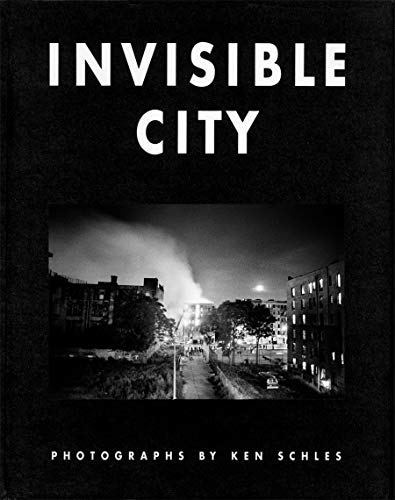
Schles, Ken. Invisible City by Ken Schles.
Schles, Ken. Invisible City by Ken Schles.
Couldn't load pickup availability
Steidl, 2014. [First published by Twelvetrees in 1988. Gritty black-and-white photos of life in the East Village of New York City.] 1st edition, thus. Hardcover with dust jacket, new in shrink wrap. Summary:
Invisible City by American photographer Ken Schles is a seminal masterpiece of 20th-century photographic literature. Originally published in 1988 by Twelvetrees Press, the book was meticulously reprinted in a definitive facsimile edition by Steidl in 2014, releasing concurrently with its companion volume, Night Walk.
The book is an intense, claustrophobic, and deeply personal portrait of New York City’s Lower East Side during the mid-1980s—a period defined by rampant urban decay, the crack epidemic, the AIDS crisis, and a thriving, defiant underground art scene.
Key Overview and Objectives
-
An Internalized Landscape: Unlike traditional documentary photography that observes from a distance, Schles’s work is intensely subjective. The book acts as a visual diary of his own survival and social circle, heavily featuring the interior of his fortified, crumbling apartment building on Avenue B.
-
Philosophical Framework: The title and conceptual underpinning of the book are heavily inspired by Italo Calvino’s novel Invisible Cities. Schles uses the physical ruins of the Lower East Side to mirror the internal, psychological states of its inhabitants, capturing a hidden city of the mind existing beneath the official geography of New York.
Core Themes and Visual Style
-
Claustrophobia and Chaos: The imagery drifts seamlessly between chaotic, strobe-lit underground punk shows, smoke-filled bars, police raids, and domestic interiors where friends sleep, embrace, or stare blankly into the dark. There is a persistent sense of existential dread mixed with frantic hedonism.
-
Extreme High-Contrast Aesthetic: Schles pushed his film to its absolute technical limits. The images are defined by heavy grain, deep shadows, motion blur, and harsh flash. This gritty, low-light aesthetic strips away objective detail to create a dreamlike, nocturnal world where the boundaries between reality and nightmare blur.
-
Cinematic Sequencing: The 2014 Steidl edition preserves the book’s legendary, rapid-fire sequencing. Full-page images are juxtaposed against quotes from historical and philosophical texts—including Lewis Mumford, George Orwell, and Franz Kafka—elevating the local squalor into a universal allegory on the alienation of modern urban life.
Significance
The 2014 Steidl edition solidified Invisible City’s status as a legendary, foundational text in the history of the modern photobook. It remains one of the most powerful visual records of pre-gentrification New York, perfectly capturing the dark, entropic energy of an era that completely reshaped the cultural landscape of the city.
