Gary Saretzky Photo Books
Scherman, David E. & Richard Wilcox. Literary England: Photographs of Places Made Memorable in English Literature.
Scherman, David E. & Richard Wilcox. Literary England: Photographs of Places Made Memorable in English Literature.
Couldn't load pickup availability
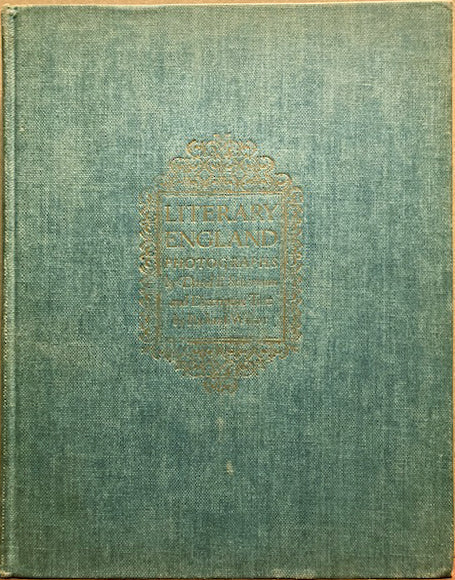
Random House, 1944. Preface by Christopher Morley. [Book developed from picture essay that appeared in LIFE Magazine on June 14, 1943. Photos by David Scherman with literary excerpts by John Keats, William Wordsworth, Alfred Lord Tennyson, Charles Dickens, Jane Austen, Elizabeth Barrett Browning, Thomas Hardy, A.E. Housman, Rudyard Kipling, et al. For information on Scherman, see the interview in John Loengard, LIFE Photographers: What They Saw.] VG except one page wrinkled, very little wear on blue cloth binding, no dust jacket.
David E. Scherman (1916–1997) was an influential American photojournalist, editor, and World War II war correspondent whose striking work for LIFE magazine helped define mid-century photojournalism. Born in Manhattan, Scherman joined LIFE in 1936 shortly after graduating from Dartmouth College, quickly demonstrating a knack for intrepid reporting under hazardous conditions. During WWII, he covered the Blitz in London, survived the sinking of the SS Zamzam by a German commerce raider (smuggling film of the raider past captors), and teamed up with fellow correspondent Lee Miller to cover the Allied advance across Western Europe, capturing crucial imagery during the liberation of Dachau and Buchenwald concentration camps. On April 30, 1945—the day of Adolf Hitler's suicide—Scherman famously photographed Miller bathing in Hitler's Munich apartment bathtub (and was himself photographed by Miller in the same tub), creating one of the most iconic and surreal symbolic images of the Third Reich's defeat. Transitioning to editorial leadership after the war, Scherman served as a senior editor at LIFE, authored several books including Literary Englandand The Best of Life, and remained a pivotal figure in shaping American visual culture until his death in 1997.
Literary England: Photographs of Places Made Memorable in English Literature is a notable wartime photographic survey published by Random House in 1944. The book features 50 full-page, black-and-white photographs taken by Life magazine photojournalist David E. Scherman, paired with descriptive commentary and literary curation by Lifeeditor Richard Wilcox.
With a preface by acclaimed author Christopher Morley, the volume acts as a visual and textual tour of the physical landscapes, buildings, and regions that inspired classic English poetry, drama, and prose.
Key Overview and Objectives
-
A Visual Cartography of Fiction: The project set out to bridge the gap between geography and the literary imagination. Scherman and Wilcox traveled across Britain to photograph the exact locales that served as the settings for, or directly inspired, some of the most famous works in the English language.
-
Wartime Cultural Preservation: Released during the later stages of World War II, the publication carried a poignant undercurrent. By documenting historic English landmarks—many of which were under threat or had been damaged by the Blitz—the book served as a cultural preservation project and a nostalgic tribute to the heritage of the Allied world.
Core Themes and Visual Style
-
From Chaucer to Hardy: The book organizes its chapters chronologically and thematically based on literary eras. It features landmarks associated with iconic authors and works, including the Canterbury road (Chaucer), the moody heaths of Wessex (Thomas Hardy), the Lake District (William Wordsworth), the dramatic cliffs of Dover (Shakespeare's King Lear), and the London alleyways of Charles Dickens.
-
The Photojournalistic Picturesque: Scherman, who was better known for his gritty combat and news photography, adapted his style to capture a romantic, atmospheric, and distinctly British aesthetic. The full-page plates utilize dramatic skies, deep shadows, and careful compositions to evoke the specific mood of the accompanying literature.
-
Contextual Exposition: Facing each photograph, Wilcox provides the relevant excerpts from the poems or novels depicted, along with historical notes explaining the location's significance to the author's life or creative process.
Significance
Literary England remains a fascinating artifact of mid-century publishing and transatlantic cultural solidarity during World War II. By transforming abstract literary settings into tangible, photographic realities, Scherman and Wilcox created a definitive, beautifully produced guide that deeply appealed to Anglophiles and students of literature alike.