Gary Saretzky Photo Books
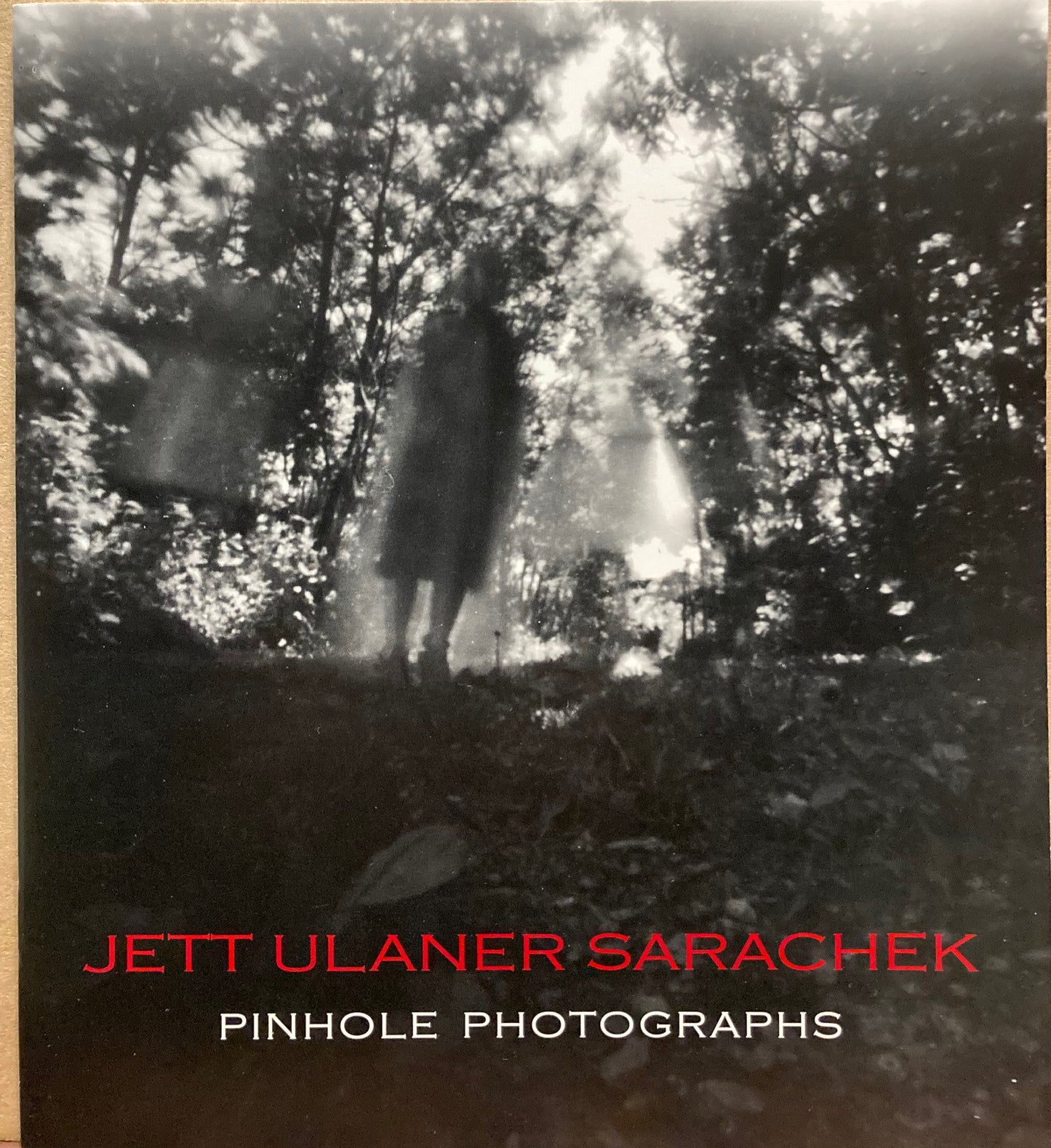
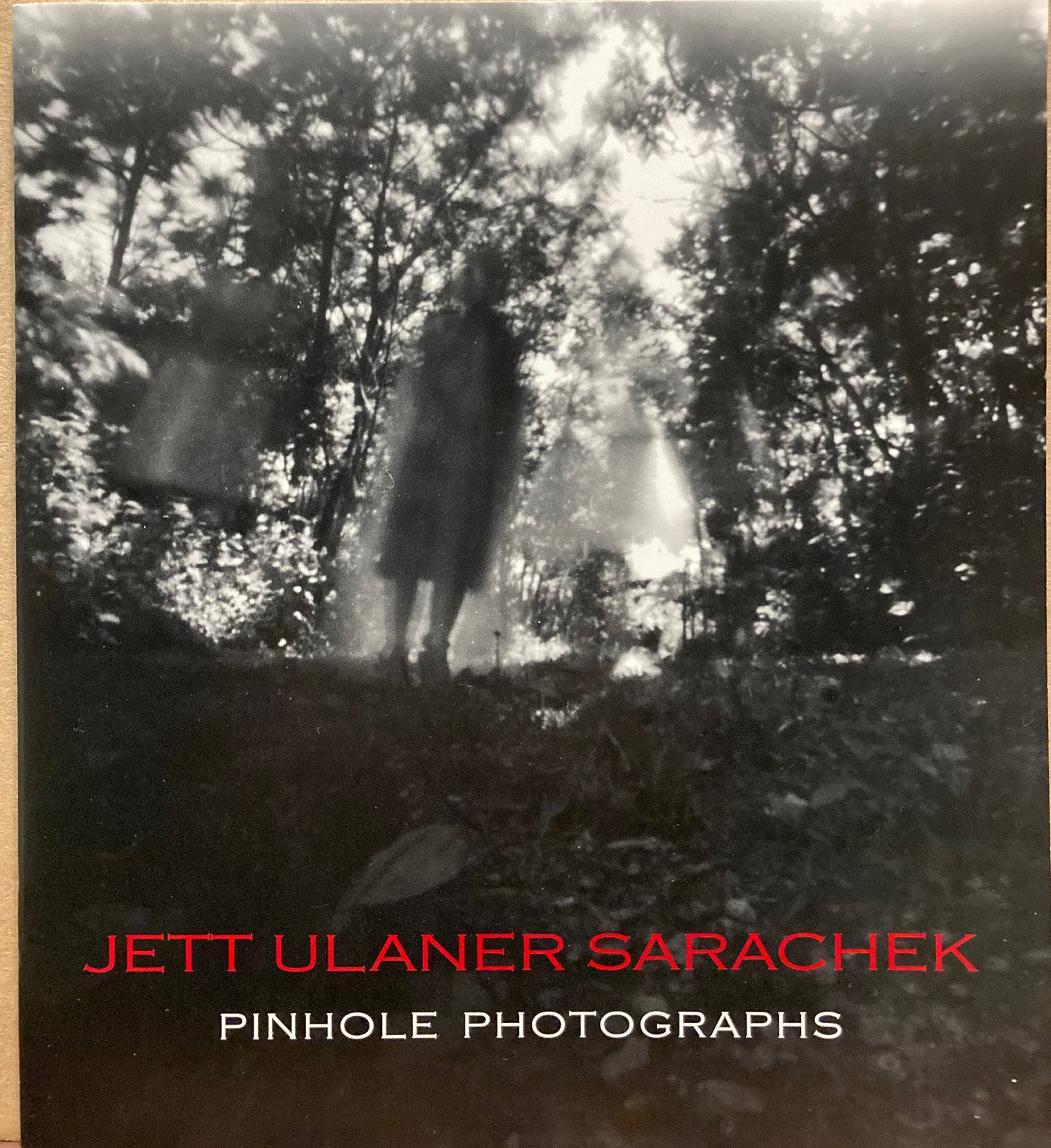
Sarachek, Jett Ulaner. Jett Ulaner Sarachek: Pinhole Photographs. Signed.
Sarachek, Jett Ulaner. Jett Ulaner Sarachek: Pinhole Photographs. Signed.
Couldn't load pickup availability
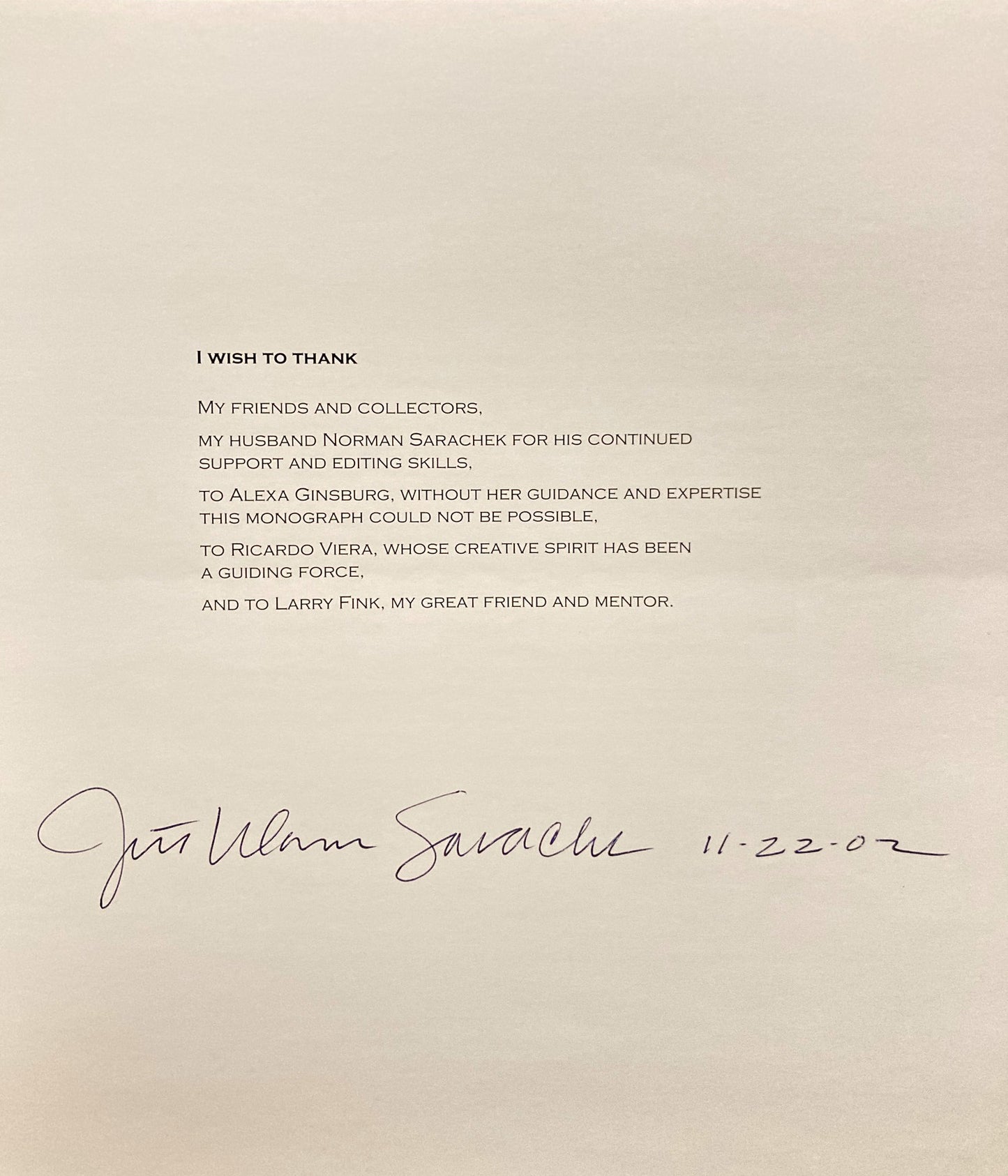
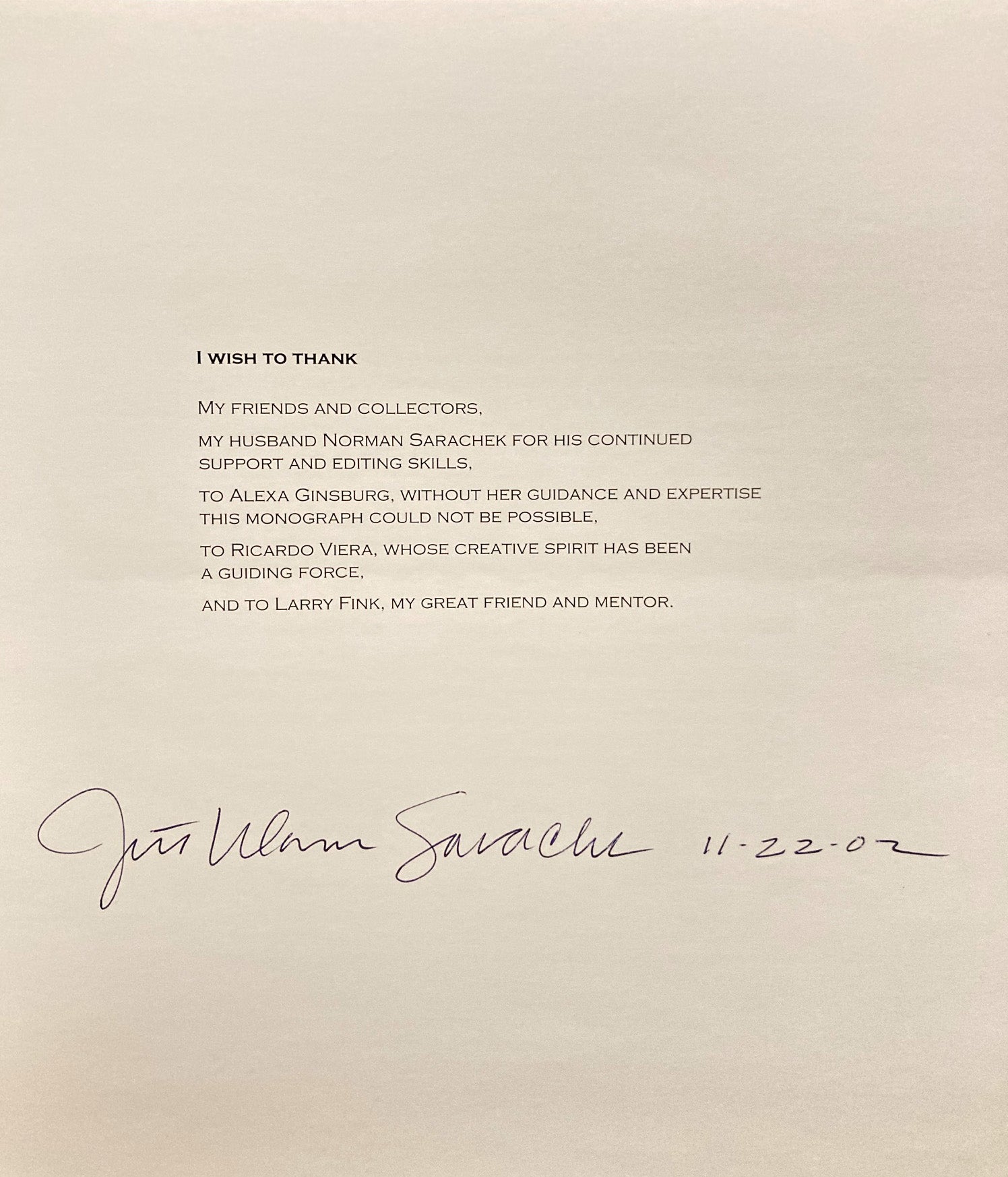
Self-published, 2000. SIGNED and dated Nov. 22, 2002. Wraps, 20 pages. Scarce. Fine. Summary:
Jett Ulaner Sarachek: Pinhole Photographs is a self-published monograph released in 2000 that surveys the evocative, long-exposure lensless photography of contemporary artist Jett Ulaner Sarachek. The book serves as a dedicated showcase of the artist’s mastery of the pinhole camera, utilizing a primitive, historic photographic technique to capture deeply contemplative and dreamlike imagery at the turn of the 21st century.
Key Overview and Objectives
-
Embracing Slowness: The publication acts as a philosophical argument for deliberate, slow-process photography. Sarachek uses the inherent limitations of the pinhole camera—namely, the lack of a glass lens and the requirement for incredibly long exposure times—to strip away the instantaneous, frantic speed of modern photography.
-
The Magic of the Lensless Eye: Sarachek uses the text and images to explore how a simple aperture can transform ordinary, found spaces into soft, universally focused, and timeless compositions.
Core Themes and Visual Style
-
The Soft-Focus Aesthetic: The photographs throughout the volume are characterized by the infinite depth of field and characteristic rectilinear perspective unique to pinhole optics. The lack of a sharp lens creates a subtle, atmospheric blur and vignetting that lends the imagery a ghostly, painterly quality reminiscent of 19th-century Pictorialism.
-
Architecture, Nature, and Still Life: The book organizes Sarachek's work into intimate thematic series. Her subjects range from serene natural landscapes and quiet interior spaces to geometric architectural details and arranged still lifes.
-
The Fluidity of Time: Because pinhole exposures often last from several seconds to many minutes, moving elements like water, clouds, or human figures become blurred or entirely invisible. The book highlights how Sarachek uses this phenomenon to capture the passage of time itself, turning rushing landscapes into ethereal, still sanctuaries.
Significance
Jett Ulaner Sarachek: Pinhole Photographs stands as a beautiful example of the turn-of-the-century revival of alternative and historic photographic processes. By self-publishing this collection in 2000—just as the digital photography revolution was beginning to dominate the mainstream—Sarachek’s monograph remains a vital testament to the enduring artistic power of handmade, analog experimentation.